
About Bugatti Type 30
Dressed as a regular, two-door vehicle, the Type 30 was a super-sleeper of its times' thanks to the new engine installed under the hood and the four-speed gearbox.
Ettore Bugatti was already a known and respected name in the European automotive industry. His car victories in various races made him famous. In 1922, Bugatti introduced the Type 30, which was based mostly on the Type 13 "Brescia," the first real production car ever built by the Frenchman company, but powered by a magnificent engine used on the Type 29 race-car.
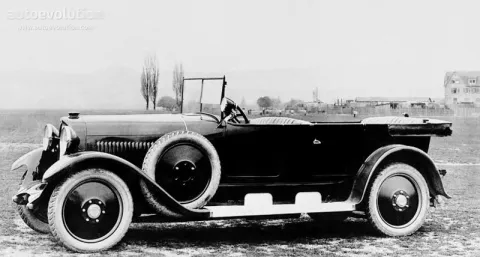
Most of the 600 units built were completed with Bugatti bodyworks, while a few were sold only as bare chassis and completed by independent coachbuilders. All of them featured the same radiator with a specific rounded shape, unlike most of the other cars that sported squared ones. One particular detail for the Type 30 was the oval-shaped fuel-tank, which was made like that or a sleeker, more aerodynamic profile.
For the original Bugatti bodywork, the open-top cabin offered room for two, although its narrow interior made it more suitable only for the driver. For the dashboard, Bugatti installed a metallic panel and placed most of the dials in the middle. Another two dials found their place in front of the driver and on the passenger side.
The engine was the most important part of the vehicle. It was designed for racing and adapted to the road. Its inline-eight configuration with just 2.0-liter displacement was unusual even for those times. Bugatti installed a multi-valve system with two inlets and one exhaust. Most Type 30 featured a Zenith carburetor, while others received Solex ones, which helped the engine create up to 100 hp.