

About Lamborghini Huracan 580-2
Lamborghini introduced the Huracan lineup in 2014 and was offered exclusively with an all-wheel drive system, but in 2016, it indulged its customers with a two-wheel drive version, named the LP 590-2.
Taming a supercar with an all-wheel drive system was easy. Everyone could drive it and feel safe, even when they exaggerated a little. But it was precisely that attribute that annoyed some people who wanted their go-fast vehicles to behave a little bit wildly. And that’s why the RWD version of the Huracan was developed. Furthermore, the Italian car manufacturer, which was under the same roof as Audi, knew that some customers liked the rear-wheel drive systems more than the all-wheel drive ones. In addition, by creating such version, the car’s nose was lighter and the manufacturing cost was lower, so it could increase the profit from each unit sold.
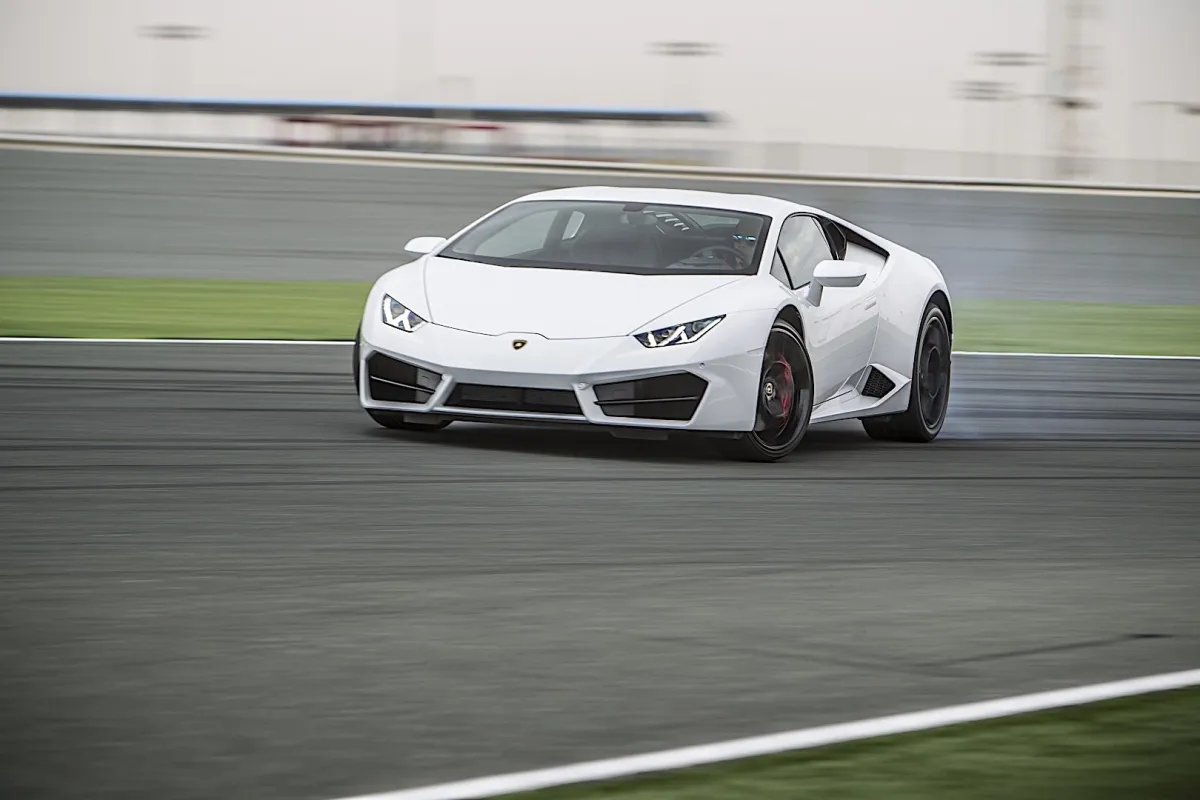
At first sight, there was no difference between the regular 610-4 and the 580-2 versions of the Hurracan. But still, a keen eye for detail could notice that the latter had different side scoops on the front bumper than the former. These were split horizontally. Furthermore, the trapezoidal-shaped center air intake had less-angled side slats, and its lower side was flush with the rest of the bumper, unlike the 580-2 Huracan that featured a raised section.
From its profile, the short-nosed Hurracan 580-2 had the same shape as its brother. The low roof line and the ascending beltline emphasized the car’s aggressive look. Behind the doors, on the lower side of the quarter panels, the automaker installed a set of triangular vents that cooled the rear wheels, while on the upper side, Lamborghini installed the air intakes for the engine. Finally, at the back, the car boasted a quad exhaust system integrated into the carbon-fiber black rear diffuser. The car’s LED taillights had angular-shaped lights above the functional broad mesh grille that stretched over the rear fascia.
Inside, the automaker installed a pair of sports seats separated by a wide center console that housed several buttons that controlled the transmission and parking brake. In addition, Lamborghini’s design team took inspiration from jet fighters and placed the red button that started the engine. Fronting the driver was a TFT display inside the instrument cluster that showed every data the driver needed from the car. The infotainment system also used the screen and showed the navigation as well. On the center stack, the automaker installed three additional gauges above a set of switches, and the HVAC controls.
Behind the cabin, Lamborghini installed a naturally aspirated V10 engine, like the rest of the Huracan range. It produced 30 ponies less than the one placed in the Huracan 610-4. The automaker said that this was for a better driving experience. Another significant change for the vehicle was the weight. Since there was no front differential, the car’s nose was lighter, leading to a 40/60 weight distribution.