Skip to content
AD

Marussia B1 (2010 - present)

Marussia · 3 trims

Marussia B1

The Marussia B1 (2010 - present) is available in 3 trims producing 300 to 420 hp. The fastest trim reaches 249 km/h.

Power
420 hp
0–100
3.8 s
Fuel economy
Cargo

B1 Trims

Compare →
Trims and engine versions — Marussia B1
Trim Fuel Power Torque 0–100 Top speed Fuel economy CO2 Select
3.5L 6AT (300 HP) Petrol 300 hp 409 Nm 249 km/h
2.8L Turbo (360 HP) Petrol 360 hp 521 Nm 249 km/h
2.8L Turbo (420 HP) Petrol 420 hp 601 Nm 3.8 s 249 km/h

Fuel economy and CO2 follow the stated test cycle. Manufacturer figures; deviations per market and option pack are possible.

Is Marussia B1 a good choice against other models?

Average across every Marussia B1 trim, compared with 8,133 trims of other cars from the 2007–2013 period.

Is Marussia B1 a good choice against other models?
Measure This model Average Position
Power 360 hp 197 hp
better than 91%
Torque 510 Nm 318 Nm
better than 90%
Top speed 249 km/h 211 km/h
better than 83%
Acceleration 0–100 km/h 3.8 s 9.3 s
better than 99%
Unladen weight 1,100 kg 1,544 kg
better than 92%

Percentages show the share of trims from the same period this model beats on that measure. Manufacturer figures.

Not stated by the manufacturer: combined consumption, co2 emissions and cargo volume. Those measures are left out of the comparison.

Comparable models from other brands

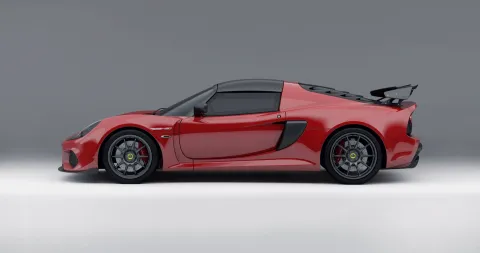
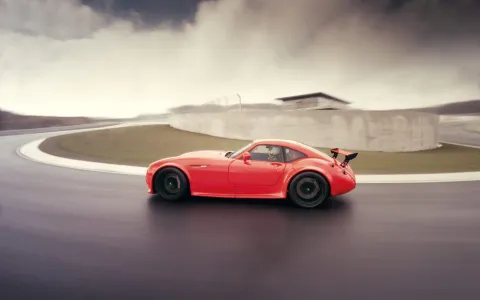
Lotus Wiesmann Chevrolet Aston Martin Volvo Kia

About Marussia B1

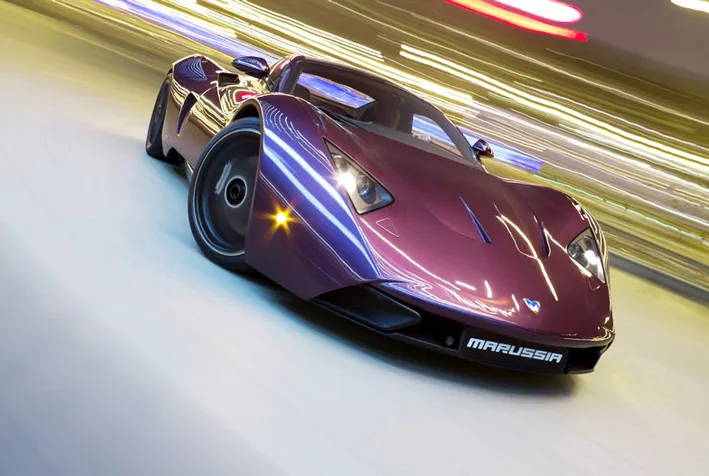
While vodka, caviar, and the Cold War might be associated with Russia, something else important came from there: the Marussia B1 supercar.

That's right! A supercar made in Russia tried to compete with high-performance cars with a mid-engine vehicle built with the help of Cosworth Engineering. Also, keep in mind that the car manufacturer benefited from the F1 experience since it was a partner in the Marusia-Virgin F1 Team with Richard Branson.

Marussia designed the B1 around an aluminum shell and covered it in more carbon fiber than most supercars from that era. The carmaker followed Collin Chapman's idea to make a car light instead of powerful. But it didn't leave aside the aerodynamic. Since it was a mid-engined vehicle, it sported a slim front area with triangular headlights and a raked and curved windshield. Two front air intakes cooled the brakes and helped to increase the downforce. A pair of vents behind the front wheels released the air trapped in the wheel well. Behind the scissor-type doors, the carmaker made the air-intakes for cooling the twin-turbocharged engine.

Inside, the carmaker installed a leather-clad interior with hand-stitching. There was not a single analog dial in the cockpit. Marussia opted for a digital instrument panel and two additional touch screens: one on the center stack and the other on the passenger side. A pair of slim, high-bolstered bucket seats provided the side support needed during high-speed cornering.

While it wasn't a compelling car, it had the same power to weight ratio as a Ferrari Italia. The carmaker built the Marussia B1 in three engine versions for specific markets. Unfortunately, the company was dissolved in 2014 when most of its 300 employees left and joined a governmental project for a luxury car.

How much power does the Marussia B1 have?

The most powerful Marussia B1 trim is the 2.8L Turbo (420 HP) with 420 hp. The model has 3 trims, starting at 300 hp.

How quickly does the Marussia B1 accelerate from 0 to 100 km/h?

The quickest trim is the 2.8L Turbo (420 HP): 0-100 km/h in 3.8 seconds, with a top speed of 249 km/h.

Other Marussia models

Marussia B2

2010 - present · 3 trims

Power
426 hp
0–100
3.8 s
Fuel economy

Petrol