Skip to content
AD

Rolls-Royce Camargue (1975 - 1986)

Rolls-Royce · 1 trim

Rolls-Royce Camargue

The Rolls-Royce Camargue (1975 - 1986) is available in 1 trims producing 192 to 192 hp. The fastest trim reaches 192 km/h. The lowest stated fuel consumption is 20.3 l/100 km.

Power
192 hp
0–100
10.9 s
Fuel economy
20.3 l/100 km
Cargo
708 l

Camargue Trims

Compare →
Trims and engine versions — Rolls-Royce Camargue
Trim Fuel Power Torque 0–100 Top speed Fuel economy CO2 Select
6.75L V8 3AT (192 HP) Petrol 192 hp 10.9 s 192 km/h 20.3 l/100 km 483 g/km

Fuel economy and CO2 follow the stated test cycle. Manufacturer figures; deviations per market and option pack are possible.

Is Rolls-Royce Camargue a good choice against other models?

Average across every Rolls-Royce Camargue trim, compared with 446 trims of other cars from the 1972–1978 period.

Is Rolls-Royce Camargue a good choice against other models?
Measure This model Average Position
Power 192 hp 128 hp
better than 85%
Top speed 192 km/h 180 km/h
better than 73%
Acceleration 0–100 km/h 10.9 s 12.7 s
better than 60%
Combined consumption 20.3 l/100 km 10.5 l/100 km
better than 1%
CO2 emissions 483 g/km 225 g/km
better than 0%
Cargo volume 708 l 410 l
better than 95%
Unladen weight 2,330 kg 1,200 kg
better than 0%

Percentages show the share of trims from the same period this model beats on that measure. Manufacturer figures.

Not stated by the manufacturer: torque. Those measures are left out of the comparison.

Comparable models from other brands

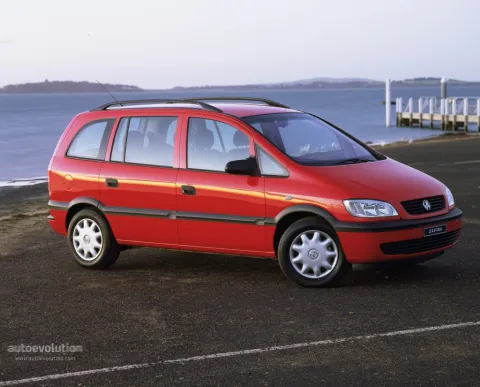
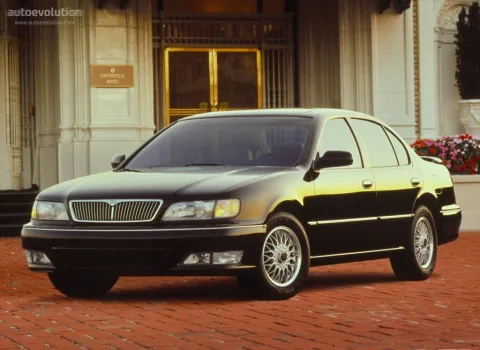
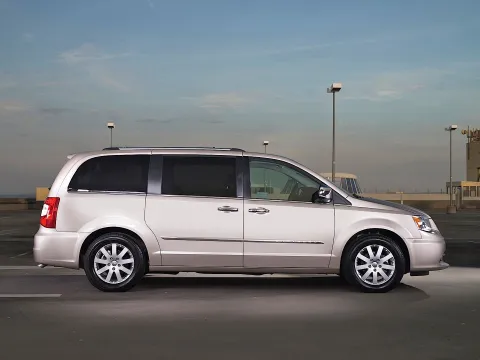
Holden Infiniti Chrysler Chevrolet Alfa Romeo Renault

About Rolls-Royce Camargue

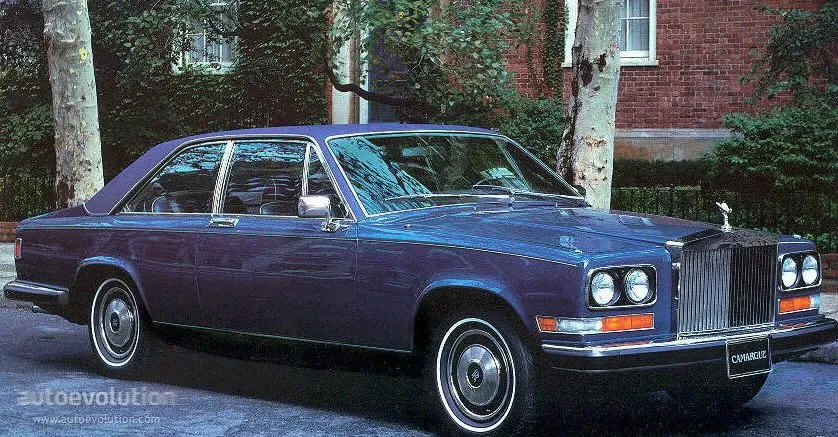
Rolls-Royce introduced the Camargue in 1975, and it was the first post-war car designed outside its British office at the Pininfarina Studios in Italy.

Deemed as one of the ugliest cars ever rolled out from the luxurious brand's assembly line, the Camargue convinced just 531 customers to buy it. The Silver Shadow from the same era outsold it in a proportion of 56 to one, and its sibling Corniche also overtook it by an eight to one factor.

When Paolo Martin from Pininfarina penned the car, he tried to make something different. But as it was the custom at the Italian office, he started with an already successful project and evolved it. The Camargue's shape was similar to the Fiat 124 Coupe, but was suitable for the Italian brand was not so pleasant for a luxury brand. It was the only Rolls-Royce that featured a tilted forward radiator by seven degrees. While that was barely noticeable on a small-sized vehicle, it was evident on a massive car such as the Camargue. The overall three-box shape looked like it was missing a set of doors in the back. Its raked-forward rear windscreen looked good, but it was the front that spoiled everything.

Inside, it was business as usual for Rolls-Royce with expensive leather upholstery and wood veneers on the dashboard and door cars. But the dials, switches, and buttons were scrambled around the panel and created a messy appearance.

Under the hood, the carmaker installed a 6.75-liter V-8 engine paired with a three-speed automatic transmission provided by General Motors. Apart from the U.S. market, where the carmaker supplied the Camargue with a fuel injection system, the rest of the world received carbureted engines, which were not so good on fuel efficiency.

How much power does the Rolls-Royce Camargue have?

The most powerful Rolls-Royce Camargue trim is the 6.75L V8 3AT (192 HP) with 192 hp. The model has 1 trims, starting at 192 hp.

What is the fuel consumption of the Rolls-Royce Camargue?

The most economical Rolls-Royce Camargue trim is the 6.75L V8 3AT (192 HP), with a stated combined consumption of 20.3 l/100 km and 483 g CO2 per km.

How quickly does the Rolls-Royce Camargue accelerate from 0 to 100 km/h?

The quickest trim is the 6.75L V8 3AT (192 HP): 0-100 km/h in 10.9 seconds, with a top speed of 192 km/h.

How large is the cargo volume of the Rolls-Royce Camargue?

The largest stated cargo volume for the Rolls-Royce Camargue is 708 litres.

Other Rolls-Royce models