Skip to content
AD

SEAT Marbella (1986 - 1998)

SEAT · 1 trim

SEAT Marbella

The SEAT Marbella (1986 - 1998) is available in 1 trims producing 41 to 41 hp. The fastest trim reaches 135 km/h. The lowest stated fuel consumption is 6.6 l/100 km.

Power
41 hp
0–100
19.2 s
Fuel economy
6.6 l/100 km
Cargo
272 l

Marbella Trims

Compare →
Trims and engine versions — SEAT Marbella
Trim Fuel Power Torque 0–100 Top speed Fuel economy CO2 Select
0.9L 4MT (41 HP) Petrol 41 hp 60 Nm 19.2 s 135 km/h 6.6 l/100 km 157 g/km

Fuel economy and CO2 follow the stated test cycle. Manufacturer figures; deviations per market and option pack are possible.

Is SEAT Marbella a good choice against other models?

Average across every SEAT Marbella trim, compared with 1,225 trims of other cars from the 1983–1989 period.

Is SEAT Marbella a good choice against other models?
Measure This model Average Position
Power 41 hp 120 hp
better than 0%
Torque 60 Nm 180 Nm
better than 0%
Top speed 135 km/h 184 km/h
better than 1%
Acceleration 0–100 km/h 19.2 s 12.2 s
better than 4%
Combined consumption 6.6 l/100 km 8.6 l/100 km
better than 84%
CO2 emissions 157 g/km 200 g/km
better than 84%
Cargo volume 272 l 438 l
better than 16%
Unladen weight 710 kg 1,161 kg
better than 98%

Percentages show the share of trims from the same period this model beats on that measure. Manufacturer figures.

Comparable models from other brands

Daewoo Buick Alfa Romeo Ford Citroën Tata Motors

About SEAT Marbella

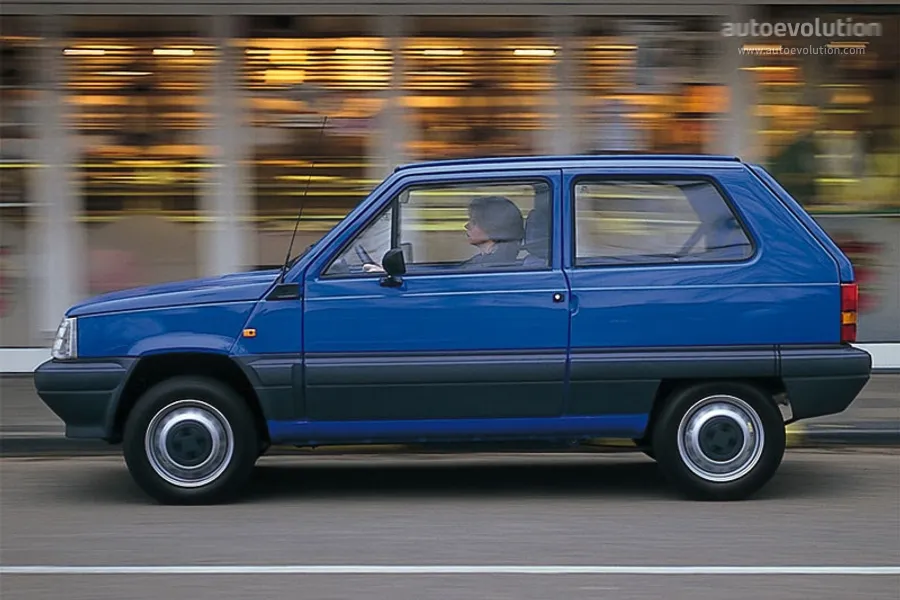
That's what was left for the Spanish carmaker SEAT after its divorce from Fiat, and things were not looking good. But the Spaniards were not ready to throw the towel.

SEAT was born on a dictator initiative and ended up in a partnership with Fiat. That was a good idea of how to put a country without an automotive industry on wheels. Over time, the Spanish carmaker learned enough and knew how to keep a car on the assembly line: add another facelift. In 1986, after its split from Fiat, SEAT had to change Panda's model name, and it chose Marbella, a famous Spanish resort.

There was no way to hide the shape of a Fiat Panda. Its boxy-look with flat panels and straight lines across the bodywork was obvious. But the Spanish carmaker found a way and changed the headlights. They were larger, with corner-mounted turn-signals, and that made the front's car looks different than Panda's front fascia. Moreover, the slatted, plastic grille was completely different. In the back, it installed corner-mounted, tiny taillights on the sides of the tailgate. It was another cost-cutting measure that worked well. Its black, plastic, wrapped-around bumpers were visually connected via a set of plastic molds glued on the doors and rear quarter panels.

Inside, the boxy exterior allowed the carmaker to create a spacious interior for its class. The dashboard was a curved shape with storage areas without doors or a locked glove compartment. There was no center stack nor a place to install a radio.

Under the hood, SEAT used the same 0.9-liter inline-four used for the base Fiat Panda version, paired to a four-speed manual.

How much power does the SEAT Marbella have?

The most powerful SEAT Marbella trim is the 0.9L 4MT (41 HP) with 41 hp. The model has 1 trims, starting at 41 hp.

What is the fuel consumption of the SEAT Marbella?

The most economical SEAT Marbella trim is the 0.9L 4MT (41 HP), with a stated combined consumption of 6.6 l/100 km and 157 g CO2 per km.

How quickly does the SEAT Marbella accelerate from 0 to 100 km/h?

The quickest trim is the 0.9L 4MT (41 HP): 0-100 km/h in 19.2 seconds, with a top speed of 135 km/h.

How large is the cargo volume of the SEAT Marbella?

The largest stated cargo volume for the SEAT Marbella is 272 litres.

Other SEAT models

SEAT Malaga

1985 - 1992 · 5 trims

Power
100 hp
0–100
11.0 s
Fuel economy
6.7

Petrol Diesel

SEAT Tarraco

2018 - present · 10 trims

Power
245 hp
0–100
7.4 s
Fuel economy

Petrol Diesel Hybrid