About Tata Motors Tata Vista
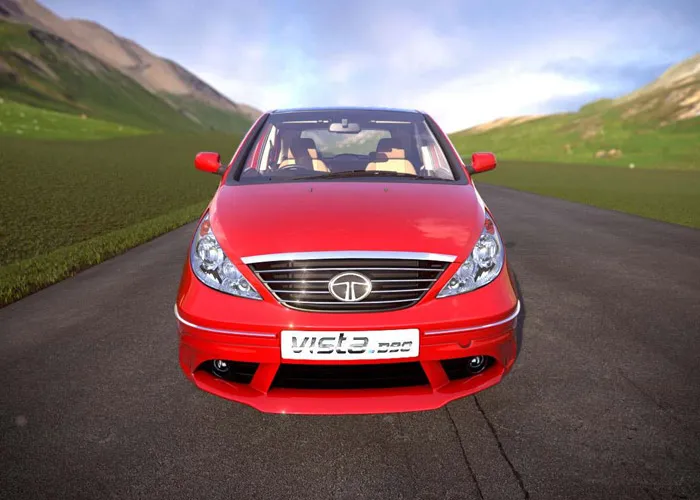
The Indian automaker Tata Motors introduced the second generation of the Vista in 2008, a decade later after the launch of this nameplate in their home market.
With an increased demand for affordable vehicles in India, Tata Motors created the Vista as the hatchback version of the Indica. Unlike its predecessor, which was also sold in England, the second generation had to rely mostly on customers from India and South Africa, where the automaker exported it. The B-segment vehicle was created to provide transportation for up to five people and to perform well on rough roads. With its simple technical solutions and turbo diesel engines carried over from Fiat, the Vista was appreciated for its sturdy construction, even though it wasn’t the most beautiful car on the road.
While the first generation of the Vista was created in the I.DE.A design institute, the second generation relied mostly on local designers. At the front, the smiling-looking grille was flanked by swept-back headlights. Below, the bumper integrated a lower air intake and, depending on the version, flanked by a pair of side scoops. To further enhance the car’s look, the automaker offered an option for a pair of fog lamps.
From its profile, the hatchback looked simple and too tall for its tiny wheels. Depending on the trim level and options, the Vista featured black door mirrors, handles, rubber stripes, or body-colored ones. The design team tried to create an appealing vehicle without raising production costs. As a result, there was only one line creased on the side of the car that crossed it from the front fenders all the way to the back on the quarter panels. Finally, at the back, the slim and tall taillights that flanked the tailgate resembled those from the previous generation but with a much more modern look.
Inside, the most significant change compared to the previous generation of the Vista was in the dashboard’s design. There, Tata installed the instrument cluster atop the center stack. As a result, it was easier for the automaker to create left or right-hand-drive vehicles. The simple bucket seats had no side bolstering since the car was mostly used for in-city or slow-moving traffic. Between the front occupants, the Vista featured a center console that housed the gear stick and a pair of cup holders. On the center stack, the automaker placed the controls for the HVAC system and the audio. Finally, at the back, the flat bench could accommodate up to three occupants for short journeys.
Under the hood, Tata installed a range of gasoline or turbo diesel engines, depending on the market. While the base version, fitted with a 1.2-liter powerplant, was deemed as too thirsty, the 1.3-liter turbo diesel carried over from Fiat was one of the favorites. The front McPherson suspension and the rear twist beam with coil springs provided adequate comfort for passengers and low maintenance costs.