Skip to content
AD

Alpine A106 (1955 - 1964)

Alpine · 1 trim

Alpine A106

The Alpine A106 (1955 - 1964) is available in 1 trims producing 26 to 26 hp. The fastest trim reaches 121 km/h. The lowest stated fuel consumption is 7.0 l/100 km.

Power
26 hp
0–100
Fuel economy
7.0 l/100 km
Cargo

A106 Trims

Compare →
Trims and engine versions — Alpine A106
Trim Fuel Power Torque 0–100 Top speed Fuel economy CO2 Select
0.7L 3MT RWD (26 HP) Petrol 26 hp 55 Nm 121 km/h 7.0 l/100 km

Fuel economy and CO2 follow the stated test cycle. Manufacturer figures; deviations per market and option pack are possible.

Is Alpine A106 a good choice against other models?

Average across every Alpine A106 trim, compared with 124 trims of other cars from the 1952–1958 period.

Is Alpine A106 a good choice against other models?
Measure This model Average Position
Power 26 hp 145 hp
better than 6%
Torque 55 Nm 223 Nm
better than 7%
Top speed 121 km/h 166 km/h
better than 13%
Combined consumption 7.0 l/100 km 12.6 l/100 km
better than 93%
Unladen weight 500 kg 1,295 kg
better than 98%

Percentages show the share of trims from the same period this model beats on that measure. Manufacturer figures.

Not stated by the manufacturer: acceleration 0–100 km/h, co2 emissions and cargo volume. Those measures are left out of the comparison.

Comparable models from other brands

Fiat Mercedes-Benz Subaru Honda

About Alpine A106

Alpine's first car was the 106 Coupe, a sports car that won the Mille Miglia race and proved that a light vehicle with a small engine could beat more powerful sports cars at their own game.

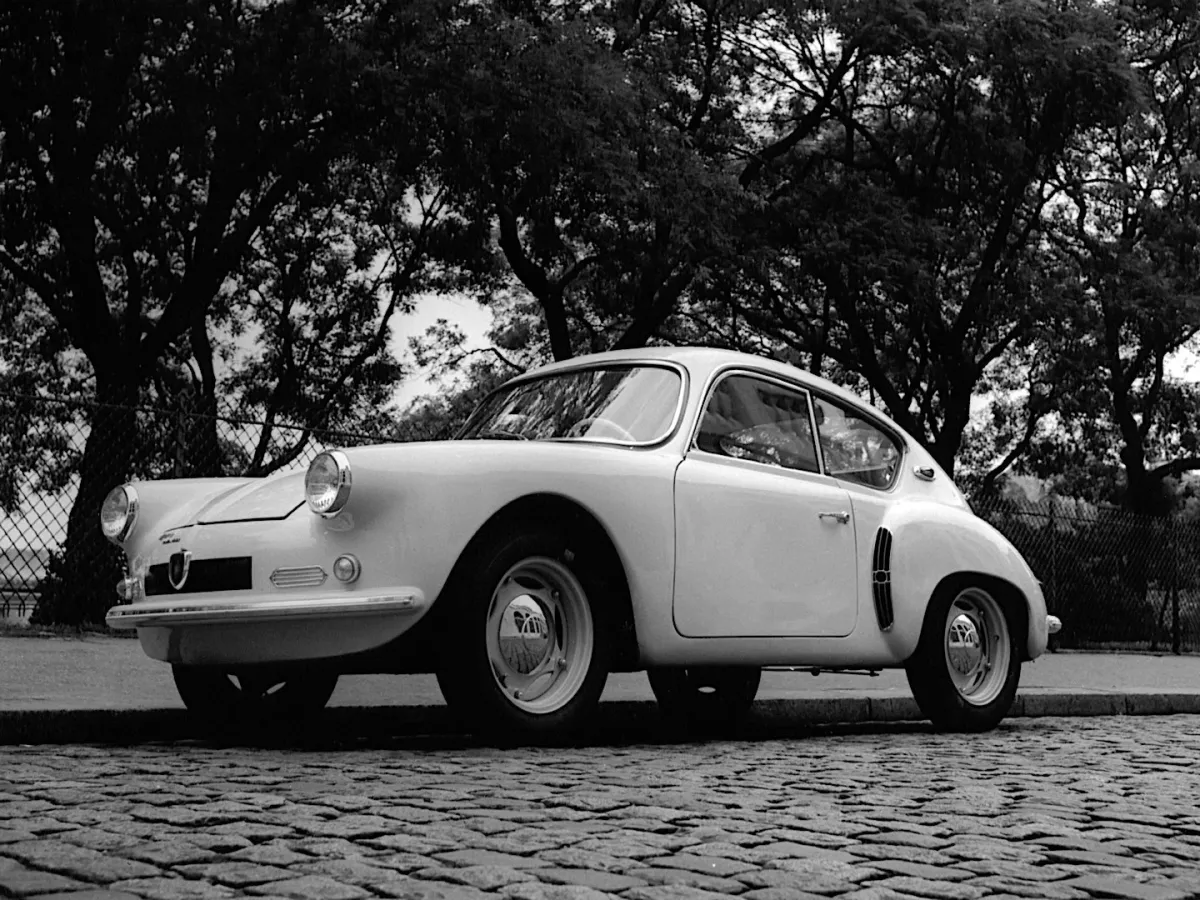
Light, nimble, and with a tiny engine in the back, some might could think that it was the French Porsche 911, but it was introduced nine years before the well-known German sports car. In the early '50s, a Renault dealer from Dieppe – France took a Renault 4 apart and used it to build a light, nimble car. In 1955, the Alpine A106 was ready to enter the world.

Its fiber-glass bodywork was lighter than a steel one, but it was more difficult to build it, especially with all those rounded shapes. The car's front featured two round headlights and a bow-like front panel. Its metallic bumper was mounted on fiber-glass support. From its sides, the car showed a steep, slightly curved windshield. Its greenhouse was sloped toward the end of the car in an arched line. The rear fenders were wider than the rest of the car and sported an air-intake at their front, used to channel the air to the engine, which was mounted in the back.

Inside, the little A106 featured two seats at the front and a small bench in the rear. Its instrument panel featured a speedometer and a few gauges but no tachometer. Between the front seats, Alpine installed the gear-stick.

The engine was a small four-cylinder unit designed by no other than Amedee Gordini, also known as "Le sorcerer" (the wizard). With an independent suspension in all corners and only 540 kg (1,190 lbs), the Alpine A106 proved to be very fast and reliable, especially on winding roads.

How much power does the Alpine A106 have?

The most powerful Alpine A106 trim is the 0.7L 3MT RWD (26 HP) with 26 hp. The model has 1 trims, starting at 26 hp.

What is the fuel consumption of the Alpine A106?

The most economical Alpine A106 trim is the 0.7L 3MT RWD (26 HP), with a stated combined consumption of 7.0 l/100 km and — g CO2 per km.

Other Alpine models

Alpine A108

1958 - 1965 · 3 trims

Power
68 hp
0–100
16.0 s
Fuel economy
7.5

Petrol

Alpine A110S

2019 - 2021 · 1 trim

Power
292 hp
0–100
4.4 s
Fuel economy

Petrol

Alpine A 110 R

2023 - present · 1 trim

Power
300 hp
0–100
3.9 s
Fuel economy

Petrol