About Jeep Liberty KK
After its divorce from Daimler, the American automaker Chrysler introduced the second generation of the Liberty mid-size SUV, and the changes were massive.
Financially, Chrysler Group was in deep trouble despite the capital infusion by Cerberus Capital Management, but it tried to survive and thrive by using the same platforms for different brands and models. The second generation of the Liberty was one of the recipients of such technology, sharing its underpinnings with the Dodge Nitro, albeit it was available as a more capable off-road vehicle than the one from its cousin. However, financial troubles were reflected in the price of the car. The base version had a 30% higher price than the 2001 Jeep Liberty. That couldn’t make customers happy, and that was reflected by slow sales. During its seven-year production time, it barely passed the 400,000 units mark. However, it is worth considering that the mid-size SUV also faced the effects of the financial crisis from 2008-2012. Jeep tried and managed to create a desirable vehicle for those who wanted an SUV capable enough to tow a 5,000 lbs (2,268 kg) trailer behind, be comfortable on the road, and still climb some trails. After all, it was trail-rated by Jeep.
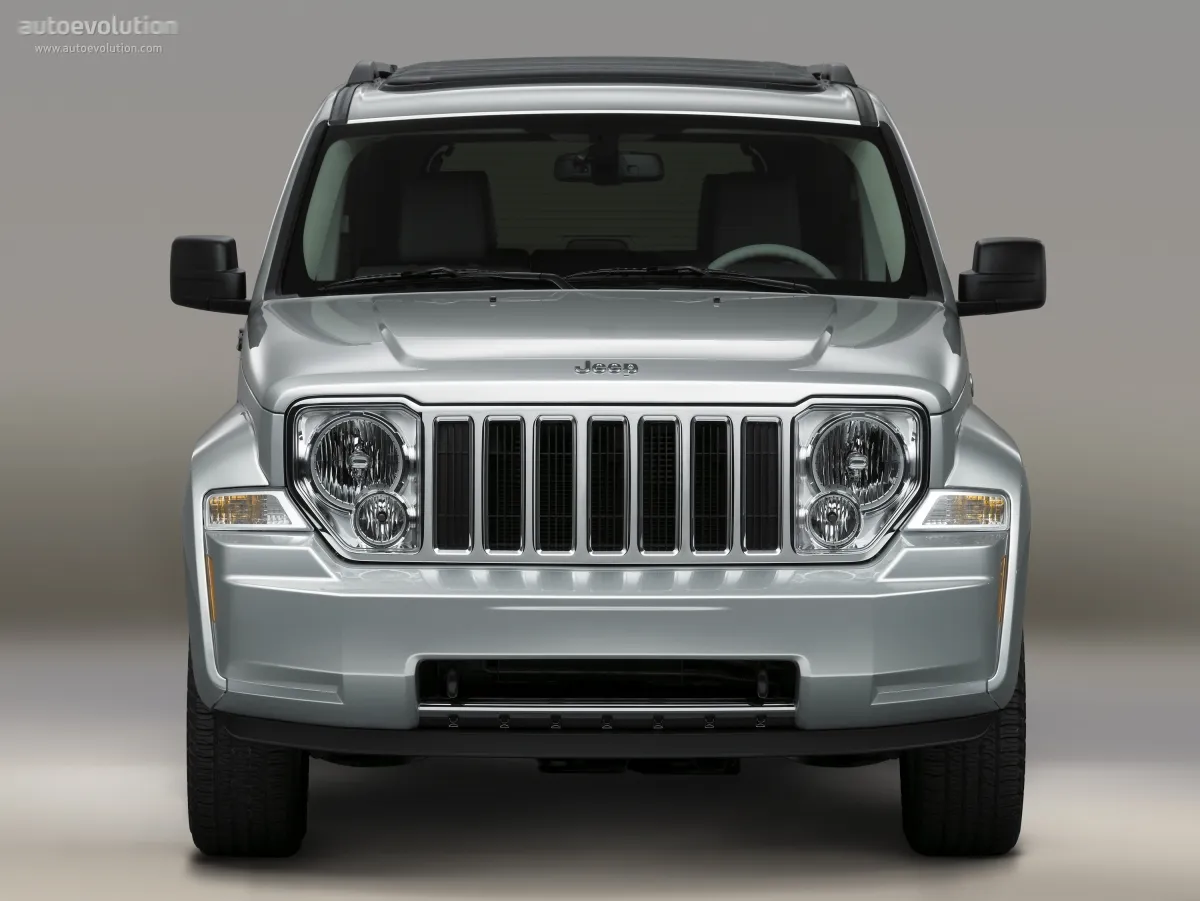
One of the most significant upgrades was noticed at the car’s front, where the former round headlights were replaced by angular-shaped ones, which also integrated the fog lamps. The front fascia also resembled the one placed by Jeep on the Commander lineup. The turn signal lamps flanked the headlights, mounted above the bumper, in a horizontal position, similar to those from Liberty’s first generation, the KJ.
Even though it kept the angular styling of its predecessor, the 2005 Liberty KK had a longer wheelbase and overall length than the Liberty KJ. It sported trapezoidal-shaped wheel arches adorned with plastic claddings to make the SUV look more muscular. The chunky grab handles for the doors still had the big opening buttons that could be used with gloves. Depending on the grade, Jeep offered the vehicle with black or body-colored rubber side stripes, which were effective against shopping carts. But there were a couple of firsts for the 2005 Jeep Liberty. One was its tailgate that opened upwards and featured an independent opening system for the rear window, while another was the optional sky-slider canvas roof that could open for more fresh air into the cabin.
Inside, customers enjoyed a pair of bucket seats at the front and a split-folding (60/40) bench seat in the back. Thanks to the longer wheelbase, there was more legroom for the rear-seated passengers. Up front, the two-tone dashboard and the upscale-looking design made the owners happy. On the center stack, the automaker installed an infotainment unit with a touchscreen, DVD player, and sat-nav system with real-time traffic control. Between the front occupants, the automaker placed a center console that housed the gear selector, the handbrake, and a tall armrest with a storage area underneath.
Under the hood, Jeep installed a standard 3.7-liter single-cam V6 engine for the U.S. market, while in other countries, it sold it with a 2.8-liter CRD powerplant. In addition to the six-speed manual, the 2005 Liberty was also available with a four-speed automatic transmission for the gas-powered version or a five-speed automatic for the turbodiesel. A two-speed transfer box was available.