About Lexus GS300
Lexus stepped up its game in the premium automotive segment and introduced the first generation of the GS300 in 1993, just five years after Toyota established the luxurious brand.
Toyota teamed up with the famous Italian styling center Italdesign Giugiaro to create the first generation of the GS300, and the concept car was known as the Jaguar Kensington. Initially, Toyota sold the new vehicle as the Aristo via an exclusive, luxury-dedicated network of dealerships across Japan in 1991. Two years later, it started exporting this mid-size premium sedan in the U.S. as the Lexus GS300. It was the beginning of a long and successful model for the Japanese brand. The first generation of this nameplate used top-notch technologies, including the famous 2JZ-GE engine used on the fourth generation of the Toyota Supra. Unlike that model, the GS300 was built for comfortable rides but with enough stamina in its veins to keep up with what other premium automakers had in their offer in terms of performance.
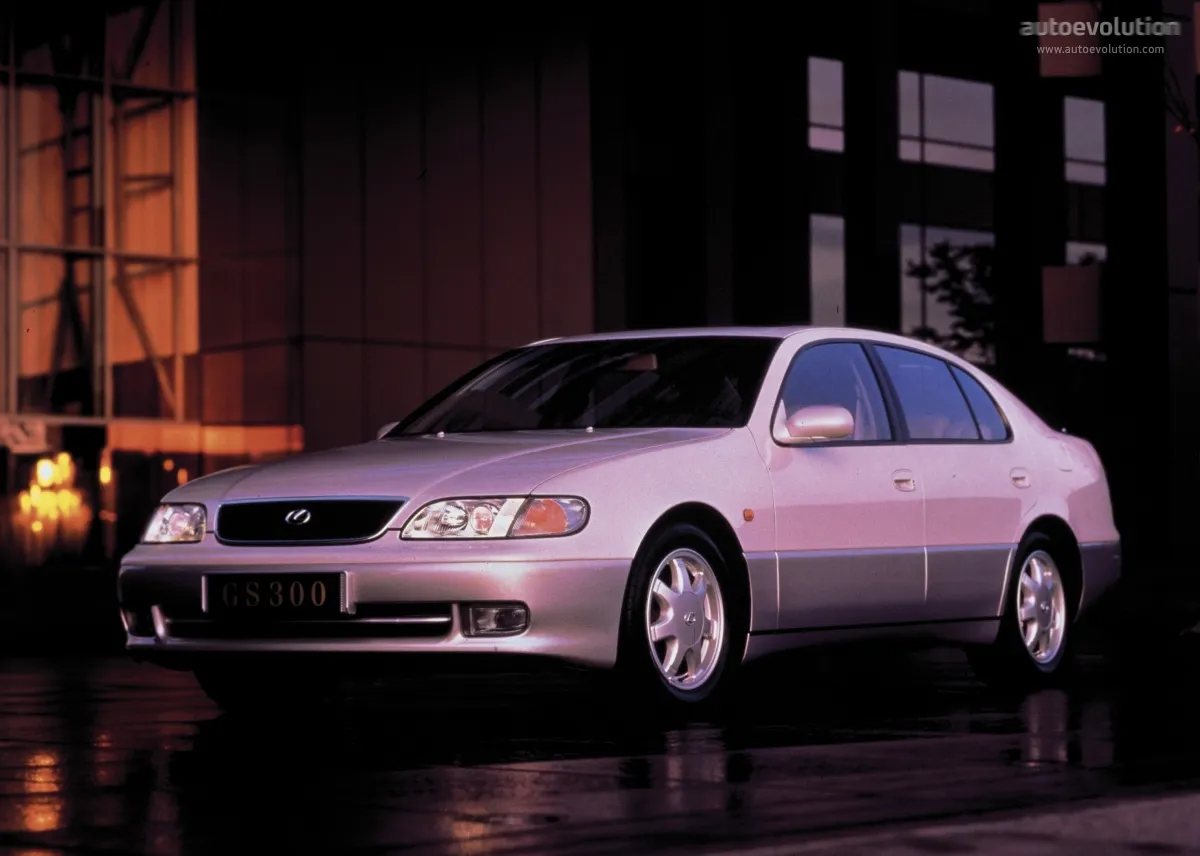
The Japanese automaker made the right decision when it chose to work with Italdesign Giugiaro, who penned the car with a front fascia on par with other European and American brands. GS300’s front fascia featured horizontal headlights flush to the hood and the grille. As a result, it looked almost like a single piece. In addition, Lexus imposed very high-quality standards and paper-thin panel gaps. On the lower side of the wrapped-around plastic bumper, the automaker installed a broad air intake in the middle adorned by a horizontal slat and flanked by a set of scoops that housed the fog lamps.
Giugiaro made the GS300 with an ascending waistline that created a dynamic appearance for the car. The organic shapes of the vehicle were challenging to form. There was not a single straight line on the car’s look: only curved lines and rounded body panels. The cab-rearward design suggested that the vehicle was fitted with an RWD system, which was correct. At the back, the tall deck was slightly sloped down, while the back was adorned by wide taillights split between the quarter panels and the trunk lid. Lexus equipped the GS300 with light-alloy wheels and available chromed finish, depending on the market and grade.
Lexus tried to attract more customers with an elegant-looking interior. Base models featured velour upholsteries, while the leather seats were optional. The two-tone dashboard design created an even more upscale look for the vehicle. A well-equipped version could provide heated seats, a power sunroof, and a power-adjustable steering wheel column for tilt and reach. On the center stack, the automaker installed a standard automatic climate control unit and a cassette player, with an option for a 12 CD-changer unit in the trunk. In the back, there was enough room for two adults, while a third one had to cope with the tall transmission tunnel.
Under the hood, besides the inline-six three-liter engine, the GS300 also had a four-liter naturally aspirated V8. All versions were paired with a four-speed automatic until 1996, when the automaker introduced a fresh five-speed automatic.