
About Maybach Typ W1 Testwagen 1919
When Wilhelm Maybach decided to step into the automotive segment by founding his own car company, it began with this: the W1 test vehicle.
In the aftermath of WWI, Germany was not allowed to build military aircraft and other kinds of vehicles. Still, they were allowed to produce passenger cars and light trucks. But Maybach aimed higher and understood that high income comes from luxury vehicles. Yet, he has to start from somewhere. With help from his son, Karl Maybach, they used an older Daimler chassis and started building on it.
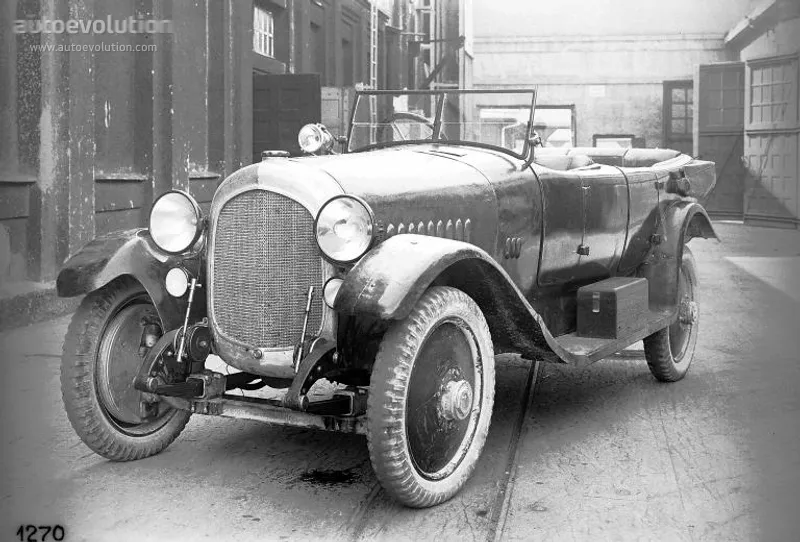
Even though the W1 was intended to be more of a mule than a finished vehicle, Wilhelm Maybach didn't do things halfway. It created a complete bodywork with curved side panels and hood, which were unusual for those times. Moreover, he placed a mesh grille in front of the radiator and fixed it into a rounded-shaped thick rim. From its sides, the vehicle revealed its majestic look, for those times, with its torpedo body style. In addition, a two-piece vertical windshield protected the occupants from wind. Access was made via two narrow doors at the front and two in the back, and all were rear-hinged. The ragtop was stored behind the cabin. Since it was a test vehicle, it didn't sport any spare wheels, although it featured a toolbox placed on the left side of the vehicle onto the sidestep.
The cabin featured a pair of seats at the front and a bench in the rear. The four-spoke steering wheel was on the right side of the car, while the center-mounted dials showed various information about the car, such as speed, temperature, fuel level, and revs.
Under the hood, Maybach installed a newly developed inline-six powerplant that was very powerful for those times. It was rated at 46 hp, which was just enough to prove it was worthy of being installed in a production vehicle. And that came in 1921 at the Berlin Motor Show bearing the W3 name.