Skip to content
AD

Maybach Typ W6 DSG Sport-Cabriolet 1935 (Unknown)

Maybach · 1 trim

Maybach Typ W6 DSG Sport-Cabriolet 1935

The Maybach Typ W6 DSG Sport-Cabriolet 1935 (—) is available in 1 trims producing 120 to 120 hp. The fastest trim reaches 130 km/h. The lowest stated fuel consumption is 24.0 l/100 km.

Power
120 hp
0–100
Fuel economy
24.0 l/100 km
Cargo

Typ W6 DSG Sport-Cabriolet 1935 Trims

Compare →
Trims and engine versions — Maybach Typ W6 DSG Sport-Cabriolet 1935
Trim Fuel Power Torque 0–100 Top speed Fuel economy CO2 Select
7.0 DSG Petrol 120 hp 130 km/h 24.0 l/100 km 571 g/km

Fuel economy and CO2 follow the stated test cycle. Manufacturer figures; deviations per market and option pack are possible.

Is Maybach Typ W6 DSG Sport-Cabriolet 1935 a good choice against other models?

Average across every Maybach Typ W6 DSG Sport-Cabriolet 1935 trim, compared with 29,871 trims of other cars from the all model years period.

Is Maybach Typ W6 DSG Sport-Cabriolet 1935 a good choice against other models?
Measure This model Average Position
Power 120 hp 189 hp
better than 30%
Top speed 130 km/h 205 km/h
better than 1%
Combined consumption 24.0 l/100 km 7.9 l/100 km
better than 0%
CO2 emissions 571 g/km 180 g/km
better than 0%

Percentages show the share of trims from the same period this model beats on that measure. Manufacturer figures.

Not stated by the manufacturer: torque, acceleration 0–100 km/h, cargo volume and unladen weight. Those measures are left out of the comparison.

Comparable models from other brands

Peugeot Lancia Volkswagen Hyundai BMW

About Maybach Typ W6 DSG Sport-Cabriolet 1935

In 1929, Wilhelm Maybach passed away and left the carmaker without the main leader that the company needed. His son, Karl Maybach, tried to pick up the pace and prevent the brand from crumbling to the ground.

One of its first ideas was creating the W6 lineup, which mixed a new platform and the old inline-six engines. Moreover, the carmaker thought about developing a sportier version of the big car, addressed to the younger generation that emerged even wealthier after the world economic crisis in the early '30s. Thus, Karl Maybach introduced the W6 Sport Cabriolet. A model that was not as successful as he hoped for.

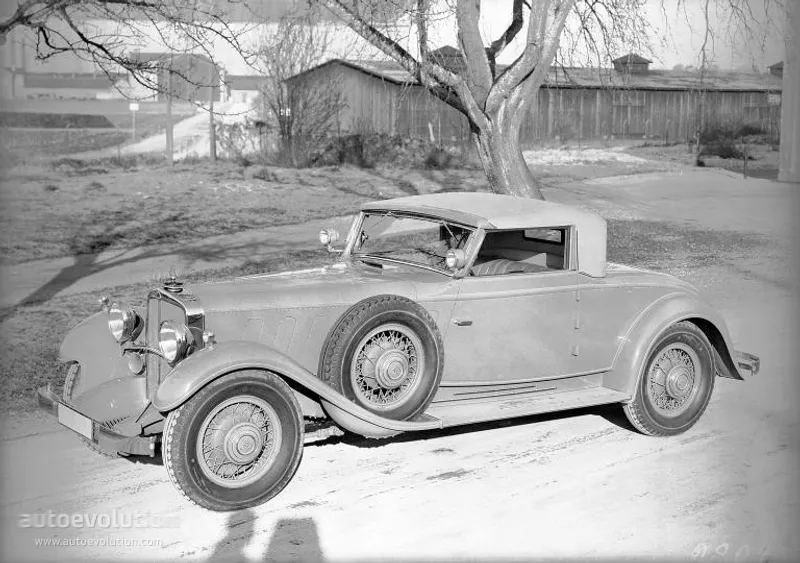
The car's front fascia resembled the same design language as its bigger, more luxurious siblings. It sported a front bumper attached to the chassis' endings in front of the front wheels. The pushed-back vertical radiator was partially protected by a curved cross-beam that also supported the headlights, and it was attached to the front fenders. Unlike the big sedans, the W6 Sport-Cabriolet featured a smaller, slightly tilted windscreen. There were only two rear-hinged doors. The retractable soft top couldn't be left at home and was stored behind the cockpit. At the back, the curved, sloped-down rear end concealed the trunk.

Like any other Maybach, the car's interior was garnished with expensive leather and wood grains on the dashboard. This version of the W6 offered just two seats. Karl Maybach made the car for those who wanted a car for their passion, not especially for business meetings and authorities.

Under the hood, the carmaker placed the former seven-liter inline-six powerplant. The standard version featured a three-speed gearbox. Later on, the DSG version added a semi-automatic one, with a two-speed transfer case that raised the total number of available gears to six.

How much power does the Maybach Typ W6 DSG Sport-Cabriolet 1935 have?

The most powerful Maybach Typ W6 DSG Sport-Cabriolet 1935 trim is the 7.0 DSG with 120 hp. The model has 1 trims, starting at 120 hp.

What is the fuel consumption of the Maybach Typ W6 DSG Sport-Cabriolet 1935?

The most economical Maybach Typ W6 DSG Sport-Cabriolet 1935 trim is the 7.0 DSG, with a stated combined consumption of 24.0 l/100 km and 571 g CO2 per km.

Other Maybach models

Maybach 62S

Unknown · 1 trim

Power
612 hp
0–100
5.2 s
Fuel economy
16.4

Petrol