Skip to content
AD

Hyundai Bayon (2022 - present)

Hyundai · 7 trims

Hyundai Bayon

The Hyundai Bayon (2022 - present) is available in 7 trims producing 84 to 120 hp. The fastest trim reaches 185 km/h. On the Belgian market the list price started at € 19,500 when it launched in 2022.

Price from
€ 19,500
Power
120 hp
0–100
10.4 s
Fuel economy
Cargo
411 l

Launch price from (2022)

€ 19,500

Most expensive regular version

€ 27,000

Belgian list price for a new car in 2022, including 21% VAT and excluding options, delivery costs and the regional registration tax (BIV). A historical guide price, not a current asking price.

Bayon Trims

Compare →
Trims and engine versions — Hyundai Bayon
Trim Fuel Power Torque 0–100 Top speed Fuel economy CO2 Select
1.2L MPi 5MT (84 HP) Petrol 84 hp 119 Nm 13.5 s 166 km/h 121 g/km
1.0L TGD-i 48V 6iMT (100 HP) Hybrid 100 hp 171 Nm 10.7 s 183 km/h 101 g/km
1.0L TGD-i 48V 7AT (100 HP) Hybrid 100 hp 171 Nm 11.7 s 180 km/h 101 g/km
1.0L TGD-i 6MT (100 HP) Petrol 100 hp 171 Nm 10.7 s 183 km/h 109 g/km
1.0L TGD-i 7AT (100 HP) Petrol 100 hp 171 Nm 11.7 s 180 km/h 106 g/km
1.0L T-GDi 48V 6iMT (120 HP) Hybrid 120 hp 171 Nm 10.4 s 185 km/h 102 g/km
1.0L TGD-i 48V 7AT (120 HP) Hybrid 120 hp 171 Nm 10.4 s 185 km/h 102 g/km

Fuel economy and CO2 follow the stated test cycle. Manufacturer figures; deviations per market and option pack are possible.

Is Hyundai Bayon a good choice against other models?

Average across every Hyundai Bayon trim, compared with 2,953 trims of other cars from the 2019–2025 period.

Is Hyundai Bayon a good choice against other models?
Measure This model Average Position
Power 103 hp 277 hp
better than 6%
Torque 164 Nm 425 Nm
better than 5%
Top speed 180 km/h 228 km/h
better than 11%
Acceleration 0–100 km/h 11.3 s 7.3 s
better than 7%
CO2 emissions 106 g/km 159 g/km
better than 89%
Cargo volume 411 l 540 l
better than 30%
Unladen weight 1,113 kg 1,764 kg
better than 96%

Percentages show the share of trims from the same period this model beats on that measure. Manufacturer figures.

Not stated by the manufacturer: combined consumption. Those measures are left out of the comparison.

Comparable models from other brands

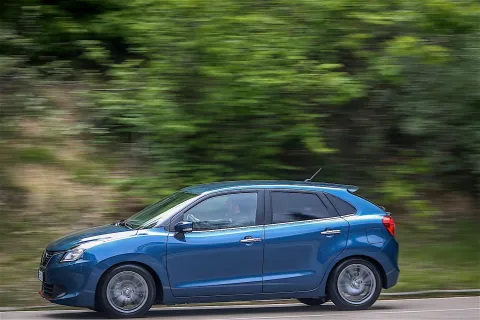
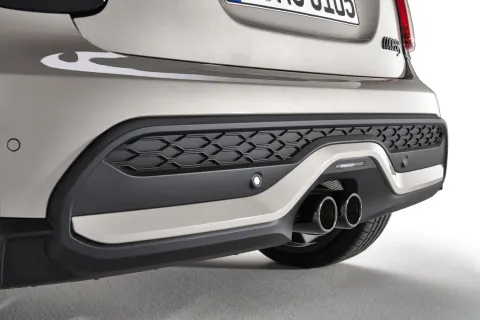
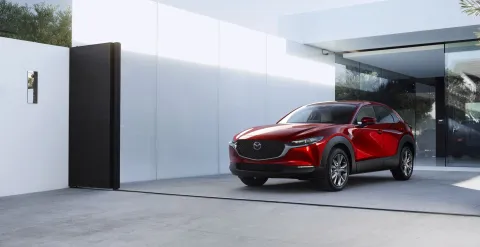
Mini Peugeot Volkswagen Suzuki Mazda

About Hyundai Bayon

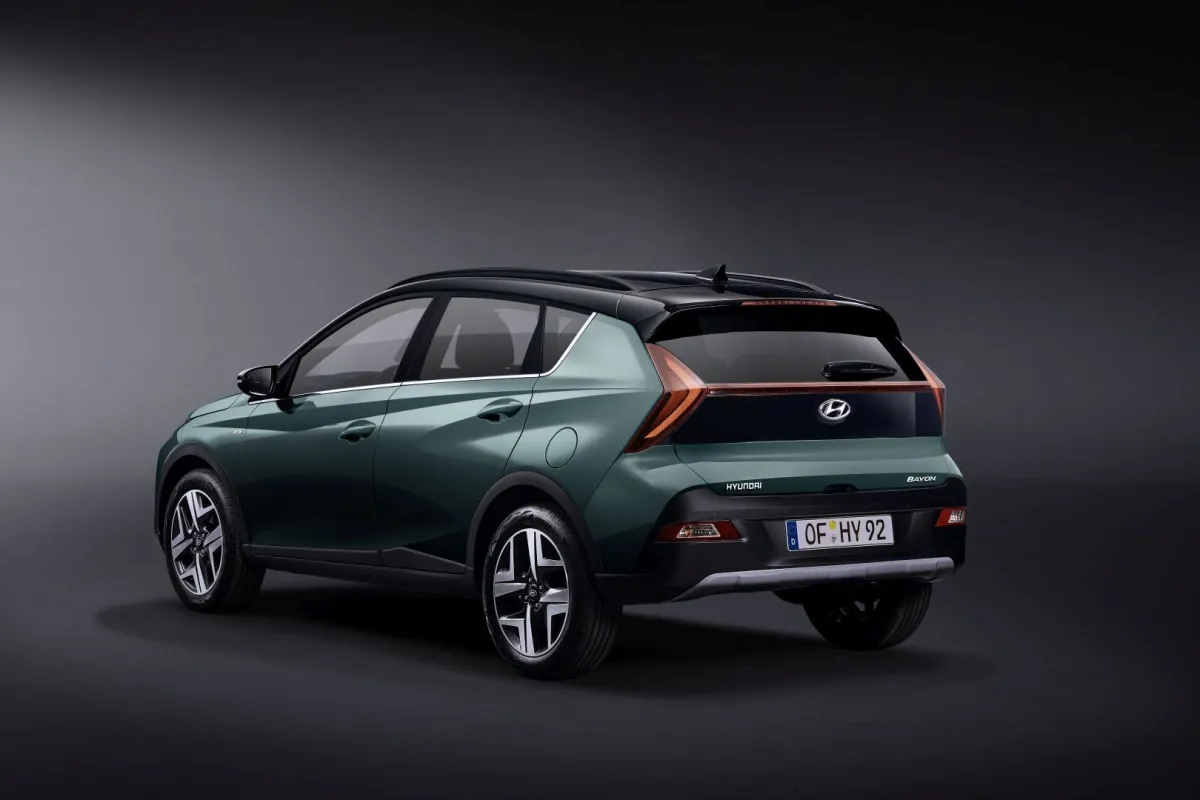
While the Bayon might ring a bell only to the European customers, it doesn't mean anything for the rest of the world. Yet, Hyundai chose that nameplate for its 2021 crossover.

Bayonne is a resort in France, and its pronunciation sounds just like the Hyundai's crossover. Considering that, it might seem that the Bayon was a recreational vehicle, not a daily driver one. Yet it was, and even though it fought on the same segment as the Hyundai Kona, it tried to address different customers and lure them away from other brands.

The Bayon looked a lot bigger than the Kona, which didn't replace it, but it was similar-sized. Its front fascia sported the slim DRLs on the upper side of the bumper, well above headlights. A tall and wide trapezoidal grille covered most of the bumper, while a silver plastic trim mimicked a shield that protected the underbody. From its sides, it looked like a flame-surfacing concept, with various angles and panels sculptured to reflect light in all directions.

Inside, there was roomy enough for four adults, thanks to its compact-sized wheelbase. The Bayon featured a flat floor in the back, which was a good point if there were five people on-board. At the front, the driver enjoyed the multiple displays installed. Its instrument cluster featured a digital 10.25" display for all the information required for driving, while an 8" touch-screen found its place on top of the center stack for the infotainment system.

Under the hood, the Bayon featured a 1.0-liter turbocharged gasoline engine that provided up to 120 hp, combined with a mild-hybrid system. Hyundai offered the crossover with a five-speed manual, a six-speed manual, or a seven-speed automatic (dual-clutch) depending on the market and options.

What did the Hyundai Bayon cost new?

On the Belgian market the Hyundai Bayon started at € 19,500 when it launched in 2022, rising to € 27,000 for the most expensive regular trim. This is the list price for that model year, not a current asking price.

How much power does the Hyundai Bayon have?

The most powerful Hyundai Bayon trim is the 1.0L T-GDi 48V 6iMT (120 HP) with 120 hp. The model has 7 trims, starting at 84 hp.

How quickly does the Hyundai Bayon accelerate from 0 to 100 km/h?

The quickest trim is the 1.0L T-GDi 48V 6iMT (120 HP): 0-100 km/h in 10.4 seconds, with a top speed of 185 km/h.

How large is the cargo volume of the Hyundai Bayon?

The largest stated cargo volume for the Hyundai Bayon is 411 litres.

Other Hyundai models

Hyundai Venue

2020 - present · 6 trims

Power
121 hp
0–100
Fuel economy

Petrol Diesel

Hyundai NEXO

2018 - present · 1 trim

Power
161 hp
0–100
Fuel economy
3.9

Hyundai Mistra

2014 - present · 2 trims

Power
155 hp
0–100
Fuel economy

Petrol

Hyundai Grand i10

2013 - present · 2 trims

Power
83 hp
0–100
Fuel economy

Petrol Diesel