Skip to content
AD

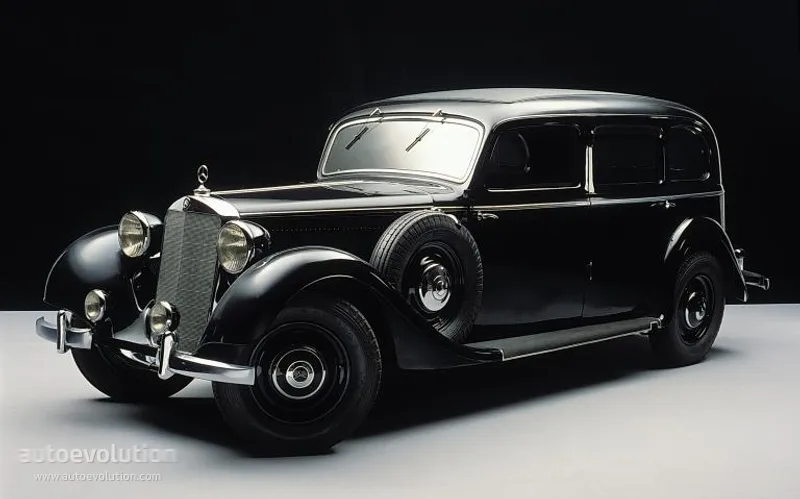
Mercedes-Benz Typ 260 D (W138) (1936 - 1940)

Mercedes-Benz · 4 trims

Mercedes-Benz Typ 260 D (W138)

The Mercedes-Benz Typ 260 D (W138) (1936 - 1940) is available in 4 trims producing 45 to 45 hp. The fastest trim reaches 93 km/h. The lowest stated fuel consumption is 11.0 l/100 km.

Power
45 hp
0–100
Fuel economy
11.0 l/100 km
Cargo

Typ 260 D (W138) Trims

Compare →
Trims and engine versions — Mercedes-Benz Typ 260 D (W138)
Trim Fuel Power Torque 0–100 Top speed Fuel economy CO2 Select
260 D Diesel 45 hp 90 km/h 11.0 l/100 km 291 g/km
260 D (II) Diesel 45 hp 93 km/h 11.0 l/100 km 291 g/km
260 D Pullman Diesel 45 hp 93 km/h 11.0 l/100 km 291 g/km
260 D Pullman (II) Diesel 45 hp 93 km/h 11.0 l/100 km 291 g/km

Fuel economy and CO2 follow the stated test cycle. Manufacturer figures; deviations per market and option pack are possible.

Is Mercedes-Benz Typ 260 D (W138) a good choice against other models?

Average across every Mercedes-Benz Typ 260 D (W138) trim, compared with 104 trims of other cars from the 1933–1939 period.

Is Mercedes-Benz Typ 260 D (W138) a good choice against other models?
Measure This model Average Position
Power 45 hp 97 hp
better than 15%
Top speed 92 km/h 124 km/h
better than 11%
Combined consumption 11.0 l/100 km 17.7 l/100 km
better than 80%
CO2 emissions 291 g/km 450 g/km
better than 88%
Unladen weight 1,587 kg 1,692 kg
better than 52%

Percentages show the share of trims from the same period this model beats on that measure. Manufacturer figures.

Not stated by the manufacturer: torque, acceleration 0–100 km/h and cargo volume. Those measures are left out of the comparison.

Comparable models from other brands

Alfa Romeo Bugatti Renault Honda Subaru

About Mercedes-Benz Typ 260 D (W138)

In February 1936 at the Berlin Motor Show, Daimler-Benz presented the 260 D in the form of a six-seater Pullman landaulet, 13 units of which had been built since July 1935.

At the same show, there was the Hanomag Rekord, another diesel-engined passenger car, although this did not go into series production until 1938. Consequently, the 260 D was the world's first series-produced diesel-engined passenger car. From September 1936, the 260 D was available in more body variants. Apart from the Pullman Landaulet, there were three other versions: a closed Pullman sedan, a four-seater, and a four/five-seater convertible.

In 1937, a facelifted variant was launched with some modifications to the radiator. The headlights were smaller and enclosed in spherical housings, directly attached to the front fenders. That solution led to the dispense of the chrome-plated transverse rod in front of the radiator.

Inside, the 260 D was very spacious due to its long wheelbase. It was offered in various versions, with seating for up to seven passengers. It was mostly used by the cab-companies, proving the fuel-efficiency of the diesel engine.

It featured a 2.6-liter four-cylinder engine that offered 45 hp mated to a four-speed manual transmission with direct-drive fourth gear. By December 1940, 1.967 units of the 260 D, known within the company as the W 138, had been built.

How much power does the Mercedes-Benz Typ 260 D (W138) have?

The most powerful Mercedes-Benz Typ 260 D (W138) trim is the 260 D with 45 hp. The model has 4 trims, starting at 45 hp.

What is the fuel consumption of the Mercedes-Benz Typ 260 D (W138)?

The most economical Mercedes-Benz Typ 260 D (W138) trim is the 260 D, with a stated combined consumption of 11.0 l/100 km and 291 g CO2 per km.

Other Mercedes-Benz models