Skip to content
AD

Mercedes-Benz 170 V Cabriolet A (W136) (1936 - 1942)

Mercedes-Benz · 2 trims

Mercedes-Benz 170 V Cabriolet A (W136)

The Mercedes-Benz 170 V Cabriolet A (W136) (1936 - 1942) is available in 2 trims producing 38 to 50 hp. The fastest trim reaches 109 km/h. The lowest stated fuel consumption is 11.0 l/100 km.

Power
50 hp
0–100
52.0 s
Fuel economy
11.0 l/100 km
Cargo

170 V Cabriolet A (W136) Trims

Compare →
Trims and engine versions — Mercedes-Benz 170 V Cabriolet A (W136)
Trim Fuel Power Torque 0–100 Top speed Fuel economy CO2 Select
170 V 4MT (38 HP) Petrol 38 hp 100 Nm 52.0 s 108 km/h 11.0 l/100 km 261 g/km
170 S 4MT (50 HP) Petrol 50 hp 112 Nm 109 km/h 11.0 l/100 km 261 g/km

Fuel economy and CO2 follow the stated test cycle. Manufacturer figures; deviations per market and option pack are possible.

Is Mercedes-Benz 170 V Cabriolet A (W136) a good choice against other models?

Average across every Mercedes-Benz 170 V Cabriolet A (W136) trim, compared with 106 trims of other cars from the 1933–1939 period.

Is Mercedes-Benz 170 V Cabriolet A (W136) a good choice against other models?
Measure This model Average Position
Power 44 hp 96 hp
better than 14%
Top speed 109 km/h 123 km/h
better than 34%
Combined consumption 11.0 l/100 km 17.6 l/100 km
better than 78%
CO2 emissions 261 g/km 447 g/km
better than 99%
Unladen weight 1,240 kg 1,701 kg
better than 67%

Percentages show the share of trims from the same period this model beats on that measure. Manufacturer figures.

Not stated by the manufacturer: cargo volume. Those measures are left out of the comparison.

Comparable models from other brands

Maruti Suzuki Fiat Citroën Buick Hindustan BMW

About Mercedes-Benz 170 V Cabriolet A (W136)

In 1936, at the International Motor and Motorcycle Show in Berlin, Mercedes-Benz showed the 170 V, 170 H, and 260 D lineups. The 170 V was an important model in the company's heritage.

The design of the new 170 V started in 1933 under the direction of chief design engineer Dr. Hans Nibel and designer Max Wagner. The 170 V to be cheaper than a regular Mercedes-Benz, with the engine in the front and it had to be launched in three years. And the result was the 170 V.

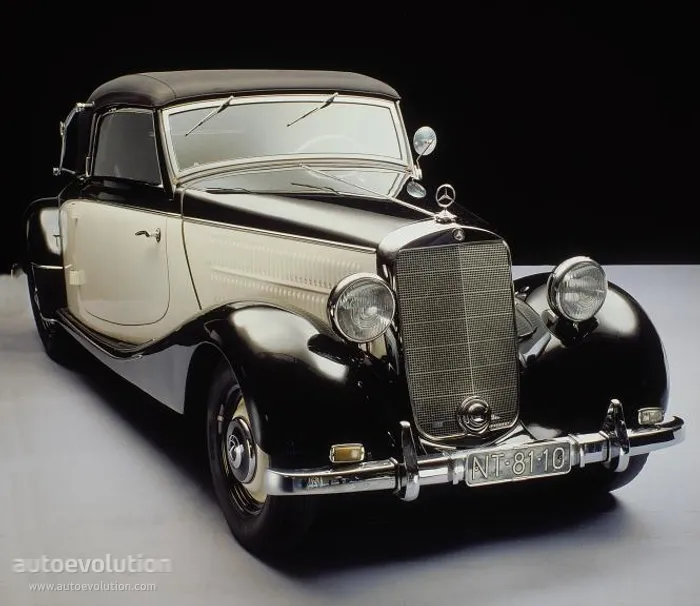
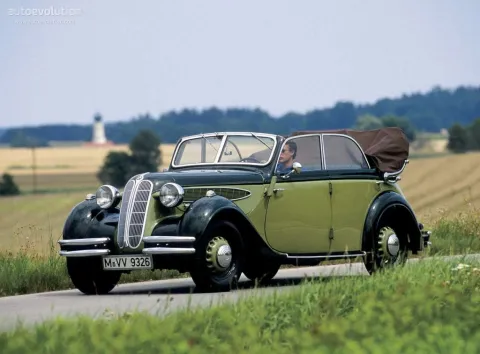
The convertible version shared the same chassis with the rest of the W136 range. Despite a longer wheelbase, the new frame was some 50 kg (110.2 lbs) lighter and also stiffer than the box-section frame previously used in the 170. The car featured a long hood, short cabin, and sloped end where the spare-wheel was installed. The specific Mercedes-Benz grille in the front was tall and narrow. Unlike other Mercedes-Benz from that era, the headlights were mounted on the front fenders and not on a chromed bar.

It was the roadster for those who couldn't afford an expensive model and Mercedes-Benz didn't want to lose those customers in favor of BMW, who already had a 2-seat convertible on the market. For those who wished a four-seat cabriolet, Mercedes-Benz built the Cabriolet B, which featured the same chassis and drivetrain, but with a longer cabin and a shorter back.

The 170 Cabriolet A featured an inline-four engine with a 1.7-liter displacement. It was mated to a four-speed gearbox. The Convertible A was the most expensive 170 V. It was fitted with the newly developed rear swing axle, which allowed better comfort and speed cornering.

How much power does the Mercedes-Benz 170 V Cabriolet A (W136) have?

The most powerful Mercedes-Benz 170 V Cabriolet A (W136) trim is the 170 S 4MT (50 HP) with 50 hp. The model has 2 trims, starting at 38 hp.

What is the fuel consumption of the Mercedes-Benz 170 V Cabriolet A (W136)?

The most economical Mercedes-Benz 170 V Cabriolet A (W136) trim is the 170 V 4MT (38 HP), with a stated combined consumption of 11.0 l/100 km and 261 g CO2 per km.

How quickly does the Mercedes-Benz 170 V Cabriolet A (W136) accelerate from 0 to 100 km/h?

The quickest trim is the 170 V 4MT (38 HP): 0-100 km/h in 52.0 seconds, with a top speed of 108 km/h.

Other Mercedes-Benz models