Skip to content
AD

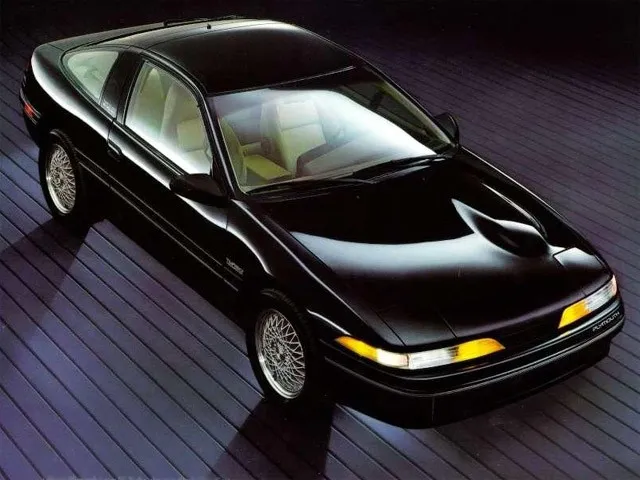
Plymouth Laser (1989 - 1994)

Plymouth · 6 trims

Plymouth Laser

The Plymouth Laser (1989 - 1994) is available in 6 trims producing 94 to 195 hp. The fastest trim reaches 230 km/h.

Power
195 hp
0–100
8.7 s
Fuel economy
Cargo
289 l

Laser Trims

Compare →
Trims and engine versions — Plymouth Laser
Trim Fuel Power Torque 0–100 Top speed Fuel economy CO2 Select
1.8i 4AT (94 HP) Petrol 94 hp 142 Nm 171 km/h
1.8i 5MT (94 HP) Petrol 94 hp 142 Nm 175 km/h
2.0i 4AT (137 HP) Petrol 137 hp 169 Nm 11.4 s 182 km/h
2.0i 5MT (137 HP) Petrol 137 hp 169 Nm 8.7 s 195 km/h
2.0i Turbo 4AT (195 HP) Petrol 195 hp 276 Nm 230 km/h
2.0i Turbo 5MT (195 HP) Petrol 195 hp 276 Nm 230 km/h

Fuel economy and CO2 follow the stated test cycle. Manufacturer figures; deviations per market and option pack are possible.

Is Plymouth Laser a good choice against other models?

Average across every Plymouth Laser trim, compared with 1,627 trims of other cars from the 1986–1992 period.

Is Plymouth Laser a good choice against other models?
Measure This model Average Position
Power 142 hp 130 hp
better than 68%
Torque 196 Nm 196 Nm
better than 63%
Top speed 197 km/h 188 km/h
better than 67%
Acceleration 0–100 km/h 10.1 s 11.8 s
better than 67%
Cargo volume 289 l 441 l
better than 18%
Unladen weight 1,217 kg 1,249 kg
better than 47%

Percentages show the share of trims from the same period this model beats on that measure. Manufacturer figures.

Not stated by the manufacturer: combined consumption and co2 emissions. Those measures are left out of the comparison.

Comparable models from other brands

Ferrari Bentley Toyota GMC Chevrolet Xpeng

About Plymouth Laser

Plymouth filled the gap after the dismissal of Eagle brand and carried over a few models from the axed car brand, such as the Laser.

Designed and built in Normal - Illinois at the Diamond Star plant, the Laser was a rebadged Mitsubishi Eclipse first generation, but without the all-wheel-drive variants offered by the Japanese brand. Plymouth tried to offer a budget sporty compact coupe vehicle under a $20,000 mark and succeeded.

The car’s exterior featured a narrow front end and a flat hood adorned by a bulge. Its short cabin and sloped rear window made the car a fierce competitor for the sport compact market. Its pop-up headlights spoiled the car’s look when they were open but made it look sleek with them closed down. At the back, the horizontal lines with sharp edges left the impression of a much wider car.

Inside, the front seats provided enough room for two adult-sized occupants, but the rear seats were cramped even for small children. Yet, they were good enough to carry some luggage for a longer trip. The trunk was not exactly spacious but was good enough for daily shopping.

Under the hood, Plymouth relied exclusively on Mitsubishi’s engines, either naturally aspirated or turbocharged. The latter and most potent version featured the famous 4G63 powerplant installed on the Lancer rally car as well. Unlike its more famous cousin, the Laser was available only as a front-wheel-drive vehicle. But it could still get an under eight-second nought-to-60 mph (0-97 kph) time.

How much power does the Plymouth Laser have?

The most powerful Plymouth Laser trim is the 2.0i Turbo 4AT (195 HP) with 195 hp. The model has 6 trims, starting at 94 hp.

How quickly does the Plymouth Laser accelerate from 0 to 100 km/h?

The quickest trim is the 2.0i 5MT (137 HP): 0-100 km/h in 8.7 seconds, with a top speed of 195 km/h.

How large is the cargo volume of the Plymouth Laser?

The largest stated cargo volume for the Plymouth Laser is 289 litres.

Other Plymouth models

Plymouth Acclaim

1989 - present · 3 trims

Power
143 hp
0–100
Fuel economy

Petrol

Plymouth Breeze

1996 - present · 3 trims

Power
152 hp
0–100
Fuel economy

Petrol

Plymouth 1967

Unknown · 1 trim

Power
127 hp
0–100
13.4 s
Fuel economy

Petrol