About Renault Pulse
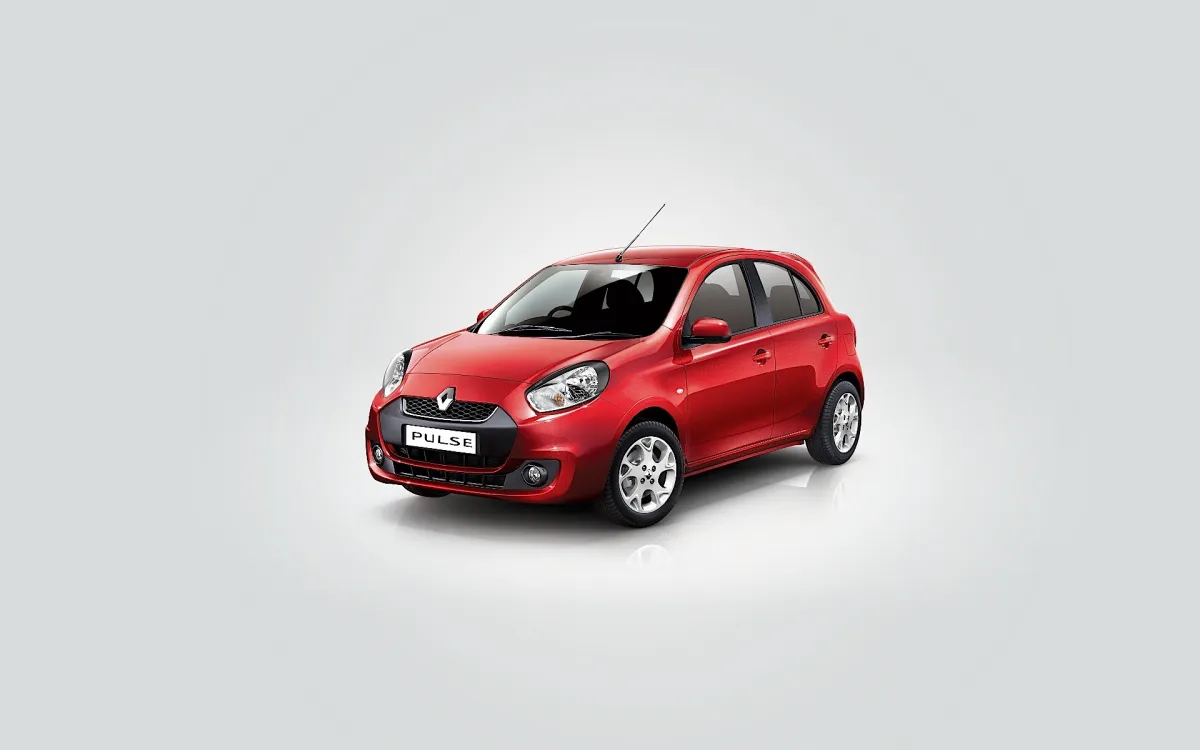
Renault adopted the badge-engineering method when it tried to enter the Indian market with an affordable vehicle, and the result was the 2011 Renault Pulse.
After joining forces with Nissan and forming the Renault-Nissan Alliance, the French automaker started to find ways of boosting its profits. One way was to use already developed platforms on re-badged vehicles. So, after it introduced the Fluence sedan and the Koleos SUV, the French brand launched the Pulse, which it built in India to avoid high customs taxes. This model targeted young customers with its low starting price and fuel-efficient engines.
The Pulse featured a modified front fascia, which was different from the Nissan Micra’s fourth generation. Renault installed a black, unpainted cross beam in front of the radiator, which, in turn, sported a hexagonal pattern. On the apron, the small-sized vehicle could be equipped with fog lamps and a silver skid plate that protected the engine from road debris. Still, that was made from plastic, not metal.
From its profile, the curved lines of the bodywork led to a bubble-like greenhouse that started with a panoramic windshield. Unlike the Micra, which was available in three or five-door configurations, the Pulse was offered only in the latter version. To cut costs but still keep the car looking good, the automaker installed black door handles but body-colored door mirror caps. The base version was fitted with steel wheels, while the upper trim levels got a set of alloys. Finally, at the back, the Pulse featured corner-mounted vertical taillights that flanked the tailgate. In addition, a roof spoiler sat atop the rear window. As a final design tweak, the car sported a black lower area on the rear bumper that echoed the front side of the vehicle.
Inside, depending on the grade, the Pulse featured a single or a two-tone dashboard. On the center stack, the automaker placed the CD stereo and, underneath it, the controls for the HVAC system. While it couldn’t brag about its high-quality materials, the car tried to look upscale with its rounded shapes. In front of the driver, the half-oval instrument cluster featured a large speedometer that took center stage and was flanked by the rev counter on the left and a small LCD on the right that showed the odometer and the fuel level. The front bucket seats provided enough comfort for its customers, while the bench seat in the back could host two passengers or three for short jaunts.
The Pulse came fitted with either a 1.2-liter gasoline engine or a turbo-diesel powerplant. Both were paired with a five-speed manual transmission that sent the power to the front wheels. Thanks to the reinforced independent front suspension and the torsion beam in the back, the Pulse could handle well with bad or poorly maintained roads.