Skip to content
AD

Volvo 262 C (1977 - 1981)

Volvo · 2 trims

Volvo 262 C

The Volvo 262 C (1977 - 1981) is available in 2 trims producing 140 to 155 hp. The fastest trim reaches 190 km/h.

Power
155 hp
0–100
10.0 s
Fuel economy
Cargo
614 l

262 C Trims

Compare →
Trims and engine versions — Volvo 262 C
Trim Fuel Power Torque 0–100 Top speed Fuel economy CO2 Select
2.7L V6 4MT RWD (140 HP) Petrol 140 hp 204 Nm 10.6 s 190 km/h
2.8L V6 5MT RWD (155 HP) Petrol 155 hp 234 Nm 10.0 s 185 km/h

Fuel economy and CO2 follow the stated test cycle. Manufacturer figures; deviations per market and option pack are possible.

Is Volvo 262 C a good choice against other models?

Average across every Volvo 262 C trim, compared with 468 trims of other cars from the 1974–1980 period.

Is Volvo 262 C a good choice against other models?
Measure This model Average Position
Power 148 hp 128 hp
better than 71%
Torque 219 Nm 196 Nm
better than 68%
Top speed 188 km/h 178 km/h
better than 69%
Acceleration 0–100 km/h 10.3 s 12.6 s
better than 67%
Cargo volume 614 l 416 l
better than 93%
Unladen weight 1,418 kg 1,301 kg
better than 33%

Percentages show the share of trims from the same period this model beats on that measure. Manufacturer figures.

Not stated by the manufacturer: combined consumption and co2 emissions. Those measures are left out of the comparison.

Comparable models from other brands

Holden Chevrolet Hyundai Alfa Romeo DS Automobiles Peugeot

About Volvo 262 C

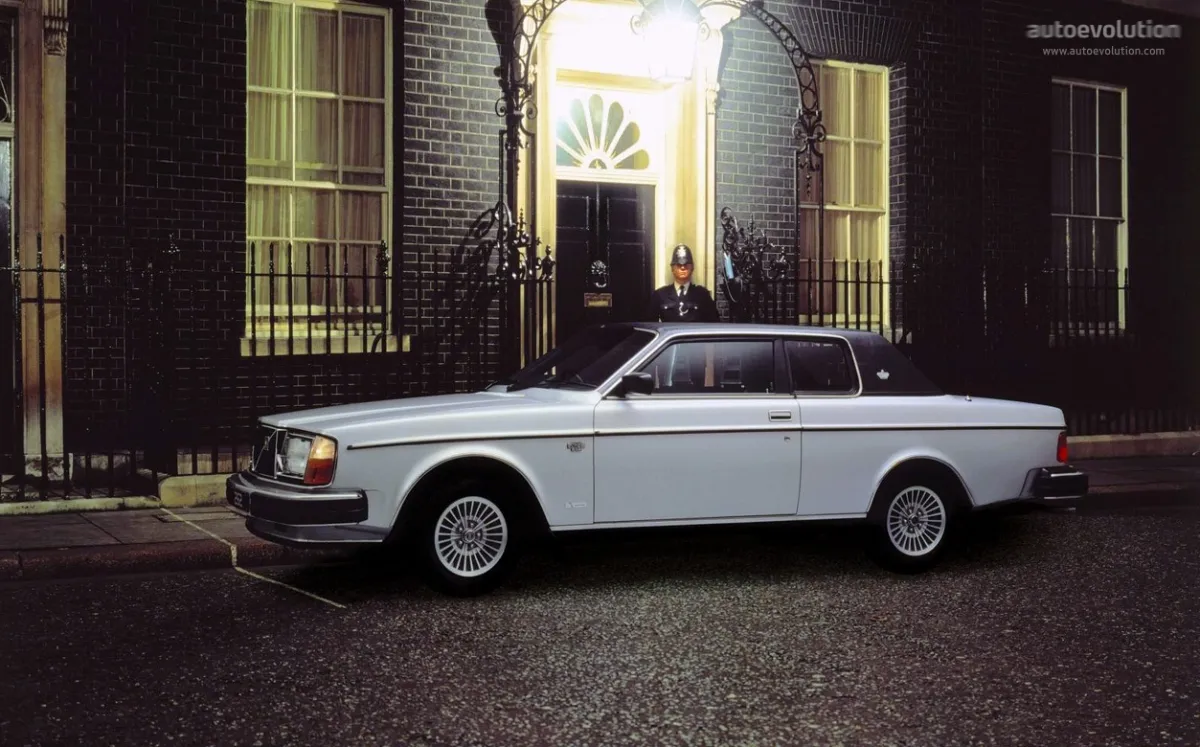
Volvo tried a new approach on the market and introduced the 262C as a personal luxury coupe in 1977 with some help from Bertone.

Volvo was focused more on safety and reliability than on performance, but it still had to admit that coupes were the head-turners in the automotive industry. At least, that was true back in the mid-70s when the 262C appeared on the market. Then, the coupe was based on the regular 200-series sedan, fitted with a six-cylinder engine and a bodywork built, in part, by Bertone in Italy.

In the U.S., the "chop the roof" way of modding cars was extensively used by individuals. On the other hand, Volvo called Bertone and cut a deal with the Italian company. While the design was signed by a Swedish, the bodywork's final assembly was made in Bertone's factory. The car sported a flat front fascia with the Volvo-specific wedged shapes for the grille and headlights. With a roof lowered by some 10 cm (4") than the regular sedan, a thick C-pillar, and narrow windows and windshield, it looked like a tank without a gun.

Inside, the cabin was fitted with the most luxurious items that Volvo had in its basket. It had everything fitted as standard, from the leather-wrapped seats to the wood trims on the dash and door cards. Moreover, even though the Swedish customers didn't need an air-conditioning unit, that was also a standard feature. In addition to the front bucket seats, the automaker also installed a bench for two in the back. Still, due to the limited headroom, it wasn't easy to send someone there unless it was a child.

Under the hood, Volvo installed its latest powerplant; the 2.7-liter PRV engine developed together with Peugeot and Renault. It didn't provide too much power, but thanks to the fuel-injected system, it had a decent fuel efficiency.

How much power does the Volvo 262 C have?

The most powerful Volvo 262 C trim is the 2.8L V6 5MT RWD (155 HP) with 155 hp. The model has 2 trims, starting at 140 hp.

How quickly does the Volvo 262 C accelerate from 0 to 100 km/h?

The quickest trim is the 2.8L V6 5MT RWD (155 HP): 0-100 km/h in 10.0 seconds, with a top speed of 185 km/h.

How large is the cargo volume of the Volvo 262 C?

The largest stated cargo volume for the Volvo 262 C is 614 litres.

Other Volvo models

Volvo 343

1976 - 1982 · 3 trims

Power
95 hp
0–100
12.5 s
Fuel economy
9.0

Petrol

Volvo 66

1975 - 1981 · 2 trims

Power
57 hp
0–100
18.5 s
Fuel economy

Petrol

Volvo 345

1979 - 1982 · 3 trims

Power
95 hp
0–100
12.5 s
Fuel economy
9.0

Petrol

Volvo 244

1975 - 1990 · 8 trims

Power
155 hp
0–100
9.0 s
Fuel economy
8.3

Petrol Diesel

Volvo 245

1975 - 1990 · 8 trims

Power
155 hp
0–100
9.0 s
Fuel economy
8.7

Petrol Diesel

Volvo 265

1980 - 1982 · 1 trim

Power
155 hp
0–100
10.0 s
Fuel economy
12.6

Petrol