About Holden Epica
Introduced at the 2006 Geneva Motor Show, the Daewoo Epica was renamed the Holden Epica and shipped to Australia for the 2007 model year and became a significant contender in the mid-size sedan market segment.
After General Motors bought the troubled automaker Daewoo in 2001, the American car giant worked relentlessly to improve the Korean brand. As a result, in 2002, it launched the replacement for the Leganza mid-size sedan with the Magnus, which lasted just four years on the market before it introduced the Epica. The new model was sold under different nameplates, depending on the country. As an Australian brand and part of the GM group, Holden placed its badge on the car, introduced the Epica model in 2007, and entered into the mid-size sedan segment with a well-equipped vehicle built in South Korea.
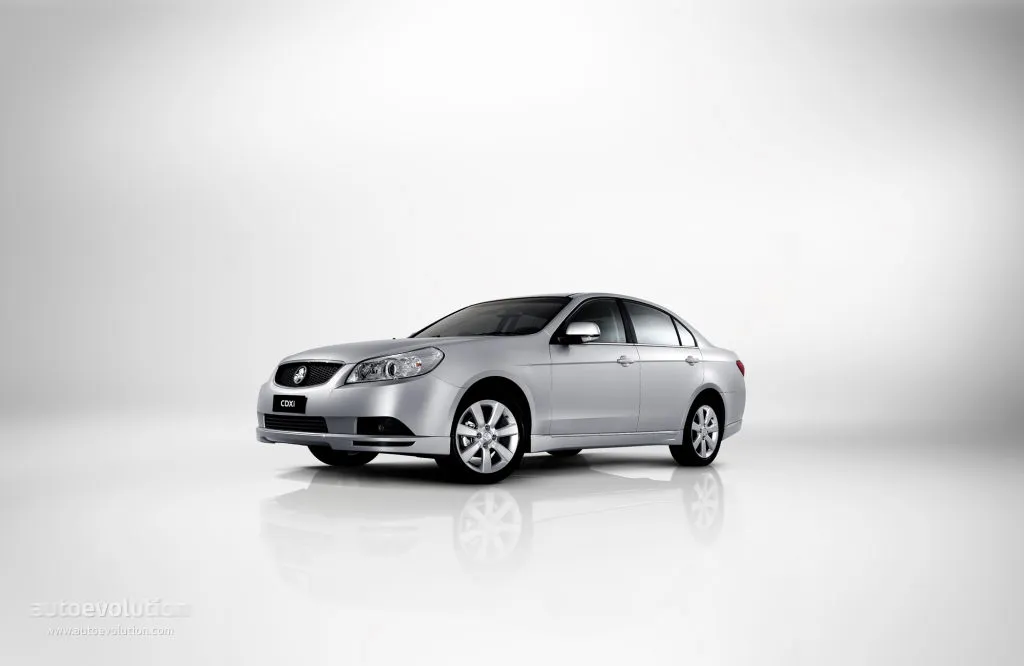
While the car’s overall shape resembled the Magnus, its front fascia was entirely new. It featured swept-back headlights that mixed curved organic shapes with sharp corners. The broad grille between them sported the Holden badge in the middle and was decorated by chromed trims. On the lower side of the wrapped-around plastic bumper, the 2007 Holden Epica sported a rectangular air intake in the middle flanked by a pair of side scoops that housed the round fog lamps.
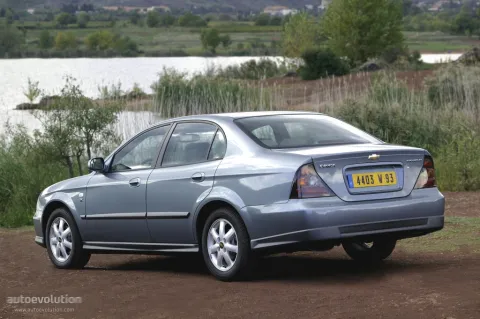
The car’s athletic profile was emphasized by the ascending waistline, thus creating a sporty look for the vehicle. Furthermore, the cab-forward design featured large glass areas and a sloped rear window. The short deck behind it was flat. The 2007 Holden Epica was initially available in two grades: the CDX and the CDXi, depending on the engine where the former ran on 16-inch alloy wheels while the latter was shod with a 17-inch set. As an option, both versions could be optioned with an 18-inch set. The body-colored door mirrors and handles gave the Epica an upscale look, and it soon became a contender for the reckoned and more potent Commodore lineup.
Thanks to its roomy cabin, the 2007 Holden Epica was appreciated by its customers. The rounded, two-tone dashboard featured a center stack that housed a display for the climate control system, the six-CD in-dash sound system, and an ashtray at the bottom. The four-spoke steering wheel with buttons for the onboard computer and sound system framed a three-dial instrument cluster where the speedometer took center stage. It was flanked on the left by the tachometer, while on the right were the gauges for the fuel level and the coolant temperature. The cloth-covered front seats were comfortable and provided some side bolstering. At the same time, in the back, customers could enjoy the split-folding (60/40) bench seat wide enough for three adults. In addition, Holden offered a leather-wrapped interior.
At the car’s launch, the 2007 Holden Epica was available with a choice of two transversely-mounted inline-six engines with a displacement of 2.0- and 2.5-liter, respectively, developed by Porsche. Both versions were paired with a five-speed manual transmission that sent the power to the front wheels. The latter was also available with a six-speed automatic gearbox. Later, the car manufacturer added a 2.0-liter turbodiesel powerhouse that provided excellent fuel efficiency. Its independent suspension in all corners was also a plus for the car since it provided improved ride quality over some of its competitors that still used a twisting beam system.