About Holden Tigra
Holden made a surprising move and entered the small-sized convertible segment in 2005 with the Tigra, a rebadged version of the European 2004 Opel/Vauxhall Tigra.
In 2004, Opel introduced the second generation of its small-sized, sporty-looking vehicle, the Tigra. Unlike its predecessor, which was a coupe-only affair, this generation came as an open-top version. Furthermore, it wasn't fitted with a canvas top, like other Opel convertibles before, but with a retractable hard top, like the segment-leader Peugeot 206 CC. The appealing vehicle looked so daring and cost GM so much that the car giant pushed it on all markets, including the Australian one, where it was badged as Holden. The car was based on the same platform as the third generation's Opel/Vauxhall/Holden Corsa.
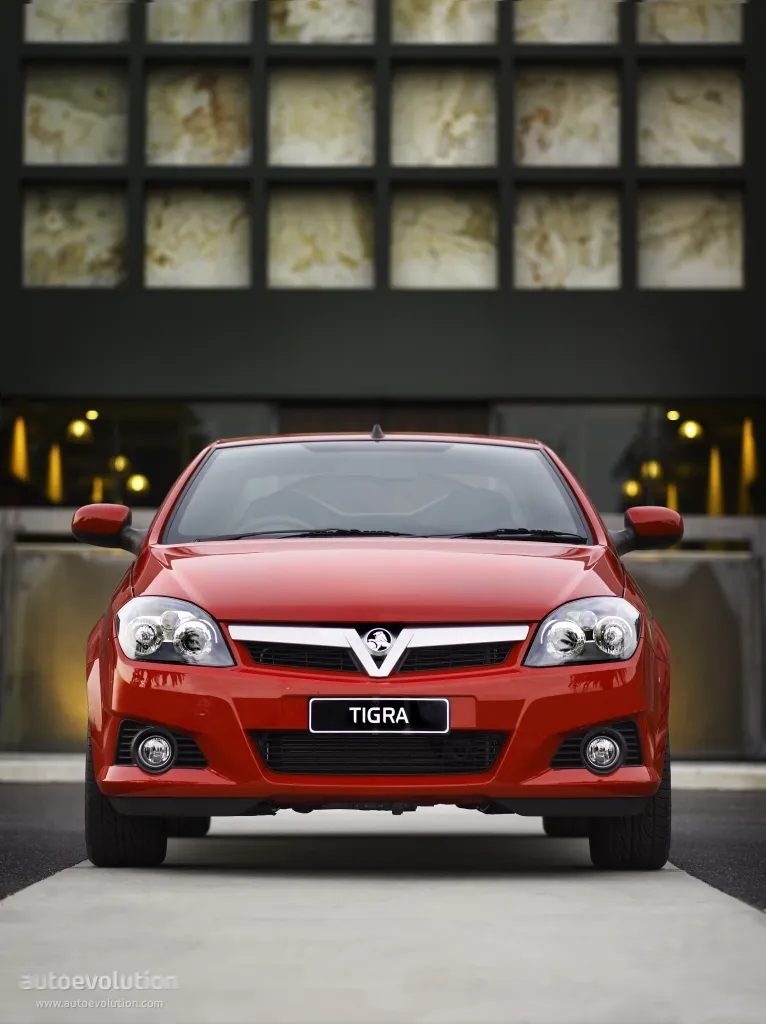
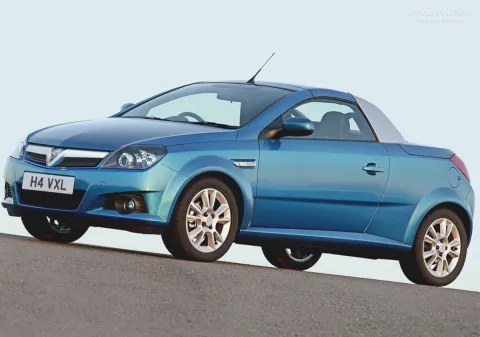
At the front, the 2005 Holden Tigra followed the new-edge design styling with rounded lines and sharp angles. Its swept-back rhomboidal headlights sported clear lenses over the dual-headlamps unit and the blinkers. Between them, the automaker installed a thick chromed slat over the grille, with a V-shape in the middle that supported the brand's badge. Lower, on the wrapped-around plastic bumper, the automaker placed a second air intake in the middle and a pair of side scoops that housed the round fog lamps.
With its roof up, the 2005 Holden Tigra looked like a sporty-looking, small-sized coupe. While the raked windshield looked suitable for such a vehicle, the unusually steep angle of the rear window seemed rather unusual. However, with the roof down, the car revealed its main character as an attractive roadster with a short, flat deck behind the cabin. Furthermore, Holden offered the car with color-keyed door mirrors and handles, alloy wheels, and aerodynamic side skirts. Out back, the taillights' shape echoed the headlights and flanked the trunk's wide opening. Unfortunately, the only way to open or close the lid was to keep a button pressed. There was no manual option since the entire assembly was part of the retractable hardtop system.
Despite the seductive exterior look, the interior resembled too much of the low-priced Corsa lineup. The hard-plastic materials, the hump on the dashboard for the onboard computer's screen, and the faded silver shades on the center stack were not exactly what a customer craved on a roadster. On the plus side, the bolstered seats provided enough lateral support for their occupants. Unlike the Corsa, there were no seats in the back. The automaker considered that developing a bench seat there was just a waste of time and money since the short wheelbase wouldn't allow any legroom for someone seated there.
While GM offered the Opel/Vauxhall Tigra with a choice of two engines in Europe, the automaker considered that the 1.4-liter version shouldn't be provided in Australia. As a result, Holden offered the car only with the 1.8-liter gasoline powerhouse. To simplify things, it offered the small roadster only with a five-speed manual gearbox, which sent the power to the front wheels.