Skip to content
AD

Caterham Classic (2000 - present)

Caterham · 1 trim

Caterham Classic

The Caterham Classic (2000 - present) is available in 1 trims producing 105 to 105 hp. The fastest trim reaches 177 km/h. The lowest stated fuel consumption is 7.0 l/100 km.

Power
105 hp
0–100
6.5 s
Fuel economy
7.0 l/100 km
Cargo
74 l

Classic Trims

Compare →
Trims and engine versions — Caterham Classic
Trim Fuel Power Torque 0–100 Top speed Fuel economy CO2 Select
1.4 5MT (105 HP) Petrol 105 hp 129 Nm 6.5 s 177 km/h 7.0 l/100 km

Fuel economy and CO2 follow the stated test cycle. Manufacturer figures; deviations per market and option pack are possible.

Is Caterham Classic a good choice against other models?

Average across every Caterham Classic trim, compared with 4,683 trims of other cars from the 1997–2003 period.

Is Caterham Classic a good choice against other models?
Measure This model Average Position
Power 105 hp 157 hp
better than 26%
Torque 129 Nm 245 Nm
better than 11%
Top speed 177 km/h 200 km/h
better than 24%
Acceleration 0–100 km/h 6.5 s 10.7 s
better than 93%
Combined consumption 7.0 l/100 km 8.4 l/100 km
better than 65%
Cargo volume 74 l 503 l
better than 0%
Unladen weight 525 kg 1,394 kg
better than 100%

Percentages show the share of trims from the same period this model beats on that measure. Manufacturer figures.

Not stated by the manufacturer: co2 emissions. Those measures are left out of the comparison.

Comparable models from other brands

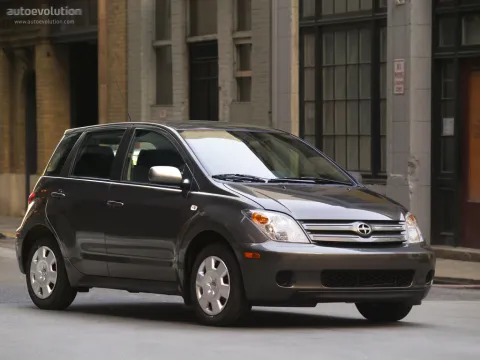
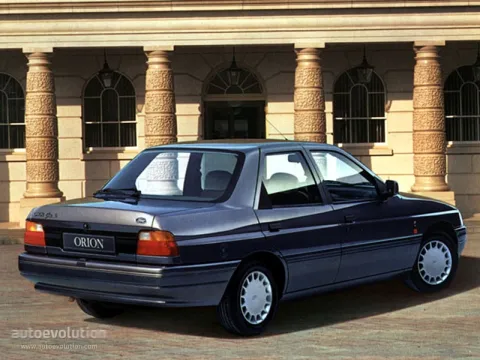
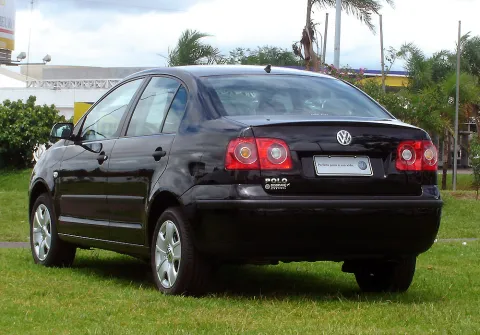
Daewoo Alfa Romeo Scion Ford Volkswagen

About Caterham Classic

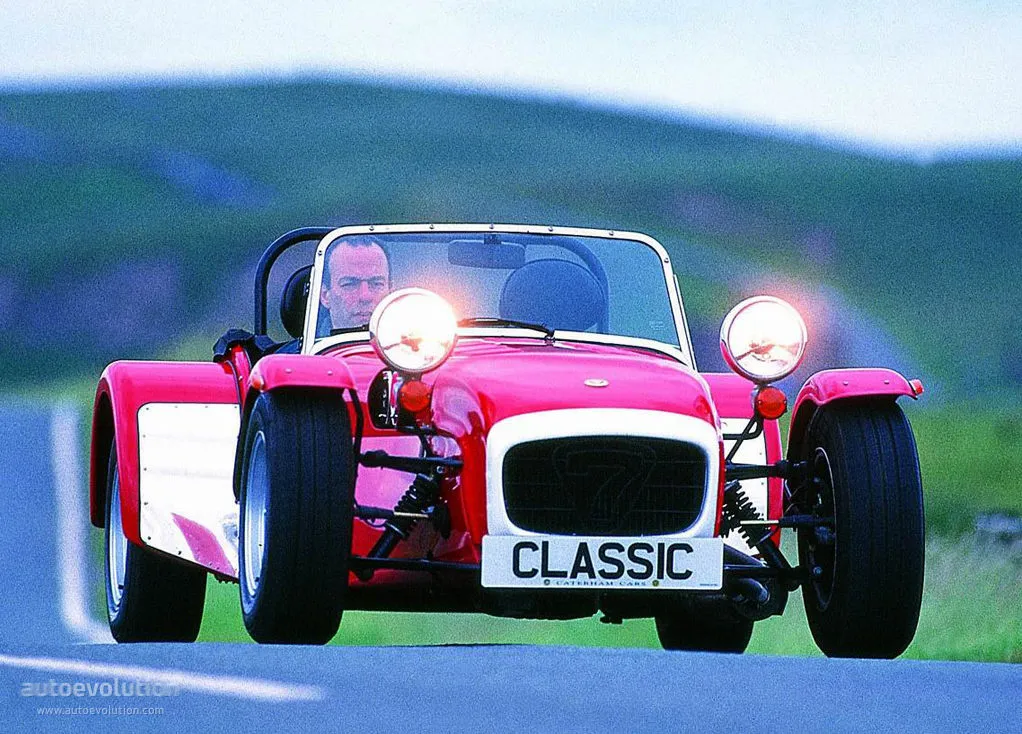
Caterham was the only car manufacturer that bought the rights to build the Lotus Seven and improved it over the years. It was an ultimate roadster/toy/track-day weapon.

Collin Chapman designed the Lotus Seven in the '50s, and it was the quintessence of a road-legal race-car. Many cars pretended to be race-cars with number plates, but none of them could be what the Seven was. The British engineer had one goal: to mount an engine into a car that was as light as possible. Graham Nearm, a former Lotus dealer, bought Lotus's rights and built the Seven after the carmaker dropped the roadster from its lineup.

The construction was simple: a set of aluminum panels attached to a tubular steel chassis. The exposed suspension struts and the separate fenders were typical for Caterham vehicles, while its round headlights were attached to the bodywork via chromed mounts. Like the original model, the little roadster featured a straight windshield and a small cabin big enough to fit two occupants separated by the tall center tunnel. Behind them, there was only the rear axle and a vertical panel.

It is hard to say about the Caterham that it had an interior. It was just a place with two seats, a dash panel, and a steering wheel. A few buttons and switches were installed for lights, wipers, and a hazard button. The bucket-seats were designed to hold their occupants in place while hard cornering since the Caterham was known for its high-speed cornering abilities.

Under the hood, there was an inline-four engine that sent its power to the rear wheels. Despite its low power, it could rocket the car to 100 kph (62 mph) in under seven seconds.

How much power does the Caterham Classic have?

The most powerful Caterham Classic trim is the 1.4 5MT (105 HP) with 105 hp. The model has 1 trims, starting at 105 hp.

What is the fuel consumption of the Caterham Classic?

The most economical Caterham Classic trim is the 1.4 5MT (105 HP), with a stated combined consumption of 7.0 l/100 km and — g CO2 per km.

How quickly does the Caterham Classic accelerate from 0 to 100 km/h?

The quickest trim is the 1.4 5MT (105 HP): 0-100 km/h in 6.5 seconds, with a top speed of 177 km/h.

How large is the cargo volume of the Caterham Classic?

The largest stated cargo volume for the Caterham Classic is 74 litres.

Other Caterham models

Caterham CSR

2005 - present · 2 trims

Power
264 hp
0–100
3.1 s
Fuel economy
10.2

Petrol