About Caterham Supersport
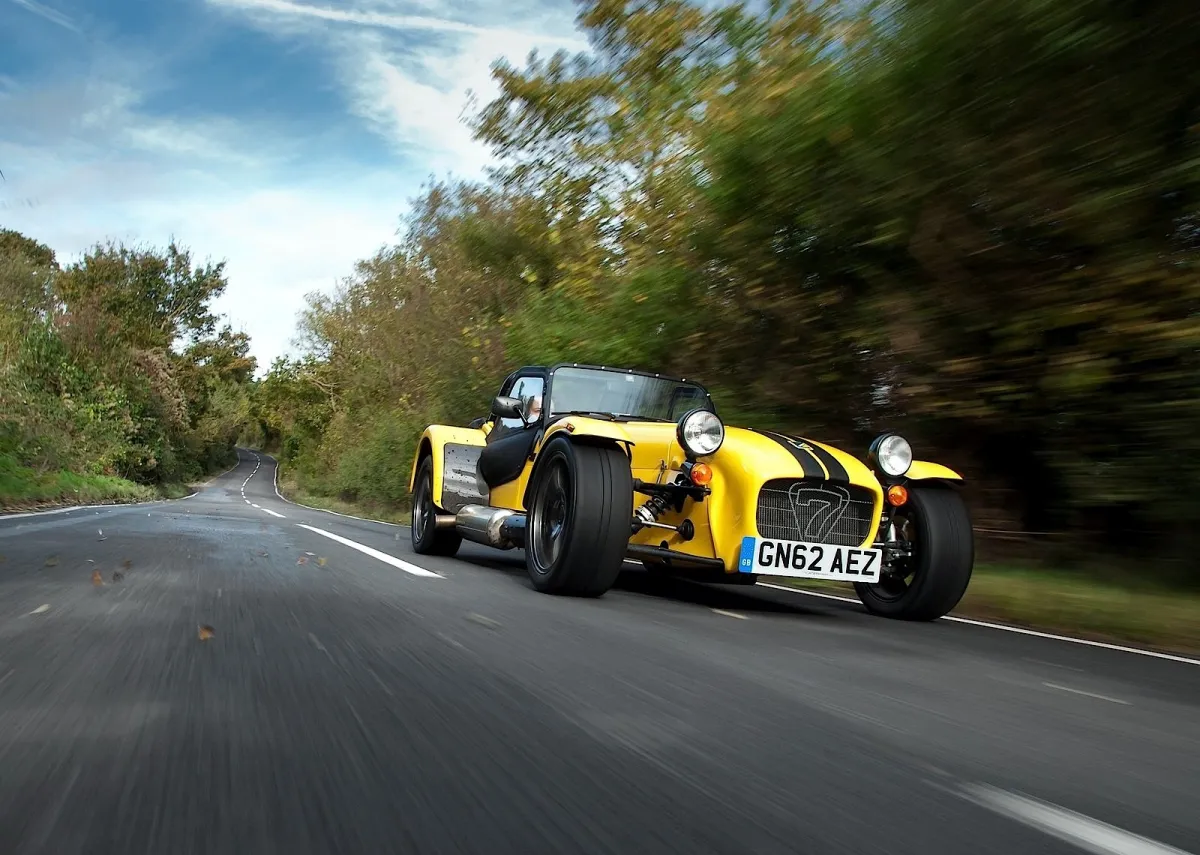
Caterham was already known in the world of lightweight and fast vehicles. It used the same recipe prescribed by the famous Colin Chapman back in the late 50s when it made the famous Lotus Seven but added some modern touches to the car. The result was a nimble two-seater with go-kart handling and supersport car 0 to 60 mph (0-97 kph) time. Last but not least, these were very affordable compared to their performance.
When Colin Chapman founded Lotus Cars in the late 40s, his idea was "Simplify, then add lightness." As a result, he created special sports cars for those who didn't need or want any unnecessary items inside their vehicles when they were going around a track. One of his masterpieces was the Lotus Seven. It was considered the epitome of lightweight, designed for sports vehicles. It only had an engine, a gearbox, a chassis, and minimal bodywork to cover mechanical parts, but not the cockpit. In 1973, he sold the rights to produce that vehicle to Caterham Cars, and this company continued to make it and improve it over time.
The Supersport kept the original concept intact. It featured a low and long engine compartment compared to the overall length of the vehicle. The exposed suspension elements for the front suspension and the minimalist front fenders that covered only the wheels added more character to the Caterham Seven. The doors, just like on the rest of the Caterham vehicles, were only needed if the occupants needed some protection against rain. Behind the cabin, another set of fenders covered the rear wheels, and then the car ended with an almost vertical, yet slightly tilted forward, panel.
Inside the cockpit, the driver and their side passengers were divided by the transmission tunnel where the carmaker installed a short gear stick. In front of them was a flat panel that supported several dials that showed the engine's revs, oil and water temperature, oil pressure, and the speedometer. A thick, removable steering wheel fronted the driver. Caterham installed a pair of thin plastic high-bolstered bucket seats that were barely padded with a thin layer of fabric to provide not just some comfort but mostly friction so the occupants wouldn't slide out during high-speed cornering maneuvers.
Under the hood, the car manufacturer installed a Ford 1.6-liter naturally aspirated engine tuned to produce 139 HP (142 PS). Even though this value was not impressive, it did its job very well thanks to the light weight of the vehicle. Thanks to the 520 kg (1146 lbs), the power-to-weight ratio was fantastic, allowing the car to sprint from naught to sixty in a mere 4.9 seconds with a top speed of 120 MPH (194 kph).