Skip to content
AD

Dacia 1320 (1988 - 1991)

Dacia · 2 trims

Dacia 1320

The Dacia 1320 (1988 - 1991) is available in 2 trims producing 54 to 65 hp. The fastest trim reaches 150 km/h. The lowest stated fuel consumption is 8.4 l/100 km.

Power
65 hp
0–100
15.4 s
Fuel economy
8.4 l/100 km
Cargo
328 l

1320 Trims

Compare →
Trims and engine versions — Dacia 1320
Trim Fuel Power Torque 0–100 Top speed Fuel economy CO2 Select
1.3L 5MT (54 HP) Petrol 54 hp 88 Nm 18.6 s 140 km/h 8.4 l/100 km
1.4L 5MT (65 HP) Petrol 65 hp 100 Nm 15.4 s 150 km/h 9.0 l/100 km

Fuel economy and CO2 follow the stated test cycle. Manufacturer figures; deviations per market and option pack are possible.

Is Dacia 1320 a good choice against other models?

Average across every Dacia 1320 trim, compared with 1,429 trims of other cars from the 1985–1991 period.

Is Dacia 1320 a good choice against other models?
Measure This model Average Position
Power 60 hp 129 hp
better than 5%
Torque 94 Nm 193 Nm
better than 5%
Top speed 145 km/h 187 km/h
better than 5%
Acceleration 0–100 km/h 17.0 s 11.9 s
better than 8%
Combined consumption 8.7 l/100 km 8.9 l/100 km
better than 43%
Cargo volume 328 l 450 l
better than 28%
Unladen weight 900 kg 1,239 kg
better than 90%

Percentages show the share of trims from the same period this model beats on that measure. Manufacturer figures.

Not stated by the manufacturer: co2 emissions. Those measures are left out of the comparison.

Comparable models from other brands

Citroën Toyota Fiat Ford Honda Maruti Suzuki

About Dacia 1320

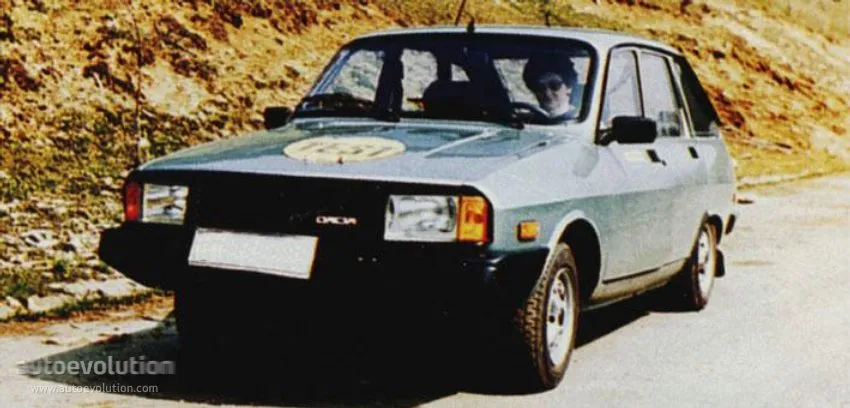
Dacia engineers tried to make a different vehicle based on the same old Renault 12 platform and started with a reshaped bodywork named 1320.

The Romanian carmaker produced a limited series from the Renault 20, re-named as Dacia 2000, which was available only for high-ranking members of the communist party. But Ceausescu liked the car and ordered the local carmaker to create something similar, and the result was named 1320. It resulted in two different vehicles, named locally as CN1 and CN2, respectively.

Both vehicles sported the same front fascia with squared headlights and a plastic grille with horizontal slats. The wrapped-around black plastic bumper featured a lower apron. Dacia used the same color for the flush door-handles and mirrors. Unlike the 1325 (CN2 – Liberta), the 1320 sported a longer rear end with a big tailgate but without a rear wiper. Dacia carried over its taillights from the 1310 sedan sibling.

Inside, there was a new dashboard with a taller center stack. Unlike the previous Dacia models, it sported more vents and a bigger glove-compartment. Its instrument cluster displayed all sorts of information regarding oil pressure, ammeter, and oil temperature, apart from the regular speedometer, tachometer, fuel level, and coolant temperature. Its rear bench was folding in one piece. The driver could have manually adjusted the door mirrors from inside, and there was no option for power windows or locks.

Under the hood, Dacia installed the same old 1.4-liter engine based on the even older Renault's 1.3-liter engine with carburetor and on-head valves. A five-speed manual was the only option available. Like its 1325 sibling, the 1320 featured front and rear stabilizer bars to improve the car's handling, but with old-type semi-independent suspension.

How much power does the Dacia 1320 have?

The most powerful Dacia 1320 trim is the 1.4L 5MT (65 HP) with 65 hp. The model has 2 trims, starting at 54 hp.

What is the fuel consumption of the Dacia 1320?

The most economical Dacia 1320 trim is the 1.3L 5MT (54 HP), with a stated combined consumption of 8.4 l/100 km and — g CO2 per km.

How quickly does the Dacia 1320 accelerate from 0 to 100 km/h?

The quickest trim is the 1.4L 5MT (65 HP): 0-100 km/h in 15.4 seconds, with a top speed of 150 km/h.

How large is the cargo volume of the Dacia 1320?

The largest stated cargo volume for the Dacia 1320 is 328 litres.

Other Dacia models

Dacia 500 Lastun

1985 - present · 1 trim

Power
22 hp
0–100
45.0 s
Fuel economy
3.3

Petrol

Dacia Nova

1995 - present · 3 trims

Power
75 hp
0–100
14.7 s
Fuel economy
7.1

Petrol

Dacia SuperNova

1999 - 2003 · 1 trim

Power
75 hp
0–100
14.3 s
Fuel economy
6.7

Petrol

Dacia Solenza

2003 - 2005 · 2 trims

Power
75 hp
0–100
13.1 s
Fuel economy
5.6

Petrol Diesel