About Dacia Dokker
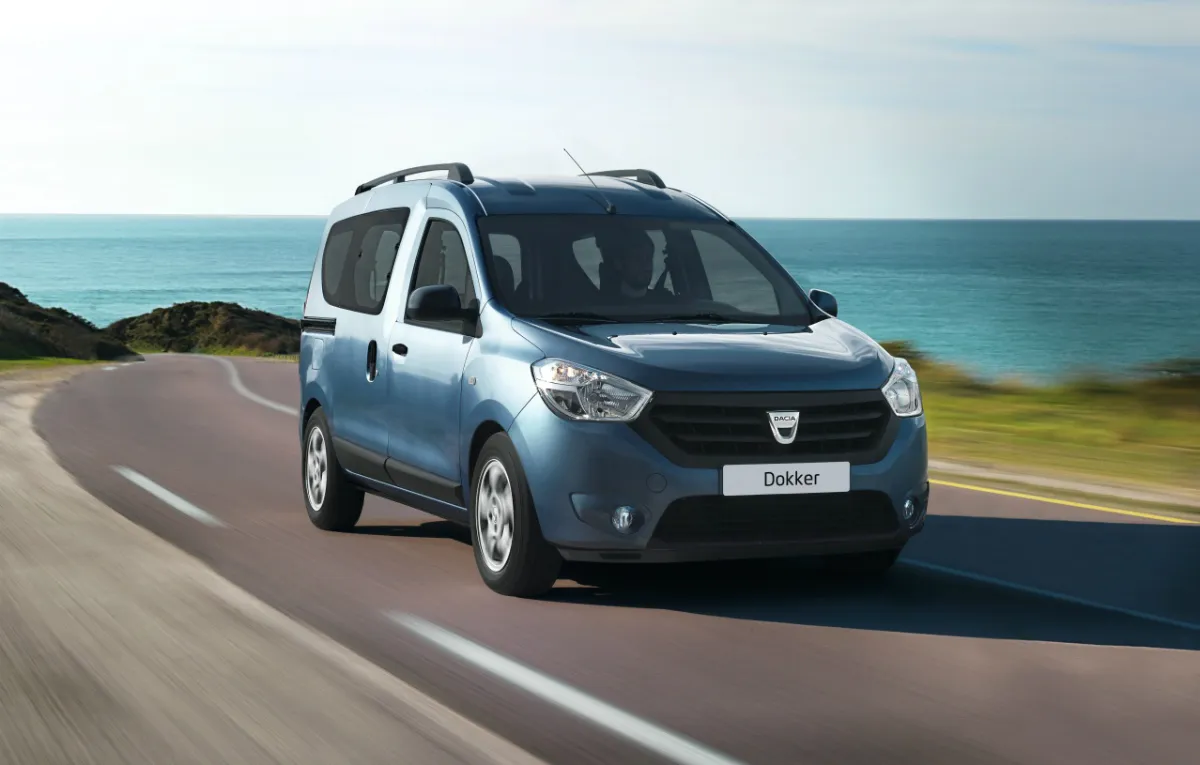
The Romanian automaker Dacia introduced the Dokker range in 2012 and offered it either as a light commercial vehicle or a family-friendly MPV.
With the first generation of the Dokker, Dacia expanded its range in the LCV segment, replacing the former Dacia Logan Van. The main difference was that while its predecessor was a seven-seat vehicle that morphed into a utility vehicle, the Dokker was the other way around. It was designed as a van and morphed into an MPV. It was a way better solution for everyone.
Dacia produced the parts for the Dokker in its home facility in Romania and exported them to Morocco as CKD kits to be assembled there. This unusual solution lowered the production costs, and the sales went through the roof, with waiting periods that exceeded six months. Still, the vehicle showed its utilitarian roots in its exterior and interior. But customers didn’t care too much about that.
While the exterior design was nothing to write home about, it wasn’t mundane either. It still had some character thanks to the short overhangs and the flat and tall nose. The Dokker’s headlights sported an angular shape on the inner areas and were rounded on the outer ones. They flanked a three-slat grille that could be ordered in body color, depending on the trim level.
On the lower bumper, the automaker added a secondary air intake flanked by a pair of scoops for the optional fog lamps and even a lower splitter, which was there for pedestrian protection. From its profile, the tall greenhouse started with a steep and panoramic windshield and continued with a roof fitted with roof rails.
The vehicle came fitted with generously sized rear sliding doors, which eased ingress and egress for those seated on the second row. Behind them, the automaker added a third row of windows between the C-pillars and the vertical D-posts. Finally, at the back, the automaker added vertical, corner-mounted taillights that flanked the rear unequally-lengths doors.
Inside, Dacia installed high-mounted bucket seats for the front occupants, with almost no side bolstering. But the interior was cleverly designed, even if it was made with cheap materials. The plastic dashboard sported round vents carried over from its Logan sibling and a few storage compartments on its top.
Customers could get the car with a seven-inch infotainment system mounted on the center stack, featuring navigation, Bluetooth connectivity, CD, and a USB port. Lower, closer to the center console, Dacia installed the controls for the HVAC system.
The driver fronted the simple layout of the instrument cluster where the automaker installed the speedometer, the rev counter, and the gauges for the fuel level and coolant temperature. In addition, a small LCD was placed at the bottom of the instrument panel, and the Dokker displayed data from its onboard computer.
In the back, the 60/40 split-folding bench could be removed completely to get a larger cargo area. This was very useful, especially for those looking for a utility vehicle capable of doing school runs and other similar activities.
Under the hood, Dacia installed the same turbo diesel and gasoline engines that were available for the rest of the Logan range, depending on the market. All versions were paired with five- or six-speed manuals that sent the power to the front wheels only.