Skip to content
AD

Ferrari 250 GT (1954 - 1963)

Ferrari · 5 trims

Ferrari 250 GT

The Ferrari 250 GT (1954 - 1963) is available in 5 trims producing 220 to 280 hp. The fastest trim reaches 269 km/h. The lowest stated fuel consumption is 16.0 l/100 km.

Power
280 hp
0–100
6.0 s
Fuel economy
16.0 l/100 km
Cargo

250 GT Trims

Compare →
Trims and engine versions — Ferrari 250 GT
Trim Fuel Power Torque 0–100 Top speed Fuel economy CO2 Select
3.0L V12 4MT RWD (220 HP) Petrol 220 hp 265 Nm 7.1 s 230 km/h 18.0 l/100 km
3.0L V12 4MT RWD (240 HP) Petrol 240 hp 265 Nm 7.5 s 240 km/h 16.0 l/100 km
3.0L V12 4MT RWD (250 HP) Petrol 250 hp 255 Nm 7.1 s 240 km/h 23.1 l/100 km
3.0L V12 4MT RWD (260 HP) Petrol 260 hp 314 Nm 6.4 s 209 km/h 16.9 l/100 km
3.0L V12 4MT RWD (280 HP) Petrol 280 hp 275 Nm 6.0 s 269 km/h 16.0 l/100 km

Fuel economy and CO2 follow the stated test cycle. Manufacturer figures; deviations per market and option pack are possible.

Is Ferrari 250 GT a good choice against other models?

Average across every Ferrari 250 GT trim, compared with 107 trims of other cars from the 1951–1957 period.

Is Ferrari 250 GT a good choice against other models?
Measure This model Average Position
Power 250 hp 123 hp
better than 94%
Torque 275 Nm 199 Nm
better than 83%
Top speed 238 km/h 161 km/h
better than 98%
Acceleration 0–100 km/h 6.8 s 16.3 s
better than 100%
Combined consumption 18.0 l/100 km 12.3 l/100 km
better than 8%
Unladen weight 1,227 kg 1,293 kg
better than 58%

Percentages show the share of trims from the same period this model beats on that measure. Manufacturer figures.

Not stated by the manufacturer: co2 emissions and cargo volume. Those measures are left out of the comparison.

Comparable models from other brands

Saab AC Maserati Audi Honda Lancia

About Ferrari 250 GT

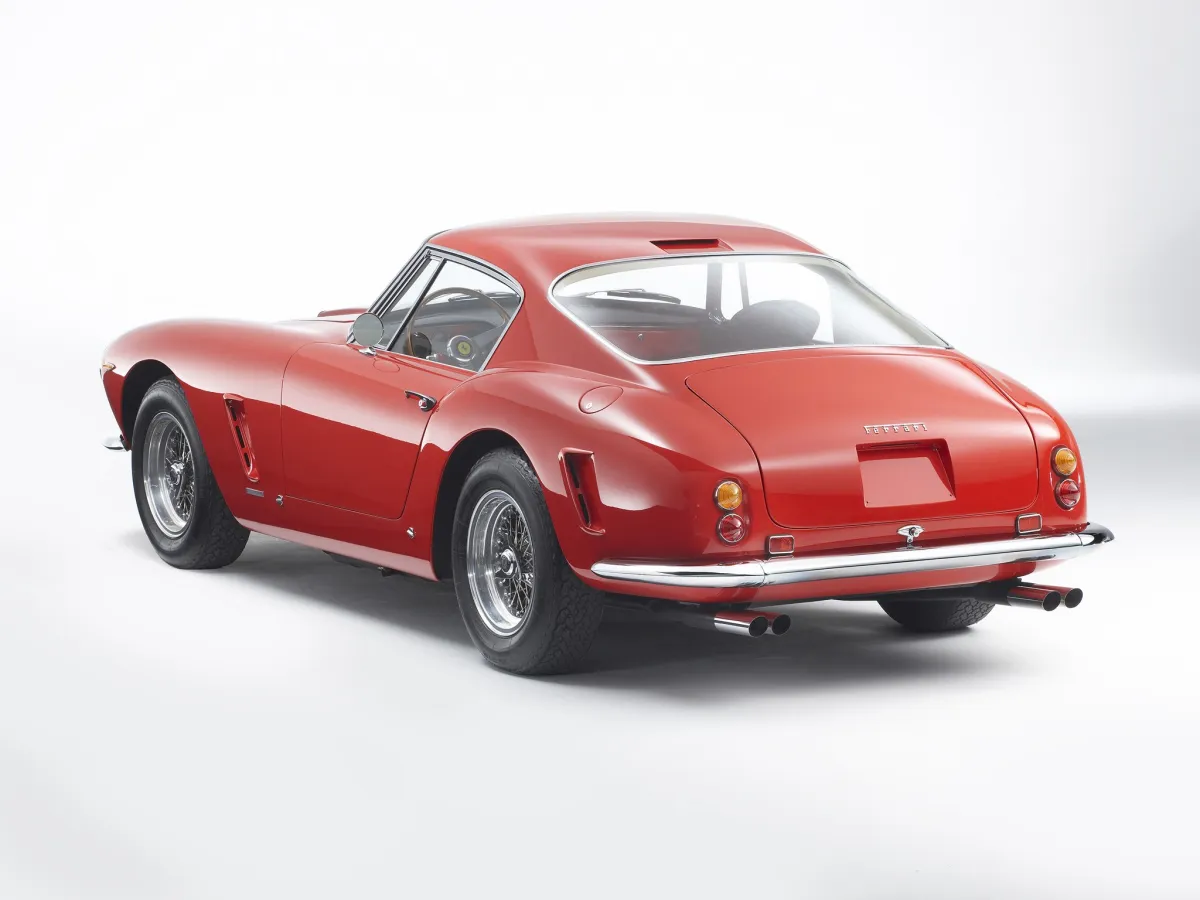
The Ferrari 250 GT Coupe was presented at the Paris Motor Show in 1954. It was the first attempt of the Italian manufacturer to build a car for the normal motorist.

The bodywork was built in the Pininfarina workshop, but soon the shop was unable to keep up with the demand. The Boano coachbuilder came along and helped with manufacturing the bodies. They produced around 80 units in one year. The overall shape was very similar to the Ferrari Europa GT and only a trained eye would notice the differences. The main difference was the shorter distance between the front wheel arch and the A-pillar. Some racing versions were built with aluminum bodywork, but usually, the road-going versions (named Lusso) had only the doors, trunk lid and the hood made out of aluminum.

Inside, there was room for two passengers. Some were fitted with a rear bench with upholstery, but that was just for the insurance companies and tax reductions since the four-passenger vehicles had a deduction in some countries. But it was just an upholstered, inside, luggage platform.

The chassis was made from two main longitudinal tubes with cross bracing and supports for the bodywork. It had front independent suspension and a rear axle with semi-elliptic leaf springs and hydraulic shocks.

The most important evolution over the Europa was under the hood, where the older, long-block, Lamperdi engine was replaced by the short-block Colombo unit. That modification allowed a shorter wheelbase compared to the Europa. And that is why the distance between the front wheel arch and the A-pillar was shorter.

How much power does the Ferrari 250 GT have?

The most powerful Ferrari 250 GT trim is the 3.0L V12 4MT RWD (280 HP) with 280 hp. The model has 5 trims, starting at 220 hp.

What is the fuel consumption of the Ferrari 250 GT?

The most economical Ferrari 250 GT trim is the 3.0L V12 4MT RWD (240 HP), with a stated combined consumption of 16.0 l/100 km and — g CO2 per km.

How quickly does the Ferrari 250 GT accelerate from 0 to 100 km/h?

The quickest trim is the 3.0L V12 4MT RWD (280 HP): 0-100 km/h in 6.0 seconds, with a top speed of 269 km/h.

Other Ferrari models

Ferrari 195 S

1950 · 1 trim

Power
170 hp
0–100
8.0 s
Fuel economy

Petrol