
Skip to content
AD

AC Cobra MkIII (1965 - 1967)

AC · 1 trim

AC Cobra MkIII

The AC Cobra MkIII (1965 - 1967) is available in 1 trims producing 280 to 280 hp. The fastest trim reaches 225 km/h.

Power
280 hp
0–100
4.7 s
Fuel economy
Cargo

Cobra MkIII Trims

Compare →
Trims and engine versions — AC Cobra MkIII
Trim Fuel Power Torque 0–100 Top speed Fuel economy CO2 Select
4.7L V8 4MT (280 HP) Petrol 280 hp 426 Nm 4.7 s 225 km/h

Fuel economy and CO2 follow the stated test cycle. Manufacturer figures; deviations per market and option pack are possible.

Is AC Cobra MkIII a good choice against other models?

Average across every AC Cobra MkIII trim, compared with 278 trims of other cars from the 1962–1968 period.

Is AC Cobra MkIII a good choice against other models?
Measure This model Average Position
Power 280 hp 164 hp
better than 82%
Torque 426 Nm 260 Nm
better than 81%
Top speed 225 km/h 181 km/h
better than 89%
Acceleration 0–100 km/h 4.7 s 12.2 s
better than 99%
Unladen weight 916 kg 1,269 kg
better than 84%

Percentages show the share of trims from the same period this model beats on that measure. Manufacturer figures.

Not stated by the manufacturer: combined consumption, co2 emissions and cargo volume. Those measures are left out of the comparison.

Comparable models from other brands

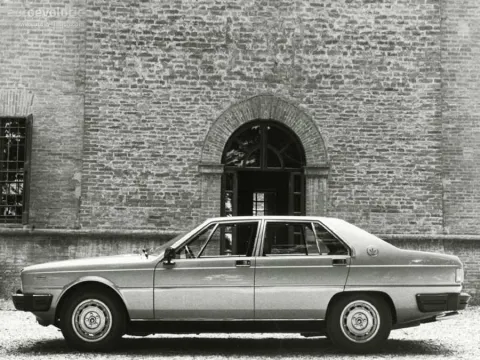
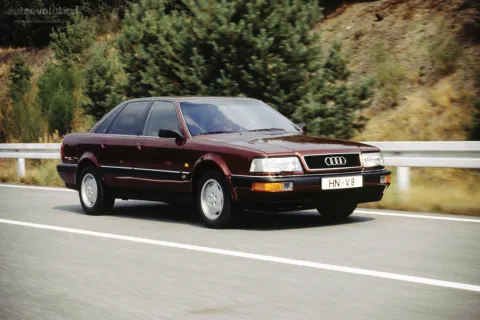
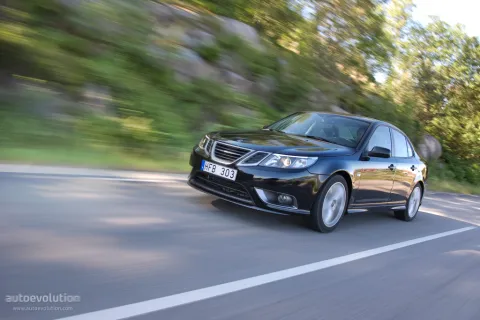
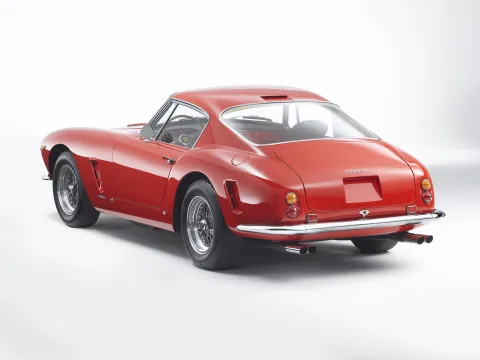
Maserati Audi Saab Ferrari Honda Lancia

About AC Cobra MkIII

The 1965 AC Cobra MK III opened a new chapter in the carmaker's history and it proved that an alliance between a British and an American carmaker can work.

After Carroll Shelby stepped inside the AC Cars in 1961, the faith of the British carmaker was changed forever. The notorious American racing driver noticed the car's abilities on the track. Ford also hired him to create a car that could beat the Corvette in their home-ground and win the LeMans race.

The third generation of the AC Ace was based on a new chassis, which was more rigid than the previous one. Its suspension featured coil springs instead of transverse leaf-spring. AC Cars already modified the bodywork and enlarged the fenders to accommodate wider wheels. Depending on the engine version, the car sported a bull-bar at the front, or just a pair of "horns" to protect the lights, aluminum bodywork. In the rear, AC Ace featured two small, round lamps for turn-signals and brake-lights.

Its cabin was fitted with two low-mounted bucket seats separated by a tall transmission tunnel. The dash panel featured five gauges and a clock mounted on the center, and a tachometer installed in front of the driver. The speedometer was on the outer side of the panel, next to the door. In a race, that was the least important information.

Under the hood, Ford installed a choice of two engines: a 4.7-liter and a 7.0-liter unit. While the former was less powered, it still provided enough power to make the 1100 kg (2425 lbs) vehicle past-rocket most of the other sports cars from that era. The 7.0-liter V-8 installed in the AC 427 managed to do a 0-100-0 mph (0-160-0 kph) test in less than 15 seconds.

How much power does the AC Cobra MkIII have?

The most powerful AC Cobra MkIII trim is the 4.7L V8 4MT (280 HP) with 280 hp. The model has 1 trims, starting at 280 hp.

How quickly does the AC Cobra MkIII accelerate from 0 to 100 km/h?

The quickest trim is the 4.7L V8 4MT (280 HP): 0-100 km/h in 4.7 seconds, with a top speed of 225 km/h.

Other AC models

AC Cobra MkII

1963 - 1965 · 1 trim

Power
271 hp
0–100
5.3 s
Fuel economy
16.2

Petrol

AC Ace

1993 - 1996 · 1 trim

Power
260 hp
0–100
Fuel economy
8.6

Petrol

AC Aceca

1998 - 2000 · 2 trims

Power
350 hp
0–100
5.6 s
Fuel economy

Petrol