Skip to content
AD

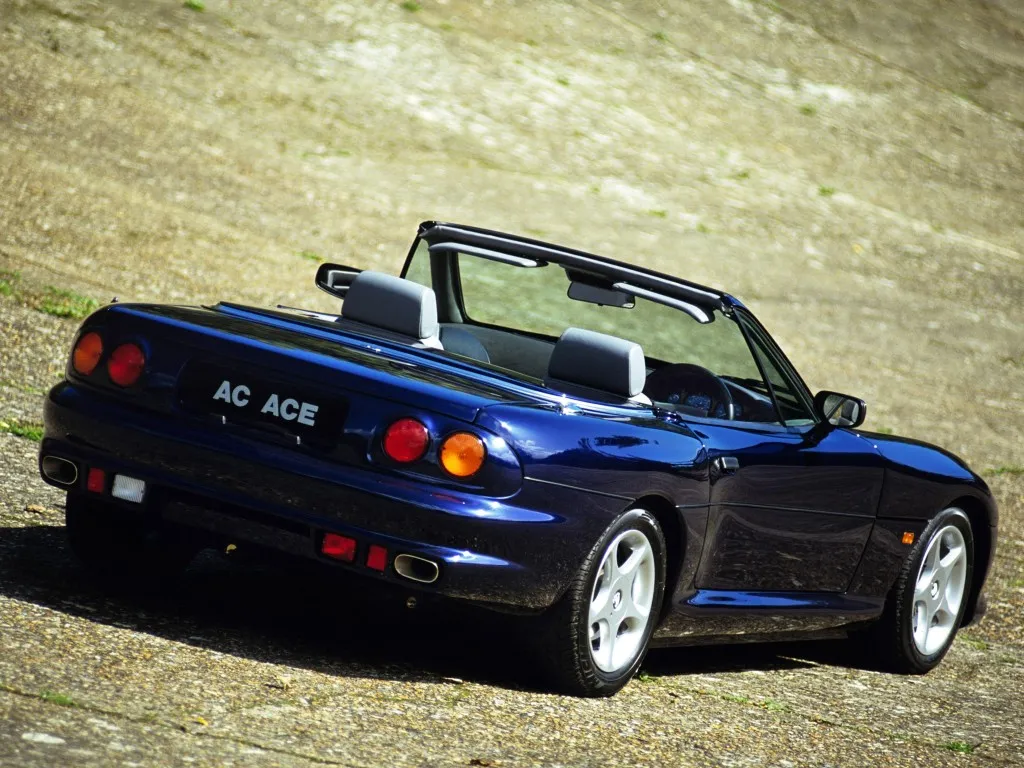
AC Ace (1993 - 1996)

AC · 1 trim

AC Ace

The AC Ace (1993 - 1996) is available in 1 trims producing 260 to 260 hp. The fastest trim reaches 225 km/h. The lowest stated fuel consumption is 8.6 l/100 km.

Power
260 hp
0–100
Fuel economy
8.6 l/100 km
Cargo
184 l

Ace Trims

Compare →
Trims and engine versions — AC Ace
Trim Fuel Power Torque 0–100 Top speed Fuel economy CO2 Select
4.9L V8 4AT (260 HP) Petrol 260 hp 434 Nm 225 km/h 8.6 l/100 km

Fuel economy and CO2 follow the stated test cycle. Manufacturer figures; deviations per market and option pack are possible.

Is AC Ace a good choice against other models?

Average across every AC Ace trim, compared with 2,560 trims of other cars from the 1990–1996 period.

Is AC Ace a good choice against other models?
Measure This model Average Position
Power 260 hp 140 hp
better than 93%
Torque 434 Nm 211 Nm
better than 96%
Top speed 225 km/h 194 km/h
better than 84%
Combined consumption 8.6 l/100 km 8.8 l/100 km
better than 44%
Cargo volume 184 l 447 l
better than 3%
Unladen weight 1,440 kg 1,310 kg
better than 28%

Percentages show the share of trims from the same period this model beats on that measure. Manufacturer figures.

Not stated by the manufacturer: acceleration 0–100 km/h and co2 emissions. Those measures are left out of the comparison.

Comparable models from other brands

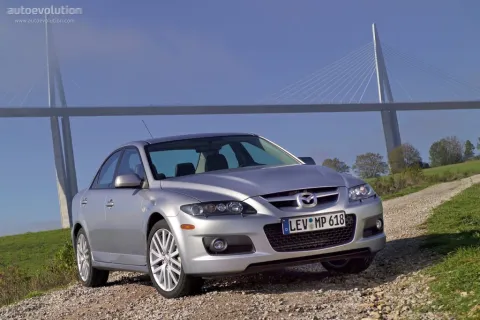
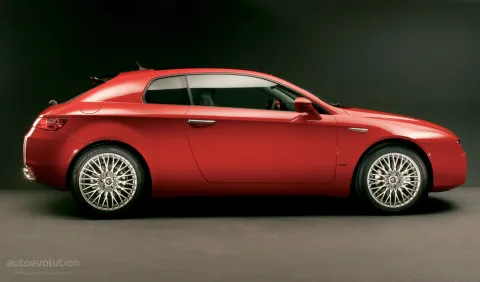
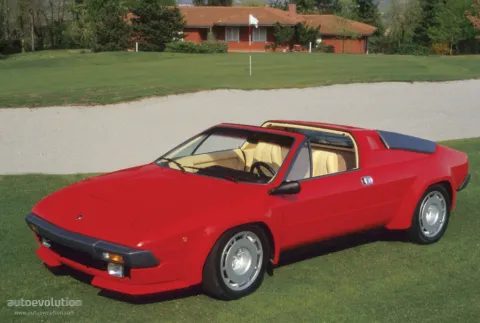
Lamborghini Honda Maserati Mazda Alfa Romeo

About AC Ace

After gaining full control over the AC brand, Ford and Brian Angliss tried to revive the British brand with innovative products to lead the small carmaker into new territories.

While the original Ace was worldwide famous, the 1993 model started on the wrong foot since everyone expected the same results as its '50s and '60s predecessors. Later on, the car was mostly known as the Brooklands Ace to cut the confusion.

This time, the car was designed by Len Bailey as a 2+2 open-top vehicle. The first prototype, known as "Ace of Spades," featured a targa-top, but the final model, which arrived in 1993, featured a classic roadster shape. Again, to cut costs, Ford provided most of the car's underpinnings, including the round headlights and turn signals.

At the front, the car's narrow end with a small radiator grille looked spot-on for a modern roadster. After installing a V8 under the hood, the carmaker had to create a bulge to make room for the air filter, which it did. Unlike the concept car, this was a genuine, two-seat roadster. Its thick A-pillars and steep windshield protected them while driving, while an electric retractable canvas-top kept them dry from the rain. At the back, the carmaker installed a short trunk and a four-round taillights setup, and a dual exhaust system.

Inside, Ace offered a leather-clad interior and plenty of standard features such as a stereo tape CD player, air-conditioning, power windows and mirrors, and an electrically heated windshield.

Under the aluminum bodywork, the carmaker installed the first-ever stainless-steel chassis in the industry. Its nearly 50:50 weight distribution made it a nimble car, and the limited-slip differential helped in many ways. A standard ABS and a powerful V8 engine completed the package.

How much power does the AC Ace have?

The most powerful AC Ace trim is the 4.9L V8 4AT (260 HP) with 260 hp. The model has 1 trims, starting at 260 hp.

What is the fuel consumption of the AC Ace?

The most economical AC Ace trim is the 4.9L V8 4AT (260 HP), with a stated combined consumption of 8.6 l/100 km and — g CO2 per km.

How large is the cargo volume of the AC Ace?

The largest stated cargo volume for the AC Ace is 184 litres.

Other AC models

AC Aceca

1998 - 2000 · 2 trims

Power
350 hp
0–100
5.6 s
Fuel economy

Petrol

AC Cobra MkIII

1965 - 1967 · 1 trim

Power
280 hp
0–100
4.7 s
Fuel economy

Petrol

AC Cobra MkII

1963 - 1965 · 1 trim

Power
271 hp
0–100
5.3 s
Fuel economy
16.2

Petrol