Skip to content
AD

Mitsubishi i-MiEV (2009 - present)

Mitsubishi · 1 trim

Mitsubishi i-MiEV

The Mitsubishi i-MiEV (2009 - present) is available in 1 trims producing 67 to 67 hp. The fastest trim reaches 130 km/h. The lowest stated fuel consumption is 2.1 l/100 km.

Power
67 hp
0–100
15.9 s
Fuel economy
2.1 l/100 km
Cargo
374 l

i-MiEV Trims

Compare →
Trims and engine versions — Mitsubishi i-MiEV
Trim Fuel Power Torque 0–100 Top speed Fuel economy CO2 Select
49 kW Electric 67 hp 197 Nm 15.9 s 130 km/h 2.1 l/100 km

Fuel economy and CO2 follow the stated test cycle. Manufacturer figures; deviations per market and option pack are possible.

Is Mitsubishi i-MiEV a good choice against other models?

Average across every Mitsubishi i-MiEV trim, compared with 7,657 trims of other cars from the 2006–2012 period.

Is Mitsubishi i-MiEV a good choice against other models?
Measure This model Average Position
Power 67 hp 194 hp
better than 1%
Torque 197 Nm 311 Nm
better than 23%
Top speed 130 km/h 210 km/h
better than 0%
Acceleration 0–100 km/h 15.9 s 9.4 s
better than 1%
Combined consumption 2.1 l/100 km 7.5 l/100 km
better than 100%
Cargo volume 374 l 470 l
better than 37%
Unladen weight 1,170 kg 1,529 kg
better than 87%

Percentages show the share of trims from the same period this model beats on that measure. Manufacturer figures.

Not stated by the manufacturer: co2 emissions. Those measures are left out of the comparison.

Comparable models from other brands

Alfa Romeo Peugeot Citroën Mazda Renault Alpine

About Mitsubishi i-MiEV

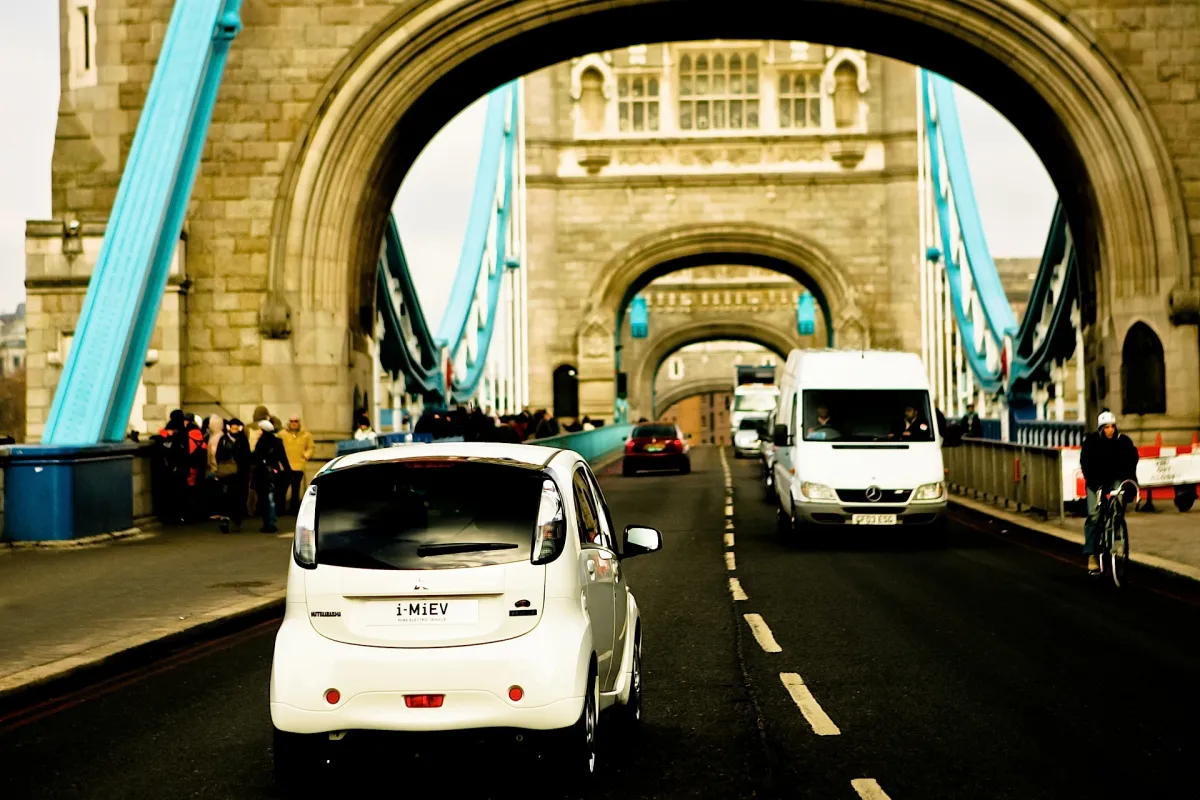
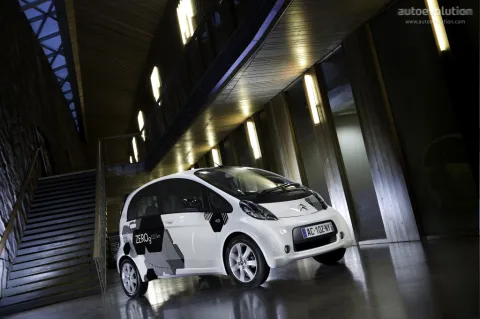
It was a shy entrance into the electric car era for Mitsubishi and the Japanese carmaker couldn't have made it on its own. Mitsubishi went for an alliance with the French manufacturer PSA (Peugeot-Citroen). Thus, the triplets of i-Miev-iOn-C-Zero appeared on the market. All three models were the same vehicle with different badges.

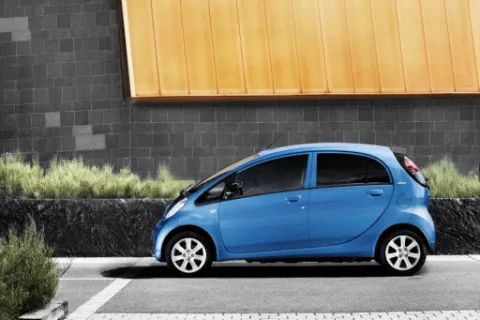
The base vehicle was the Japanese Mitsubishi i, which was sold in Japan as a Kei car with an internal combustion engine. Mitsubishi changed the engine with an electric motor, threw the fuel tank away and installed a battery pack. This is how the i-MIEV was born.

Launched right in the middle of the world economic crisis, the i-MIEV didn't have much success. The world was not ready for the electric car revolution back then and the model's price was sky-high for a tiny, 3.47 m (11.4 ft) long vehicle.

Inside the egg-shaped vehicle was enough room for four people and a trunk large enough to squeeze a six-pack.

For that time, the biggest advantage for the i-MIEV were the running costs. The vehicle could be fully charged from a regular wall outlet. The 12.5 kWh battery too about 5 long hours to charge from 0 to 100 percent. The electric motor developed 49 kW and could pull the car up to a top speed of 130 kph. It used a single-speed transmission to get along and more programs for driving plus a B-mode, which the driver could use for powerful regenerative braking.

How much power does the Mitsubishi i-MiEV have?

The most powerful Mitsubishi i-MiEV trim is the 49 kW with 67 hp. The model has 1 trims, starting at 67 hp.

What is the fuel consumption of the Mitsubishi i-MiEV?

The most economical Mitsubishi i-MiEV trim is the 49 kW, with a stated combined consumption of 2.1 l/100 km and — g CO2 per km.

How quickly does the Mitsubishi i-MiEV accelerate from 0 to 100 km/h?

The quickest trim is the 49 kW: 0-100 km/h in 15.9 seconds, with a top speed of 130 km/h.

How large is the cargo volume of the Mitsubishi i-MiEV?

The largest stated cargo volume for the Mitsubishi i-MiEV is 374 litres.

Other Mitsubishi models

Mitsubishi Grandis

2005 - present · 2 trims

Power
165 hp
0–100
10.0 s
Fuel economy
6.6

Petrol Diesel

Mitsubishi Sigma

1991 - 1996 · 4 trims

Power
205 hp
0–100
8.1 s
Fuel economy
10.1

Petrol