Skip to content
AD

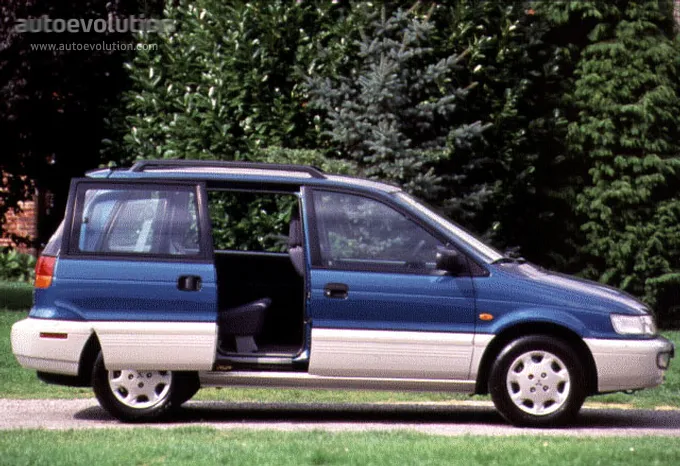
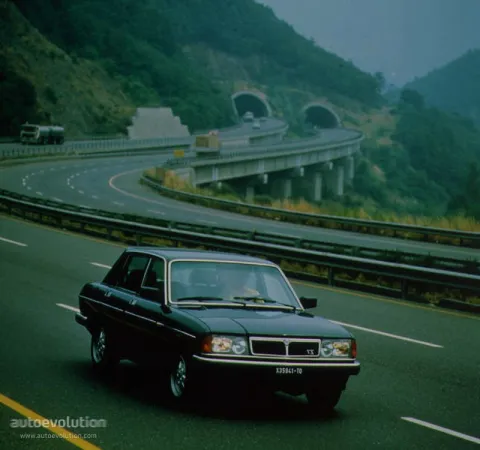
Mitsubishi Space Runner (1991 - 1999)

Mitsubishi · 3 trims

Mitsubishi Space Runner

The Mitsubishi Space Runner (1991 - 1999) is available in 3 trims producing 82 to 122 hp. The fastest trim reaches 180 km/h. The lowest stated fuel consumption is 8.1 l/100 km.

Power
122 hp
0–100
10.5 s
Fuel economy
8.1 l/100 km
Cargo
521 l

Space Runner Trims

Compare →
Trims and engine versions — Mitsubishi Space Runner
Trim Fuel Power Torque 0–100 Top speed Fuel economy CO2 Select
2.0L TD 5MT FWD (82 HP) Diesel 82 hp 172 Nm 17.8 s 155 km/h 8.1 l/100 km 215 g/km
1.8L 4AT FWD (122 HP) Petrol 122 hp 161 Nm 10.5 s 180 km/h 8.5 l/100 km
1.8L 5MT FWD (122 HP) Petrol 122 hp 161 Nm 10.5 s 180 km/h 8.8 l/100 km 210 g/km

Fuel economy and CO2 follow the stated test cycle. Manufacturer figures; deviations per market and option pack are possible.

Is Mitsubishi Space Runner a good choice against other models?

Average across every Mitsubishi Space Runner trim, compared with 2,171 trims of other cars from the 1988–1994 period.

Is Mitsubishi Space Runner a good choice against other models?
Measure This model Average Position
Power 109 hp 135 hp
better than 40%
Torque 165 Nm 202 Nm
better than 40%
Top speed 172 km/h 192 km/h
better than 28%
Acceleration 0–100 km/h 12.9 s 11.7 s
better than 31%
Combined consumption 8.5 l/100 km 8.8 l/100 km
better than 48%
CO2 emissions 213 g/km 210 g/km
better than 36%
Cargo volume 521 l 444 l
better than 85%
Unladen weight 1,206 kg 1,277 kg
better than 53%

Percentages show the share of trims from the same period this model beats on that measure. Manufacturer figures.

Comparable models from other brands

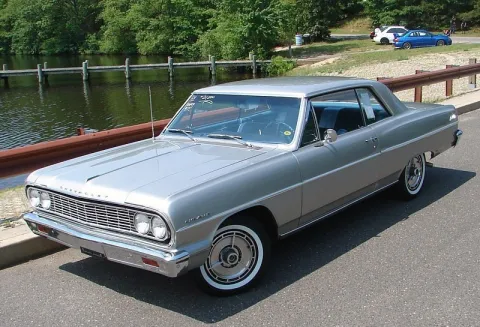
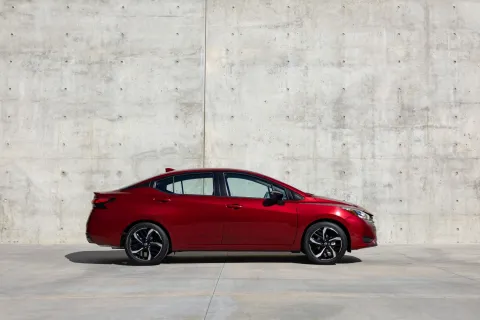
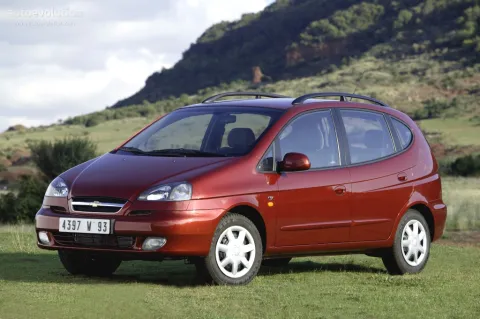
Chevrolet Nissan Mercedes-Benz Renault Lancia

About Mitsubishi Space Runner

Mitsubishi used the Galant's platform to build a compact-segment minivan, and it was successful in more countries around the world.

The Japanese carmaker introduced the MPV on its home market in 1991 and started to export it in the following year. Depending on the market, the Space Runner was available with either a front or all-wheel-drive system and with the eye-watering 4G63T turbocharged engine carried over from the Lancer Evolution. But, for most parts of the world, it was just another crossover between a station wagon and a minivan, inspired by Italdesign's concept Lancia Metagamma from 1978. Since the Italian carmaker rejected the project, Mitsubishi bought it and adapted it to its needs.

While the front side resembled the shape of a sedan, with a low-mounted bumper and flat front fascia, the steep hood and windshield looked inspired by a minivan. Also, the side sliding door, only on the passenger side, was an MPV-like idea. At the back, a wide liftgate opened the way to a spacious luggage compartment. With the rear seats folded, the trunk could get up to three mountain bikes inside.

Mitsubishi designed the vehicle for five full-grown adults. At the front, the taller drivers were not very happy with the legroom but had no troubles with the headroom. In the back, on the other hand, there was enough room for three occupants. In the instrument cluster, Mitsubishi installed white dials with red needles for the center-mounted speedometer flanked on the right by a tachometer and on the left by the fuel and temperature gauges.

Mitsubishi installed a 1.8-liter naturally aspirated engine under the Space Runner's hood for most of the markets. For the European customers, it also provided a 2.0-liter turbo-diesel option.

How much power does the Mitsubishi Space Runner have?

The most powerful Mitsubishi Space Runner trim is the 1.8L 4AT FWD (122 HP) with 122 hp. The model has 3 trims, starting at 82 hp.

What is the fuel consumption of the Mitsubishi Space Runner?

The most economical Mitsubishi Space Runner trim is the 2.0L TD 5MT FWD (82 HP), with a stated combined consumption of 8.1 l/100 km and 215 g CO2 per km.

How quickly does the Mitsubishi Space Runner accelerate from 0 to 100 km/h?

The quickest trim is the 1.8L 4AT FWD (122 HP): 0-100 km/h in 10.5 seconds, with a top speed of 180 km/h.

How large is the cargo volume of the Mitsubishi Space Runner?

The largest stated cargo volume for the Mitsubishi Space Runner is 521 litres.

Other Mitsubishi models

Mitsubishi Sigma

1991 - 1996 · 4 trims

Power
205 hp
0–100
8.1 s
Fuel economy
10.1

Petrol

Mitsubishi L300

1986 - 1994 · 3 trims

Power
111 hp
0–100
15.0 s
Fuel economy
8.7

Petrol Diesel

Mitsubishi Grandis

2005 - present · 2 trims

Power
165 hp
0–100
10.0 s
Fuel economy
6.6

Petrol Diesel