Skip to content
AD

Nissan Liberty (1999 - 2004)

Nissan · 2 trims

Nissan Liberty

The Nissan Liberty (1999 - 2004) is available in 2 trims producing 146 to 230 hp. The fastest trim reaches 180 km/h. The lowest stated fuel consumption is 6.8 l/100 km.

Power
230 hp
0–100
Fuel economy
6.8 l/100 km
Cargo

Liberty Trims

Compare →
Trims and engine versions — Nissan Liberty
Trim Fuel Power Torque 0–100 Top speed Fuel economy CO2 Select
2.0L CVT FWD (146 HP) Petrol 146 hp 198 Nm 180 km/h 6.8 l/100 km 162 g/km
2.0i 16V GT4 4AT AWD (230 Hp) Petrol 230 hp 275 Nm

Fuel economy and CO2 follow the stated test cycle. Manufacturer figures; deviations per market and option pack are possible.

Is Nissan Liberty a good choice against other models?

Average across every Nissan Liberty trim, compared with 4,239 trims of other cars from the 1996–2002 period.

Is Nissan Liberty a good choice against other models?
Measure This model Average Position
Power 188 hp 153 hp
better than 76%
Torque 237 Nm 239 Nm
better than 58%
Top speed 180 km/h 199 km/h
better than 27%
Combined consumption 6.8 l/100 km 8.4 l/100 km
better than 71%
CO2 emissions 162 g/km 203 g/km
better than 74%
Unladen weight 1,555 kg 1,378 kg
better than 24%

Percentages show the share of trims from the same period this model beats on that measure. Manufacturer figures.

Not stated by the manufacturer: acceleration 0–100 km/h and cargo volume. Those measures are left out of the comparison.

Comparable models from other brands

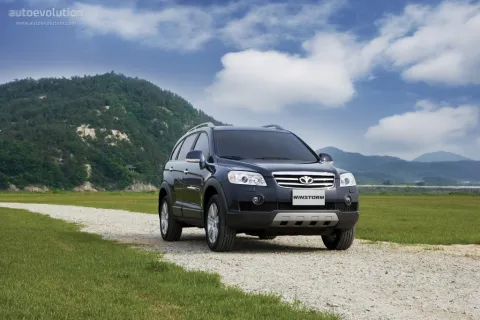
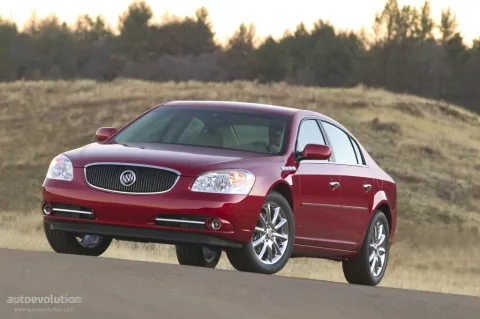
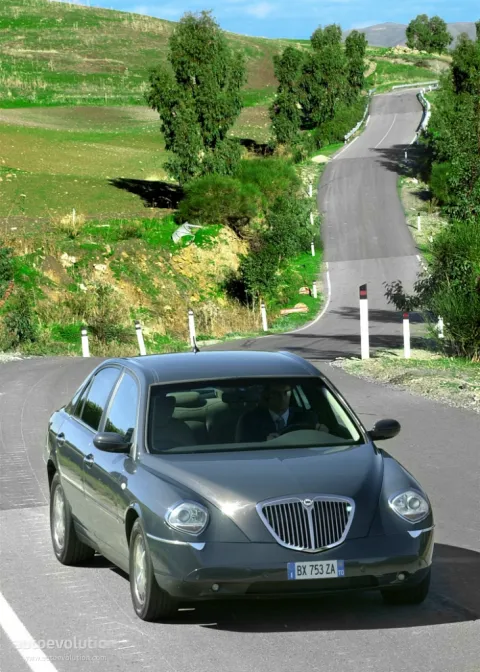
Daewoo Buick Lancia Holden Samsung Saab

About Nissan Liberty

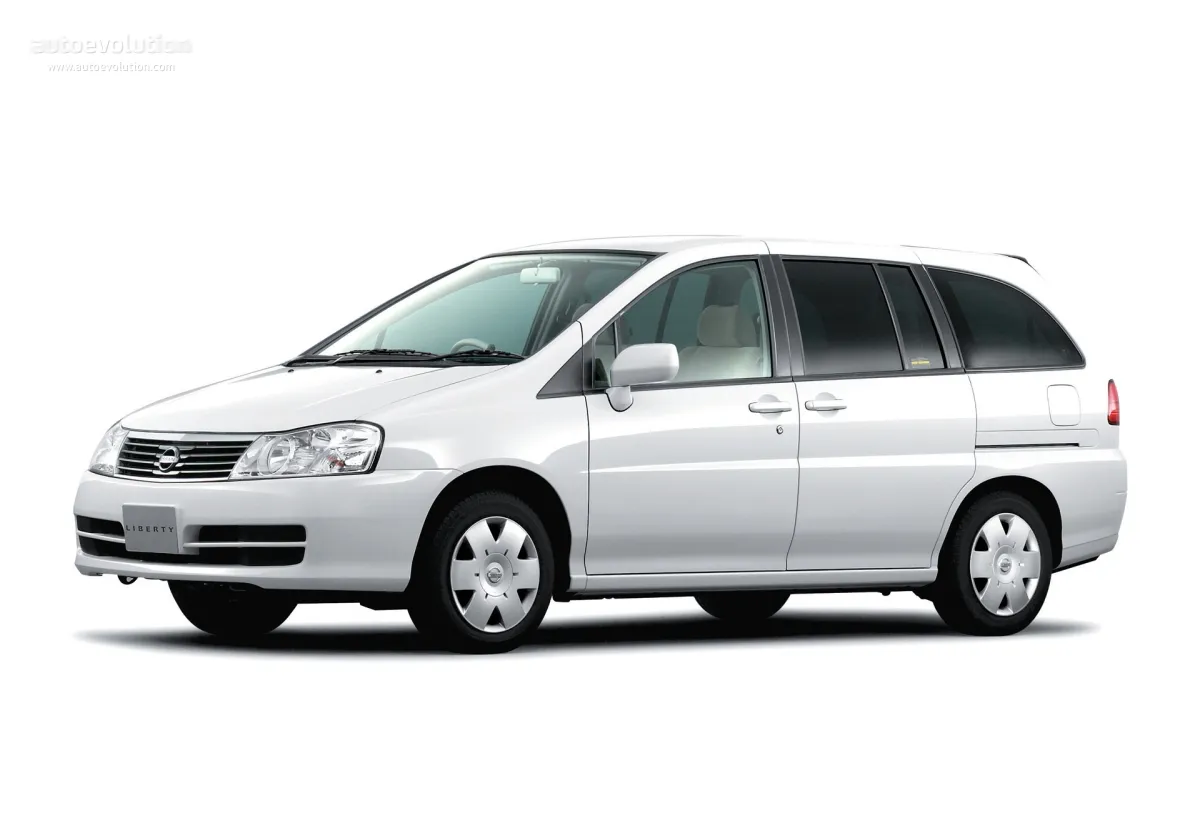
Following the success recorded by the Praire, the Japanese car-maker tried to do a sequel for that in the form of the Nissan Liberty. It was built mainly for the Japanese and Russian market.

Based on the same platform with the Nissan Avenir (Primera in Europe) wagon, the Liberty was an MPV for a big family. In the '90s, the minivan mania was spread around the world and people bought them for their functionality. Later on, that category was outpaced by the SUV segment, which grew after 2010.

From the outside, the grille didn't feature the Nissan badge. Instead of it, there was a small, rectangular one, where the letter “L” was written. The raked front end and the big headlights were one of the Liberty's characteristics. On the sides, the rear sliding doors allowed easy access inside. In the back, a roof-spoiler was not installed to enhance the sporty character, but to keep the rear window cleaner for a longer time.

Inside, the Liberty was fitted as standard with seven seats, in a 2-3-2 formula. The absence of a center console allowed a free passage through the car. To free-up the floor, the gear-selector was installed on the steering column. The middle row featured a sliding system to increase the legroom for the last row passengers. Since it was not a premium vehicle, there was no electric sliding system installed.

For the engine, the Liberty was offered with a 2.0-liter gasoline unit mated to either a CVT or a 4-speed automatic.

How much power does the Nissan Liberty have?

The most powerful Nissan Liberty trim is the 2.0i 16V GT4 4AT AWD (230 Hp) with 230 hp. The model has 2 trims, starting at 146 hp.

What is the fuel consumption of the Nissan Liberty?

The most economical Nissan Liberty trim is the 2.0L CVT FWD (146 HP), with a stated combined consumption of 6.8 l/100 km and 162 g CO2 per km.

Other Nissan models

Nissan Almera Tino

2000 - 2006 · 3 trims

Power
136 hp
0–100
12.5 s
Fuel economy
6.4

Petrol Diesel

Nissan 200 SX

1994 - 2000 · 2 trims

Power
200 hp
0–100
7.5 s
Fuel economy
8.8

Petrol

Nissan 350 Z

2006 - 2008 · 2 trims

Power
310 hp
0–100
5.8 s
Fuel economy
11.7

Petrol

Nissan Platina

2006 - 2010 · 1 trim

Power
110 hp
0–100
Fuel economy
6.1

Petrol

Nissan 100 NX

1991 - 1996 · 5 trims

Power
143 hp
0–100
8.2 s
Fuel economy
6.9

Petrol