About Holden Jackaroo 5 Doors
In 1991, GM and Isuzu introduced the second generation of the large-sized SUV Isuzu Trooper, sold under the Holden Jackaroo nameplate in Australia and New Zealand.
After seven years on the market, the Jackaroo started showing wrinkles. Its cabins were no longer up to date regarding amenities, and its engines were too thirsty. However, General Motors and Isuzu pushed harder. They improved the vehicle in all key areas, and the 1998 Holden Jackaroo benefited from all those investments. It could still compete against vehicles such as the Toyota Land Cruiser, the Nissan Patrol, and the Mitsubishi Pajero/Montero on the Australasian market. However, the declining sales couldn’t be stopped with a refreshed model, so by 2002, the automaker had to pull the plug on the entire range, regardless of the nameplate, whether it was named the Isuzu Trooper II, the Opel/Vauxhall Monterey, or the Holden Jackaroo.
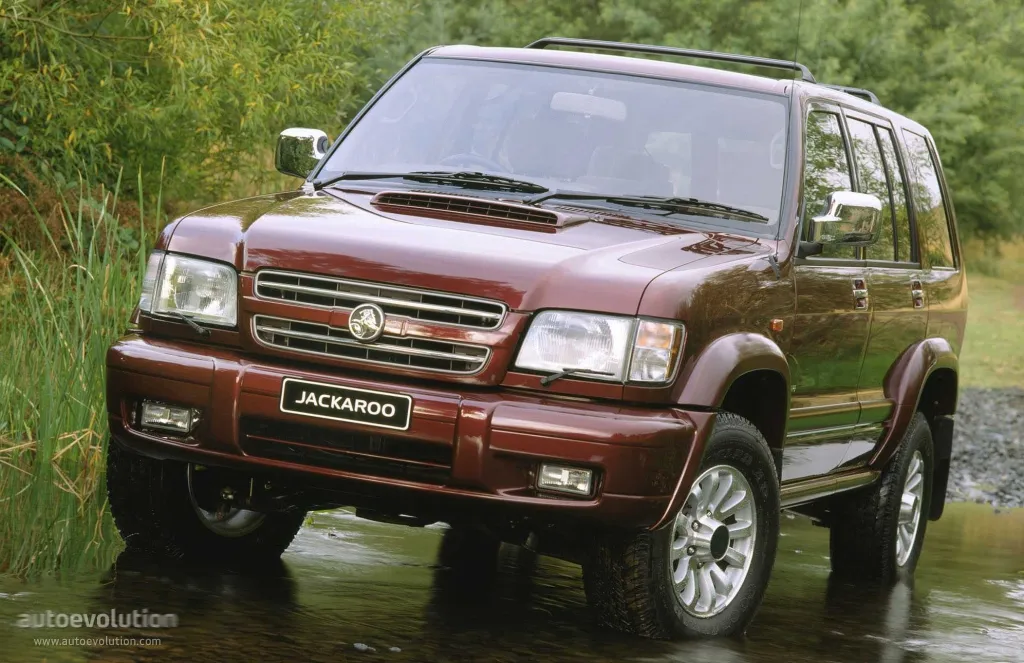
Along with the upgraded version of the Jackaroo, Holden introduced a new front fascia for the large-sized SUV. It featured more rounded edges for the headlights and the corner-mounted blinkers. Between them, the automaker placed a grille with horizontal slats and chromed trims, where the brand’s badge took center stage. At the same time, the wrapped-around plastic bumper below it sported a rectangular-shaped air intake in the middle flanked by fog lamps.
Since it was just a facelift, the automaker couldn’t significantly change the vehicle’s shape. However, it could slightly alter the front fenders and make them smoother around the edges. Its flared wheel arches emphasized the SUV’s aggressive stance, while the tall greenhouse with large windows created an airy cabin. Thanks to the grab-type door handles, customers could open or close the doors of the 1998 Holden Jackaroo with gloved hands. At the back, the automaker installed unequally-length doors, where the wider one sported the spare wheel. Like on its predecessor, the taillights were integrated into the rear plastic bumper.
Like any large-sized SUV, the 1998 Holden Jackaroo came with a spacious cabin and available three-row seating. A pair of bucket seats with cloth upholstery provided enough comfort for their occupants on long journeys. Fronting the driver was an instrument panel filled with large dials for the speedometer and tachometer, as well as gauges for the coolant temperature and the fuel level. The center stack had rounded edges and housed three rectangular vents at the top, followed by a few buttons for the rear wiper and washer and a digital clock. Lower, the automaker installed the stereo while on the center console, placing the levers for the transfer box and the gear stick (or the gear selector for the automatic versions). At the back, the split-folding (60/40) bench seat could accommodate three passengers, while on the rearmost seats, two other adults could sit.
Under the hood, the 1998 Holden Jackaroo was available with a choice of gasoline and diesel engines. These were paired with manual or automatic transmissions, depending on the trim and options. The chassis was also significantly improved and featured an improved suspension, thicker anti-roll bars, and new dampers. At the sales’ start, the 3.2-liter V6 powerhouse was still available for the top trim level, but an improved 3.5-liter unit with quad-cam configuration replaced it later that year. The two-speed transfer box was standard for 4WD versions.