About Holden Chevrolet Statesman/Caprice WH
Two years after the introduction of the third generation of the Commodore, the Australian automaker unveiled the upscale lineup, Statesman/Caprice, targeting deep-pocket customers and local authorities.
When General Motors developed the second generation of the European Opel/Vauxhall Omega, the B version, it considered using the same platform for other vehicles within the group. In addition to the U.S.-spec Cadillac Catera and the Chevrolet Lumina, it also produced the Australian Commodore VT lineup, which the car manufacturer introduced in 1997. Besides the regular version, the automaker also used a long wheelbase version to create the 1999 Holden Statesman/Caprice lineup, known as the WH, in the brand’s language. These two vehicles competed in the premium segment of the Australasian market, threatening European cars such as the BMW 7 Series and the Mercedes-Benz S-Class.
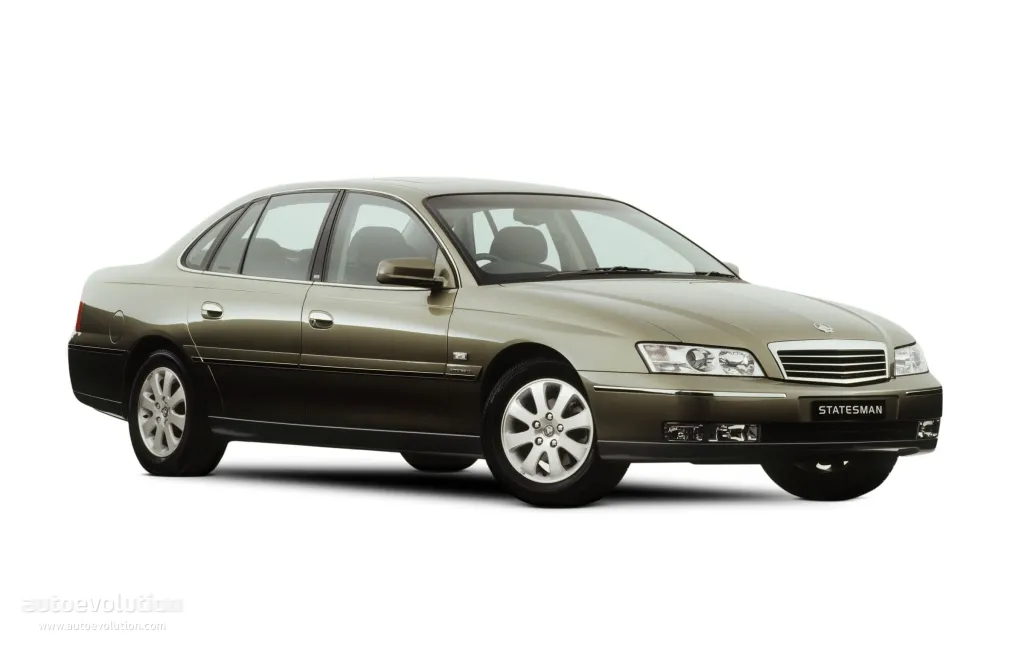
Even though the VT Commodore and the WH Statesman/Caprice shared most of their parts, they had some visual differences. They shared the same rounded-shaped horizontal headlights, but the grilles between them were unique to specific models. The Statesman featured a black egg-crate-styled one, while the upscale Caprice had slim chromed vertical slats. In addition, the latter also had a straight-up badge on the hood. Both WH variants featured horizontal fog lamps placed on the lower side of the wrapped-around plastic bumper.
From its profile, the WH lineup boasted its more extended wheelbase by 151 mm (6 inches). This added length was for the rear side of the cabin. As a result, behind the rear doors, the automaker installed triangular windows in the C-pillars. Another noticeable difference was noticed on the window line, which was surrounded by a chromed trim instead of black, like on the VT Commodore. At the same time, the Statesman came with body-colored door handles, while its higher-spec sibling Caprice had those finished with chromed decorations. At the back, the 1999 Holden Statesman/Caprice featured corner-mounted taillights visually connected via a red and white plastic stripe below the trunk lid’s opening. Last but not least, both vehicles ran on 16-inch alloy wheels.
Inside, the 1999 Holden Statesman/Caprice WH boasted a higher level of standard equipment than the regular VT Commodore. The lower-grade Statesman featured a ten-speaker sound system with six in-dash CD changers, dual-zone air conditioning, and eight-way power-adjustable front velour-covered seats. At the same time, the Caprice came with leather upholstery, two more speakers, and memory seats for the driver. The dashboard was carried over from the VT Commodore with large dials for the speedometer and tachometer flanked on the outer sides by the fuel level and coolant temperature gauges. At the back, thanks to the longer wheelbase, customers enjoyed a high comfort level, and the bench seat was profiled for two. However, if needed, three passengers could share it.
The Australian arm of GM installed a choice of three engines under the hoods of the 1999 Holden Statesman/Caprice, all paired with a four-speed automatic transmission as standard. The Statesman was also available with a five-speed manual transmission as an option for specific markets. The base powerhouse was a naturally aspirated 3.8-liter V6, while the mid-range had a supercharged version of the same unit. For those craving a larger powerplant, Holden installed a Chevrolet-sourced LS1 5.7-liter V8 carried over from the Corvette. A limited-slip differential was available across the range.