About Opel Ampera
In 2011, at the Geneva Motor Show, Opel unveiled the production version of the Ampera, a badge-engineered vehicle after the American Chevrolet Volt, and the car stole the show.
General Motors tried to create a vehicle that could outperform the Toyota Prius in any way, and its struggle led to the Chevrolet Volt for the U.S. market and the Opel/Vauxhall Ampera for the European one. Despite all the problems that occurred during the car's development process, the Ampera had a promising start. Unfortunately, due to its high price and the world financial crisis, which still affected sales, it didn't survive on the market for too long. In 2015, GM pulled the plug on the model, but with many lessons learned that helped it develop other electrified vehicles.
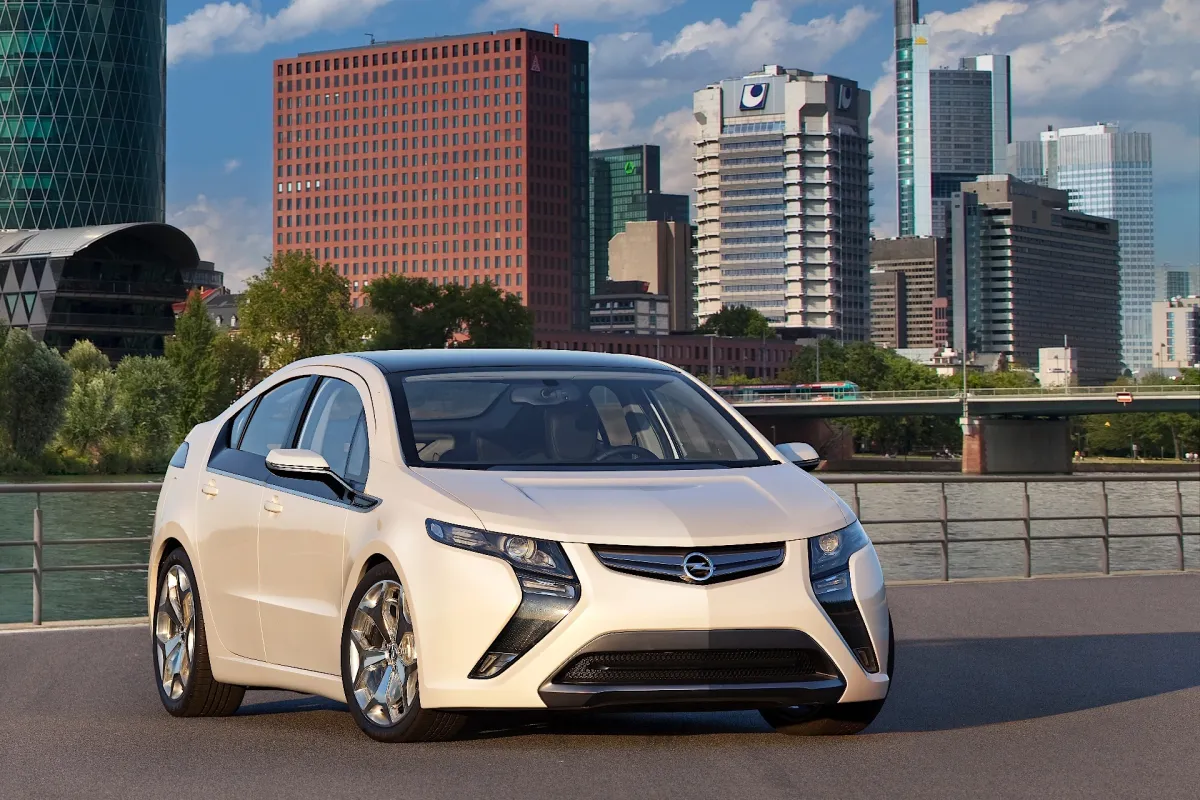
Opel's design center took the Chevrolet Volt and adapted it to suit the European customers' tastes. As a result, the car's front fascia differed from the one offered on the other side of the pond. It featured angry-looking headlights followed on their inner lower side by black trims that extended downwards, in a boomerang shape, towards the lower side of the bumper. The narrow upper grille between them sported a thick and a thin slat where the brand's badge took center stage.
From its profile, the 2011 Opel Ampera revealed its hatchback-styled shape with a raked-forward rear tailgate. GM's engineering team worked hard to lower the car's drag resistance and obtained a respectfully 0.28 Cd rating. The side windows were narrow, but to look taller, the automaker added black trims at their bottom. It was a clever way to save weight on a vehicle that was considered heavy for its category due to the battery pack. At the back, Opel's designers created new taillights that emerged from the upper sides of the quarter panels onto the tailgate and underlined them with a thick chromed slat. Finally, the lower bumper received a black trapezoidal-shaped trim that also sported the fog and the reversing lamps.
While the compact exterior dimensions of the vehicle made the car look small, the interior was spacious enough for four adults. However, the automaker had to install a tall longitudinal tunnel for the battery pack to protect them from side impacts if an accident occurred. As a result, the car had just four seats instead of five like any vehicle in the segment. The dashboard looked high-tech for those times, featuring a center touchscreen atop the center stack and another display fronting the driver. The upholstery was made from man-made leather, which wasn't of the highest quality. Furthermore, the door panels and the dashboard were made from hard plastic, which left the impression of a low-budget vehicle. One of the benefits of having the batteries installed in the middle of the vehicle was the large trunk that could be extended by folding down the rear individual seats. There, also, the automaker chose a flimsy vinyl cover for the luggage area that didn't match the car's steep price.
Underneath the bodywork, the automaker installed a 1.4-liter naturally aspirated gasoline engine that served as a generator for the electric motor that drove the wheels. As a result, the Ampera was initially considered an electric car with a range extender. Later, it was discovered that the ICE powered the vehicle via a clutch assembly at highway speeds, and the car was demoted to a hybrid vehicle status, stripping it from European governments' incentives for EVs.