About Peugeot Traveller
Peugeot introduced the Traveller in 2016 as its largest MPV for private and fleet customers, a nine-seat vehicle that helped large families to travel together.
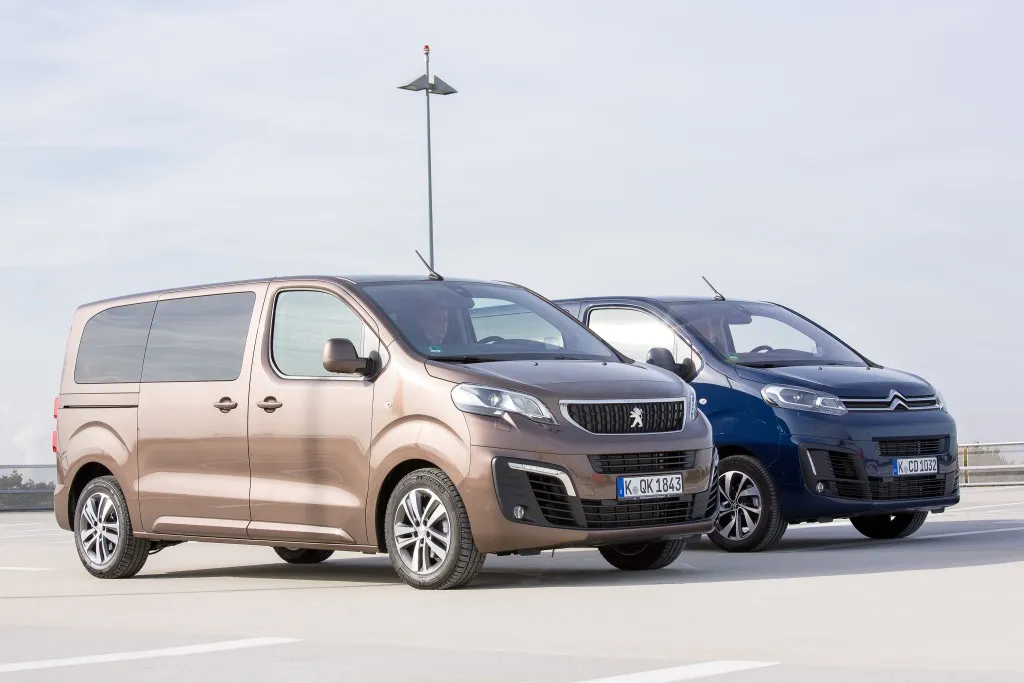
European automakers didn’t have too much experience in building minivans, and the market segment was not big enough to help them make a good profit if they didn’t play it smart. So, the Peugeot-Citroen group (PSA) allied with Toyota and made one. In addition, since Opel was already part of the PSA, it made its own version. But each automaker tried to adapt its version so it could fit in the brand’s design language, so the French automaker Peugeot did the same and gave the car a distinct look. It wasn’t exactly a looker, but thanks to its approach and pricing policy, it sold well on the European market.
Usually, minivans can’t tell a design story, and those made in cooperation with several brands are even less distinct. And yet, Peugeot’s design team managed to accomplish that when it penned the Traveller. At the front, the tall bumper featured a “fang” that masked a small portion of the headlights. Thus, it resembled the same design language seen on other Peugeot models, such as the 2008 and 3008. Unlike those models, the Traveller wasn’t fitted with LED bulbs, so customers had to deal with the regular halogen or Xenon headlamps. Furthermore, the black grille with chromed a surrounding resembled other vehicles made by the same brand, while the lower part of the bumper carried over design elements from the 308 and 208, especially the boomerang-shaped LED daytime running lights. From its profile, depending on the trim level and options, Peugeot offered either steel wheels or light-alloy ones. The automaker made the car with standard front doors and a sliding one on the curbside, while the one from the driver’s side was on the options list. At the back, the Traveller featured a large tailgate.
Inside, the automaker tried its best to provide what customers needed, from a low-grade, fabric-covered seat to a luxurious, leather-wrapped interior. Moreover, a panoramic glass roof added more light to the interior over the second and third rows of seats. For the driver and side passenger, the automaker installed tall individual seats. In front of the steering wheel, the automaker placed an instrument cluster filled with a few dials and a small TFT that showed data from the car’s onboard computer. For more convenience and pleasure driving, Peugeot added a touchscreen atop the center stack, which supported Bluetooth connectivity. Since the MPV was available in a choice of three lengths. The shortest was mostly for business or family use, while the longest was more suitable as a shuttle vehicle.
Under the hood, PSA installed a choice of four engines ranging between 94 HP (95 PS) and 174 HP (180 PS). The lowest-powered version was paired with a five-speed manual, while the upper ones were available with either a six-speed manual or a six-speed automatic. All of them sent their power to the front wheels only.