Skip to content
AD

Mercedes-Benz Typ S (W06) (1927 - present)

Mercedes-Benz · 1 trim

Mercedes-Benz Typ S (W06)

The Mercedes-Benz Typ S (W06) (1927 - present) is available in 1 trims producing 180 to 180 hp. The fastest trim reaches 171 km/h. The lowest stated fuel consumption is 26.1 l/100 km.

Power
180 hp
0–100
Fuel economy
26.1 l/100 km
Cargo

Typ S (W06) Trims

Compare →
Trims and engine versions — Mercedes-Benz Typ S (W06)
Trim Fuel Power Torque 0–100 Top speed Fuel economy CO2 Select
6.8 Kompressor (26/120/180) Petrol 180 hp 392 Nm 171 km/h 26.1 l/100 km 622 g/km

Fuel economy and CO2 follow the stated test cycle. Manufacturer figures; deviations per market and option pack are possible.

Is Mercedes-Benz Typ S (W06) a good choice against other models?

Average across every Mercedes-Benz Typ S (W06) trim, compared with 59 trims of other cars from the 1924–1930 period.

Is Mercedes-Benz Typ S (W06) a good choice against other models?
Measure This model Average Position
Power 180 hp 107 hp
better than 85%
Top speed 171 km/h 126 km/h
better than 88%

Percentages show the share of trims from the same period this model beats on that measure. Manufacturer figures.

Not stated by the manufacturer: acceleration 0–100 km/h and cargo volume. Those measures are left out of the comparison.

Comparable models from other brands

Opel Alfa Romeo Mitsubishi Ferrari Fiat Peugeot

About Mercedes-Benz Typ S (W06)

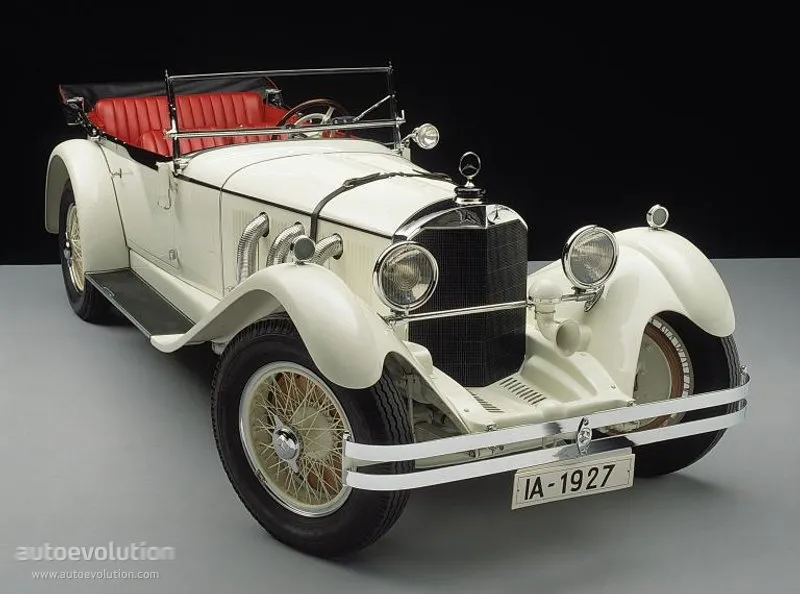
The German automaker introduced the W06 lineup in 1927, and the Typ S was among the first to appear in front of customers as a promise of a high-performance luxury vehicle.

Despite sporting a four-seat bodywork, the Typ S was so fast that it actually won the German Grand Prix in 1927. Suddenly, the luxurious brand became known for its performances, not just for its luxurious vehicles. In addition, the new W06 lineup came with many improvements for the drivetrain and suspension that made it not only a comfortable vehicle on long roads for those times' standards but also a very capable machine during high-speed cornering.

Like the rest of the range, the Typ S featured a V-shaped radiator grille placed behind the chromed bumper. Between the curved front fenders, the carmaker installed a cross-bar that supported the big and round headlights, which didn't obstruct the radiator's cooling area. One of the unique characteristics of the car was seen on the passenger's side of the vehicle, where three exhausts peaked out from within the engine compartment downwards and went to the back underneath the side steps. The curved chassis allowed the vehicle to sport a lower ground clearance than many cars from that era.

The cabin was fitted with two bucket seats at the front and a bench in the rear. As expected, the rear ones were removed during races. On the dash panel, Mercedes-Benz installed the dials in the middle, so the driver could see them easily without peaking through the four-spoke wooden steering wheel. Just like its other luxurious siblings, the Typ S featured expensive materials in the cabin.

Under the long hood, Mercedes-Benz installed a 6.8-liter inline-six engine. It was paired with a four-speed manual that sent the power to the rear live axle.

How much power does the Mercedes-Benz Typ S (W06) have?

The most powerful Mercedes-Benz Typ S (W06) trim is the 6.8 Kompressor (26/120/180) with 180 hp. The model has 1 trims, starting at 180 hp.

What is the fuel consumption of the Mercedes-Benz Typ S (W06)?

The most economical Mercedes-Benz Typ S (W06) trim is the 6.8 Kompressor (26/120/180), with a stated combined consumption of 26.1 l/100 km and 622 g CO2 per km.

Other Mercedes-Benz models