Skip to content
AD

Mercedes-Benz Typ Nurburg Sport Roadster (W08) (1928 - 1939)

Mercedes-Benz · 1 trim

Mercedes-Benz Typ Nurburg Sport Roadster (W08)

The Mercedes-Benz Typ Nurburg Sport Roadster (W08) (1928 - 1939) is available in 1 trims producing 80 to 80 hp. The fastest trim reaches 100 km/h. The lowest stated fuel consumption is 25.0 l/100 km.

Power
80 hp
0–100
Fuel economy
25.0 l/100 km
Cargo

Typ Nurburg Sport Roadster (W08) Trims

Compare →
Trims and engine versions — Mercedes-Benz Typ Nurburg Sport Roadster (W08)
Trim Fuel Power Torque 0–100 Top speed Fuel economy CO2 Select
460 K Petrol 80 hp 238 Nm 100 km/h 25.0 l/100 km 595 g/km

Fuel economy and CO2 follow the stated test cycle. Manufacturer figures; deviations per market and option pack are possible.

Is Mercedes-Benz Typ Nurburg Sport Roadster (W08) a good choice against other models?

Average across every Mercedes-Benz Typ Nurburg Sport Roadster (W08) trim, compared with 83 trims of other cars from the 1925–1931 period.

Is Mercedes-Benz Typ Nurburg Sport Roadster (W08) a good choice against other models?
Measure This model Average Position
Power 80 hp 120 hp
better than 28%
Top speed 100 km/h 134 km/h
better than 16%
Combined consumption 25.0 l/100 km 24.4 l/100 km
better than 51%
CO2 emissions 595 g/km 591 g/km
better than 52%

Percentages show the share of trims from the same period this model beats on that measure. Manufacturer figures.

Not stated by the manufacturer: acceleration 0–100 km/h and cargo volume. Those measures are left out of the comparison.

Comparable models from other brands

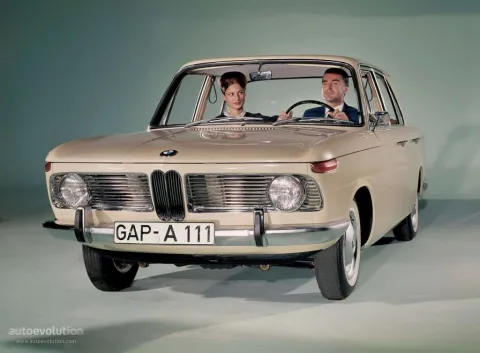
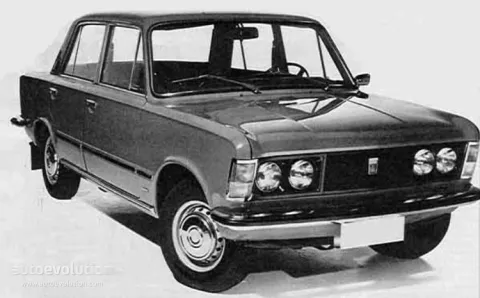
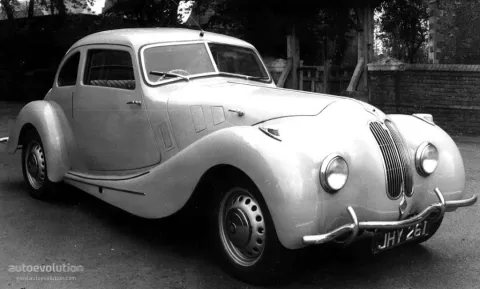
BMW FSO Bristol Fiat Caterham

About Mercedes-Benz Typ Nurburg Sport Roadster (W08)

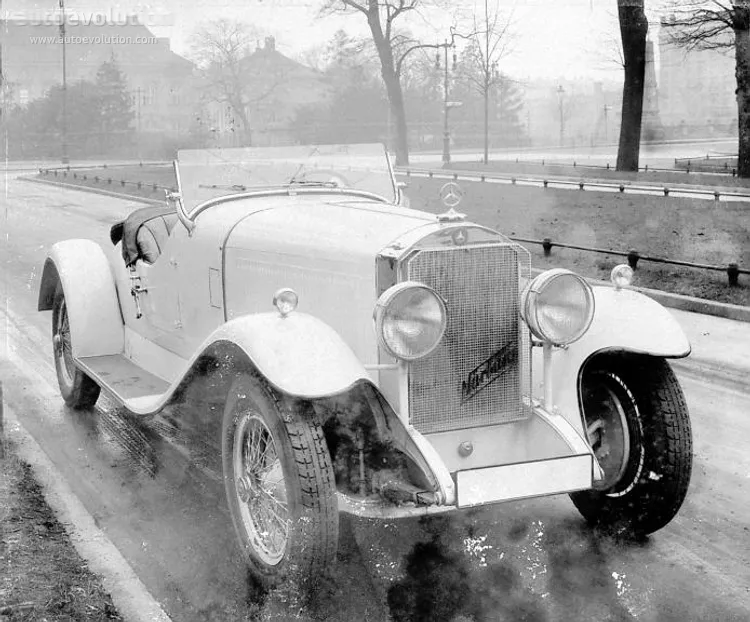
Mercedes-Benz introduced the W08 lineup in 1928, and it was the first car offered by the German carmaker with an inline-eight powerplant, and the Sport Roadster was a one-of-a-kind example.

While it is not precisely how such versions of the W08 were produced, there are few things clearly known: it was designed by no other than Ferdinand Porsche, and two vehicles appeared in 1929 on the Alpine Rally and on the 8-hour ADAC (the German Automobile Club) race. These were driven by the famous Rudolf Caracciola and Otto Merz. These cars were not shown in the carmaker's brochure nor offered for sale.

Designed on a shortened version of the W08's chassis, the Sport Roadster was a race car built with one purpose: to win races. Thus, the carmaker decided to make it around the engine compartment. At the front, it sported the big radiator protected by an additional mesh and placed the headlamps in a way that they didn't block the cooling area. Since it was not intended to be used on public roads with open traffic, it didn't feature a front or a rear bumper. Unlike the rest of the W08 range, the Sport Roadster featured wired wheels instead of wooden (artillery) ones.

The cockpit was tailored around the drivers, and they offered just two seats, so it could pass the mandatory race specs. Moreover, the seat was fixed on the floor. In front of the driver, a four-spoke steering wheel dominated the driver's side, while the dials were placed in the middle of the dashboard.

Under the hood, Mercedes-Benz installed a 4.6-liter inline-eight fed by carburetors, and it offered the same power as the rest of the W08 range: 80 PS (79 hp). Power was sent to the rear wheels via a four-speed manual transmission.

How much power does the Mercedes-Benz Typ Nurburg Sport Roadster (W08) have?

The most powerful Mercedes-Benz Typ Nurburg Sport Roadster (W08) trim is the 460 K with 80 hp. The model has 1 trims, starting at 80 hp.

What is the fuel consumption of the Mercedes-Benz Typ Nurburg Sport Roadster (W08)?

The most economical Mercedes-Benz Typ Nurburg Sport Roadster (W08) trim is the 460 K, with a stated combined consumption of 25.0 l/100 km and 595 g CO2 per km.

Other Mercedes-Benz models