Skip to content
AD

Bristol 400 (1946 - 1950)

Bristol · 1 trim

Bristol 400

The Bristol 400 (1946 - 1950) is available in 1 trims producing 81 to 81 hp. The fastest trim reaches 153 km/h. The lowest stated fuel consumption is 11.0 l/100 km.

Power
81 hp
0–100
Fuel economy
11.0 l/100 km
Cargo

400 Trims

Compare →
Trims and engine versions — Bristol 400
Trim Fuel Power Torque 0–100 Top speed Fuel economy CO2 Select
2.0 4MT (81 HP) Petrol 81 hp 125 Nm 153 km/h 11.0 l/100 km

Fuel economy and CO2 follow the stated test cycle. Manufacturer figures; deviations per market and option pack are possible.

Is Bristol 400 a good choice against other models?

Not stated by the manufacturer: acceleration 0–100 km/h, co2 emissions and cargo volume. Those measures are left out of the comparison.

Comparable models from other brands

Caterham Fiat BMW Bugatti FSO Volkswagen

About Bristol 400

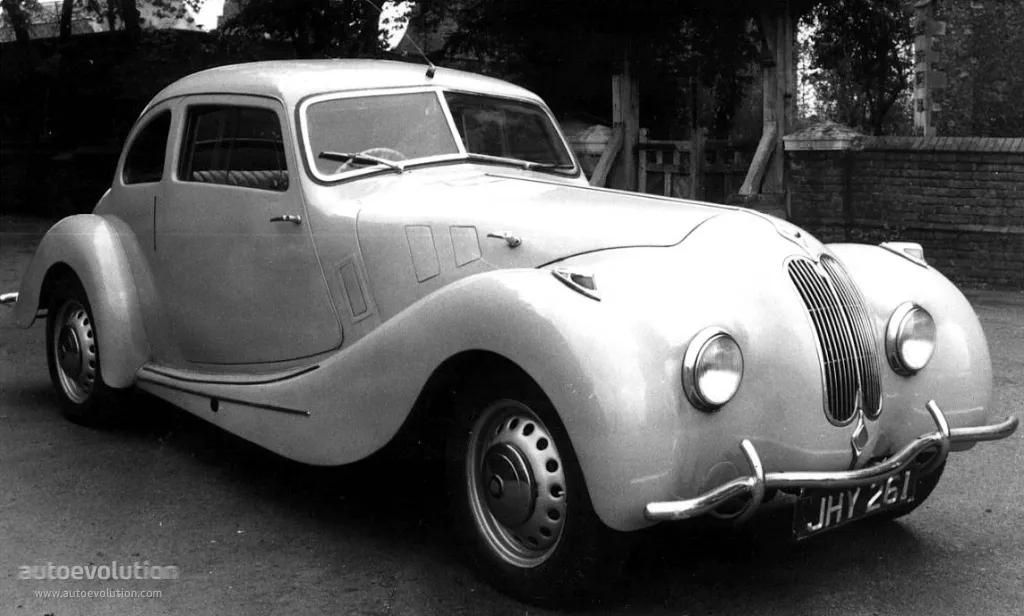
After WWII, the Bristol Aeroplane Company created a car division, bought a license from Frazer Nash, and started producing pre-war BMWs under its badge.

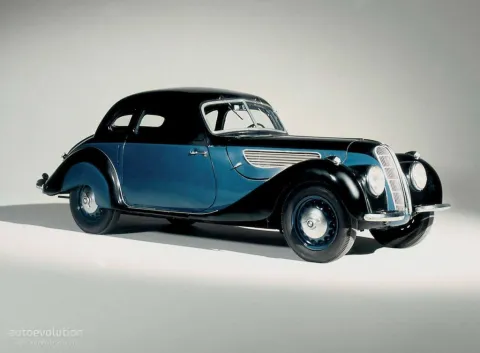
Bristol didn't have the know-how on cars, but it knew how to use light alloys. It also lacked the technology for building a car engine. Thanks to its connections with the British army, Bristol was granted to receive refunds for the war effort, got the plans for the BMW 327, and hired the German carmaker's former chief engineer, Dr. Fritz Fiedler.

The British carmaker followed the original plans but replaced the materials. It even kept the BMW kidney-grille at the front but replaced the round badge with the Bristol one. Bristol built the doors, hood, and trunk from aluminum and moved the spare wheel inside the luggage compartment for a sleeker, more aerodynamic shape. For the second series, between 1948 and 1950, the 400 had the spare wheel on the lid, like the original BMW 327. Both versions sported rear-hinged doors, and it was available only as a coupe.

Inside, the dashboard was redesigned in an aviation-specific layout, with the oil-pressure gauge placed in front of the driver. That was considered by Bristol as the most important gauge. It mounted the speedometer and tachometer in the middle, flanking the ignition key and the ammeter.

Under the hood, Bristol installed BMW's 2.0-liter inline-six engine. Three Solex carburetors fed it, and it featured a hemispherical combustion chamber, which was later on known as a Hemi-engine.

How much power does the Bristol 400 have?

The most powerful Bristol 400 trim is the 2.0 4MT (81 HP) with 81 hp. The model has 1 trims, starting at 81 hp.

What is the fuel consumption of the Bristol 400?

The most economical Bristol 400 trim is the 2.0 4MT (81 HP), with a stated combined consumption of 11.0 l/100 km and — g CO2 per km.

Other Bristol models

Bristol 402

1949 - 1950 · 1 trim

Power
86 hp
0–100
17.0 s
Fuel economy
12.0

Petrol

Bristol 403

1953 - 1955 · 1 trim

Power
107 hp
0–100
15.6 s
Fuel economy
12.0

Petrol

Bristol 406

1958 - 1961 · 1 trim

Power
107 hp
0–100
14.0 s
Fuel economy
12.0

Petrol

Bristol 407

1961 - 1963 · 1 trim

Power
253 hp
0–100
Fuel economy

Petrol

Bristol 408

1963 - present · 1 trim

Power
253 hp
0–100
10.2 s
Fuel economy
20.3

Petrol