Skip to content
AD

Bristol 402 (1949 - 1950)

Bristol · 1 trim

Bristol 402

The Bristol 402 (1949 - 1950) is available in 1 trims producing 86 to 86 hp. The fastest trim reaches 145 km/h. The lowest stated fuel consumption is 12.0 l/100 km.

Power
86 hp
0–100
17.0 s
Fuel economy
12.0 l/100 km
Cargo

402 Trims

Compare →
Trims and engine versions — Bristol 402
Trim Fuel Power Torque 0–100 Top speed Fuel economy CO2 Select
2.0L 4MT (86 HP) Petrol 86 hp 145 Nm 17.0 s 145 km/h 12.0 l/100 km

Fuel economy and CO2 follow the stated test cycle. Manufacturer figures; deviations per market and option pack are possible.

Is Bristol 402 a good choice against other models?

Average across every Bristol 402 trim, compared with 83 trims of other cars from the 1946–1952 period.

Is Bristol 402 a good choice against other models?
Measure This model Average Position
Power 86 hp 89 hp
better than 52%
Torque 145 Nm 155 Nm
better than 59%
Top speed 145 km/h 146 km/h
better than 48%
Acceleration 0–100 km/h 17.0 s 22.5 s
better than 46%
Combined consumption 12.0 l/100 km 10.9 l/100 km
better than 39%
Unladen weight 1,225 kg 1,239 kg
better than 46%

Percentages show the share of trims from the same period this model beats on that measure. Manufacturer figures.

Not stated by the manufacturer: co2 emissions and cargo volume. Those measures are left out of the comparison.

Comparable models from other brands

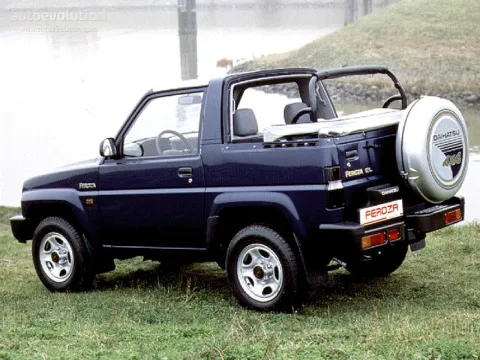
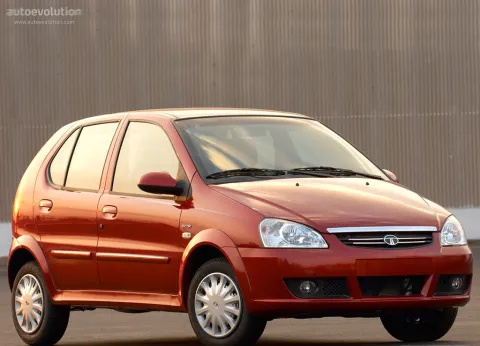
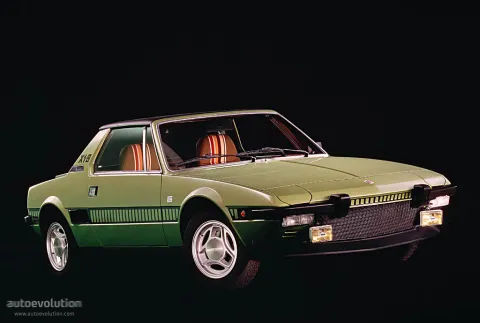
Daihatsu Tata Motors Fiat Dacia Proton

About Bristol 402

The British carmaker already had a license from BMW for the two-liter inline-six engine and the four-speed gearbox and used that to create and raise the Bristol brand.

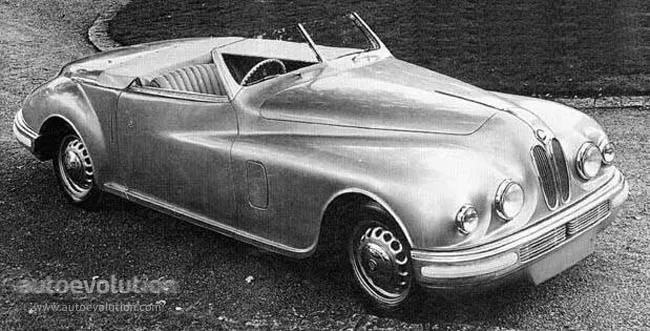
In 1948, the carmaker rushed on the market with an open-top version for the Bristol 401 and named-it drop-head. While the vehicle still relied on the underpinnings from the Bristol 400, which was mostly a licensed BMW 327, it revealed a new bodywork. Unfortunately, the car was way too bold for its time.

Bristol used the same BMW kidney-grille at the front but added two more parking lights on the outer side of the front fenders, next to the main headlamps. Its arched and profiled fenders resembled those from the model 401. Its open-top bodywork was long enough to allow the canopy to retract behind the seats completely. In the long, boat-tail style, rear-end, the carmaker installed the trunk with the spare wheel inside. At the BMW 327, that was on the trunk lid.

Inside, the carmaker made a leather-clad interior. The dashboard sported squared dials for the speedometer, tachometer, and fuel level. Its curved two-spokes from the steering wheel resembled an aircraft helm.

Under the hood, the carmaker used the three-carburetor version of the BMW's 2.0-liter inline-six engine, which produced 86 hp. Bristol used the same front-independent suspension with a transverse leaf spring and a live axle in the rear. But the car didn't prove to be successful and sold only 26 units. Other sources stated that only 23 ever left the assembly lines.

How much power does the Bristol 402 have?

The most powerful Bristol 402 trim is the 2.0L 4MT (86 HP) with 86 hp. The model has 1 trims, starting at 86 hp.

What is the fuel consumption of the Bristol 402?

The most economical Bristol 402 trim is the 2.0L 4MT (86 HP), with a stated combined consumption of 12.0 l/100 km and — g CO2 per km.

How quickly does the Bristol 402 accelerate from 0 to 100 km/h?

The quickest trim is the 2.0L 4MT (86 HP): 0-100 km/h in 17.0 seconds, with a top speed of 145 km/h.

Other Bristol models

Bristol 400

1946 - 1950 · 1 trim

Power
81 hp
0–100
Fuel economy
11.0

Petrol

Bristol 403

1953 - 1955 · 1 trim

Power
107 hp
0–100
15.6 s
Fuel economy
12.0

Petrol

Bristol 406

1958 - 1961 · 1 trim

Power
107 hp
0–100
14.0 s
Fuel economy
12.0

Petrol

Bristol 407

1961 - 1963 · 1 trim

Power
253 hp
0–100
Fuel economy

Petrol

Bristol 408

1963 - present · 1 trim

Power
253 hp
0–100
10.2 s
Fuel economy
20.3

Petrol