Skip to content
AD

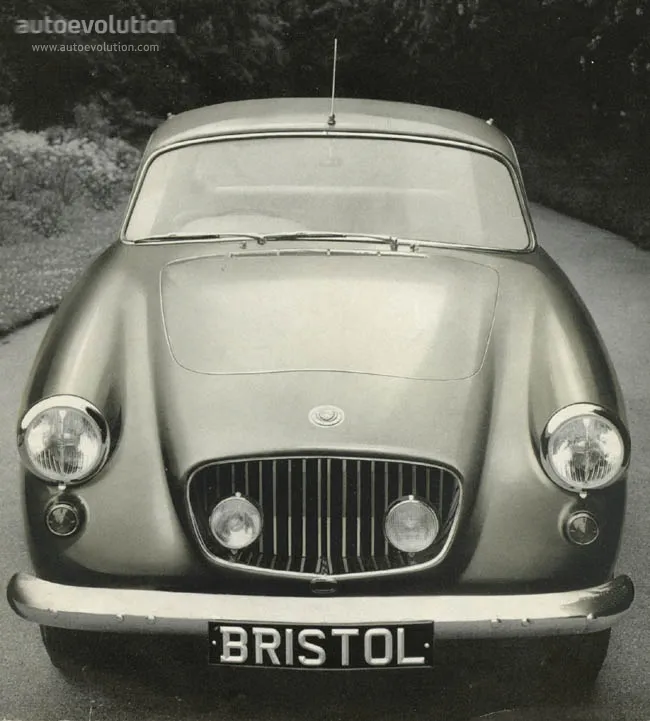
Bristol 406 (1958 - 1961)

Bristol · 1 trim

Bristol 406

The Bristol 406 (1958 - 1961) is available in 1 trims producing 107 to 107 hp. The fastest trim reaches 172 km/h. The lowest stated fuel consumption is 12.0 l/100 km.

Power
107 hp
0–100
14.0 s
Fuel economy
12.0 l/100 km
Cargo

406 Trims

Compare →
Trims and engine versions — Bristol 406
Trim Fuel Power Torque 0–100 Top speed Fuel economy CO2 Select
2.2L 5MT (107 HP) Petrol 107 hp 175 Nm 14.0 s 172 km/h 12.0 l/100 km

Fuel economy and CO2 follow the stated test cycle. Manufacturer figures; deviations per market and option pack are possible.

Is Bristol 406 a good choice against other models?

Average across every Bristol 406 trim, compared with 132 trims of other cars from the 1955–1961 period.

Is Bristol 406 a good choice against other models?
Measure This model Average Position
Power 107 hp 159 hp
better than 41%
Torque 175 Nm 244 Nm
better than 45%
Top speed 172 km/h 166 km/h
better than 54%
Acceleration 0–100 km/h 14.0 s 13.8 s
better than 38%
Combined consumption 12.0 l/100 km 12.7 l/100 km
better than 46%
Unladen weight 1,365 kg 1,355 kg
better than 44%

Percentages show the share of trims from the same period this model beats on that measure. Manufacturer figures.

Not stated by the manufacturer: co2 emissions and cargo volume. Those measures are left out of the comparison.

Comparable models from other brands

Acura Chevrolet Scion Mahindra Aston Martin Lada

About Bristol 406

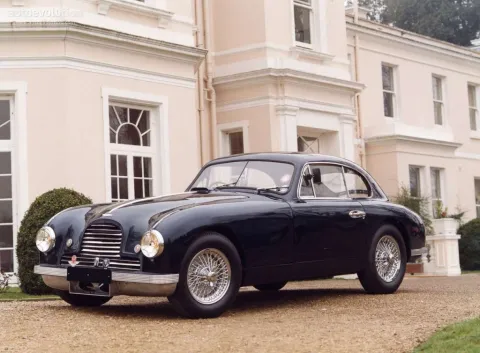
After WWII, the Bristol Aeroplane Co. decided to build cars and they started with a license of a pre-war BMW 327. And that's how the Bristol 400 series started in 1947.

Fast forward in 1958 and the new, Bristol 406 was launched. It featured the same inline-six engine from the pre-war BMW 328 with Solex triple downdraft carburetors and a cross-pushrod system that produced 105 hp.

The chassis was derived from the BMW 327, but with an evolution of a Watt linkage on its live rear axle. The 406 featured a Dunlop 4 wheel disc brakes, which was unusual for that era. The Mercedes-Benz 220 “Ponton” from the same era had four drums. On top of that, was a rack-and-pinion steering.

The styling was debatable. The 406 was the first Bristol that looked like it had been designed by a car-maker instead of an aircraft-maker. The big “mouth” front was far from pretty, but the rest of the car had a modern look.

Inside, the 406 was extremely luxurious, with sumptuous leather seats and high quality bound Wilton carpets. A particular feature for the 406 was the flip-up integrated headrests in the front seats.

The dashboard layout and the instrument cluster looked like they were taken from an aircraft, with easy reading and enough information about the car's parameters.

The body-on-frame structure made the vehicle heavy, especially for those times. And with an engine that was great in the mid-'30s, the performance wasn't that great. The 4-speed manual gearbox with an electric overdrive was new and it could keep the car in low revs at higher speeds. Only 174 units of Bristol 406 were built.

How much power does the Bristol 406 have?

The most powerful Bristol 406 trim is the 2.2L 5MT (107 HP) with 107 hp. The model has 1 trims, starting at 107 hp.

What is the fuel consumption of the Bristol 406?

The most economical Bristol 406 trim is the 2.2L 5MT (107 HP), with a stated combined consumption of 12.0 l/100 km and — g CO2 per km.

How quickly does the Bristol 406 accelerate from 0 to 100 km/h?

The quickest trim is the 2.2L 5MT (107 HP): 0-100 km/h in 14.0 seconds, with a top speed of 172 km/h.

Other Bristol models

Bristol 407

1961 - 1963 · 1 trim

Power
253 hp
0–100
Fuel economy

Petrol

Bristol 403

1953 - 1955 · 1 trim

Power
107 hp
0–100
15.6 s
Fuel economy
12.0

Petrol

Bristol 408

1963 - present · 1 trim

Power
253 hp
0–100
10.2 s
Fuel economy
20.3

Petrol

Bristol 402

1949 - 1950 · 1 trim

Power
86 hp
0–100
17.0 s
Fuel economy
12.0

Petrol

Bristol 400

1946 - 1950 · 1 trim

Power
81 hp
0–100
Fuel economy
11.0

Petrol