
Skip to content
AD

Bristol 403 (1953 - 1955)

Bristol · 1 trim

Bristol 403

The Bristol 403 (1953 - 1955) is available in 1 trims producing 107 to 107 hp. The fastest trim reaches 164 km/h. The lowest stated fuel consumption is 12.0 l/100 km.

Power
107 hp
0–100
15.6 s
Fuel economy
12.0 l/100 km
Cargo

403 Trims

Compare →
Trims and engine versions — Bristol 403
Trim Fuel Power Torque 0–100 Top speed Fuel economy CO2 Select
2.0L 4MT (107 HP) Petrol 107 hp 152 Nm 15.6 s 164 km/h 12.0 l/100 km

Fuel economy and CO2 follow the stated test cycle. Manufacturer figures; deviations per market and option pack are possible.

Is Bristol 403 a good choice against other models?

Average across every Bristol 403 trim, compared with 110 trims of other cars from the 1950–1956 period.

Is Bristol 403 a good choice against other models?
Measure This model Average Position
Power 107 hp 115 hp
better than 47%
Torque 152 Nm 190 Nm
better than 43%
Top speed 164 km/h 163 km/h
better than 53%
Acceleration 0–100 km/h 15.6 s 17.2 s
better than 43%
Combined consumption 12.0 l/100 km 12.2 l/100 km
better than 48%
Unladen weight 1,260 kg 1,275 kg
better than 50%

Percentages show the share of trims from the same period this model beats on that measure. Manufacturer figures.

Not stated by the manufacturer: co2 emissions and cargo volume. Those measures are left out of the comparison.

Comparable models from other brands

Acura Chevrolet Scion Mahindra Aston Martin Lada

About Bristol 403

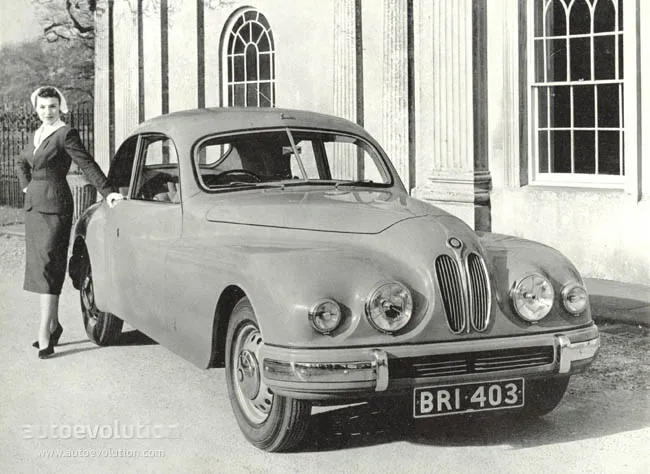
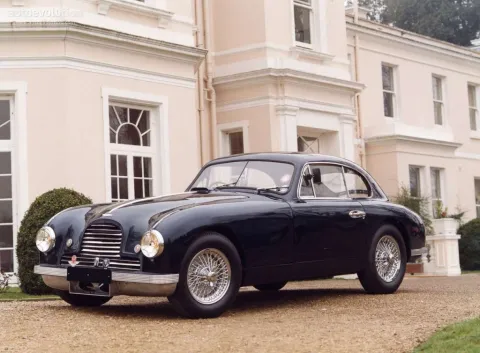
It was the last Bristol that featured the “kidney-grille” from BMW since it was built with the inline-six engine from BMW. It was the successor of the 401 and it still shared some parts with the German car-maker.

Before WWII, BMW and Bristol were linked together. The war broke their alliance and made both sides lose their projects. After 1945, the economy started to move on and the two manufacturers restarted their cooperation. Bristol used much of the BMW technology to build its cars, starting with the chassis, drivetrain, and even the look of the car, which was similar to the BMW 327 coupe.

For the exterior, the 1953 Bristol featured a new pair of headlights on the front fenders. It was a major aesthetic look that could tell the difference between the 403 and 401 models. The aerodynamically shaped bodywork was studied by the Bristol engineers, who used to be the ones to design aircraft and bombers for the RAF (Royal Air Forces).

Inside, some elements resembled the BMW 327. First, there was the same square design for gauges. The linkage to the gearbox was via an angled gear-stick, like in the 327. The dashboard was covered in wood.

The first models were fitted with modified BMW inline-six engines. Later, the 100B series unit, featured more advanced engines, with a short shift gear-stick and an overdrive top gear.

How much power does the Bristol 403 have?

The most powerful Bristol 403 trim is the 2.0L 4MT (107 HP) with 107 hp. The model has 1 trims, starting at 107 hp.

What is the fuel consumption of the Bristol 403?

The most economical Bristol 403 trim is the 2.0L 4MT (107 HP), with a stated combined consumption of 12.0 l/100 km and — g CO2 per km.

How quickly does the Bristol 403 accelerate from 0 to 100 km/h?

The quickest trim is the 2.0L 4MT (107 HP): 0-100 km/h in 15.6 seconds, with a top speed of 164 km/h.

Other Bristol models

Bristol 402

1949 - 1950 · 1 trim

Power
86 hp
0–100
17.0 s
Fuel economy
12.0

Petrol

Bristol 406

1958 - 1961 · 1 trim

Power
107 hp
0–100
14.0 s
Fuel economy
12.0

Petrol

Bristol 400

1946 - 1950 · 1 trim

Power
81 hp
0–100
Fuel economy
11.0

Petrol

Bristol 407

1961 - 1963 · 1 trim

Power
253 hp
0–100
Fuel economy

Petrol

Bristol 408

1963 - present · 1 trim

Power
253 hp
0–100
10.2 s
Fuel economy
20.3

Petrol