Skip to content
AD

Renault 30 (1979 - 1984)

Renault · 7 trims

Renault 30

The Renault 30 (1979 - 1984) is available in 7 trims producing 88 to 143 hp. The fastest trim reaches 188 km/h. The lowest stated fuel consumption is 7.4 l/100 km.

Power
143 hp
0–100
9.7 s
Fuel economy
7.4 l/100 km
Cargo
394 l

30 Trims

Compare →
Trims and engine versions — Renault 30
Trim Fuel Power Torque 0–100 Top speed Fuel economy CO2 Select
2.1td 5MT (88 HP) Diesel 88 hp 182 Nm 16.0 s 160 km/h 7.4 l/100 km 196 g/km
2.7L V6 3AT (125 HP) Petrol 125 hp 204 Nm 10.2 s 177 km/h 13.4 l/100 km
2.7L V6 4MT (125 HP) Petrol 125 hp 204 Nm 10.6 s 183 km/h
2.7L V6 3AT (131 HP) Petrol 131 hp 203 Nm 10.6 s 180 km/h
2.7L V6 4MT (131 HP) Petrol 131 hp 203 Nm 9.7 s 188 km/h 11.5 l/100 km 274 g/km
2.7L V6 3AT (143 HP) Petrol 143 hp 219 Nm 11.3 s 182 km/h 11.5 l/100 km
2.7L V6 5MT (143 HP) Petrol 143 hp 219 Nm 10.4 s 187 km/h 11.5 l/100 km

Fuel economy and CO2 follow the stated test cycle. Manufacturer figures; deviations per market and option pack are possible.

Is Renault 30 a good choice against other models?

Average across every Renault 30 trim, compared with 609 trims of other cars from the 1976–1982 period.

Is Renault 30 a good choice against other models?
Measure This model Average Position
Power 127 hp 125 hp
better than 64%
Torque 205 Nm 193 Nm
better than 64%
Top speed 180 km/h 179 km/h
better than 57%
Acceleration 0–100 km/h 11.3 s 12.6 s
better than 58%
Combined consumption 11.1 l/100 km 9.8 l/100 km
better than 23%
CO2 emissions 235 g/km 223 g/km
better than 37%
Cargo volume 394 l 430 l
better than 40%
Unladen weight 1,302 kg 1,253 kg
better than 38%

Percentages show the share of trims from the same period this model beats on that measure. Manufacturer figures.

Comparable models from other brands

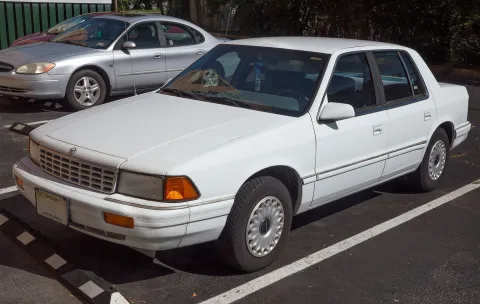
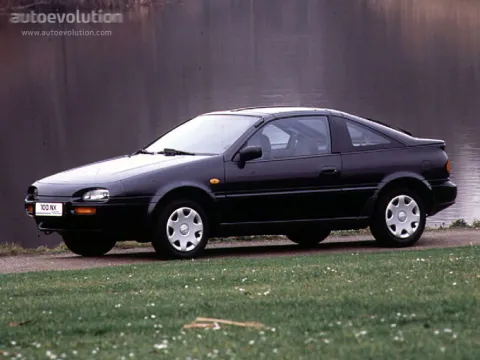
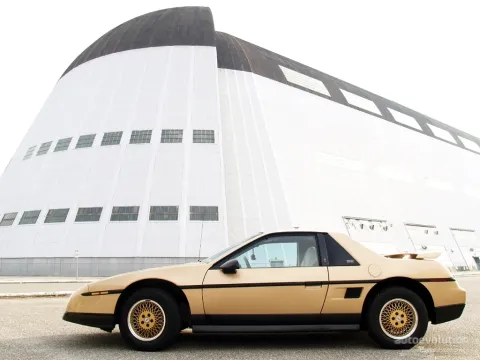
Plymouth Nissan Pontiac Chrysler Alfa Romeo Vauxhall

About Renault 30

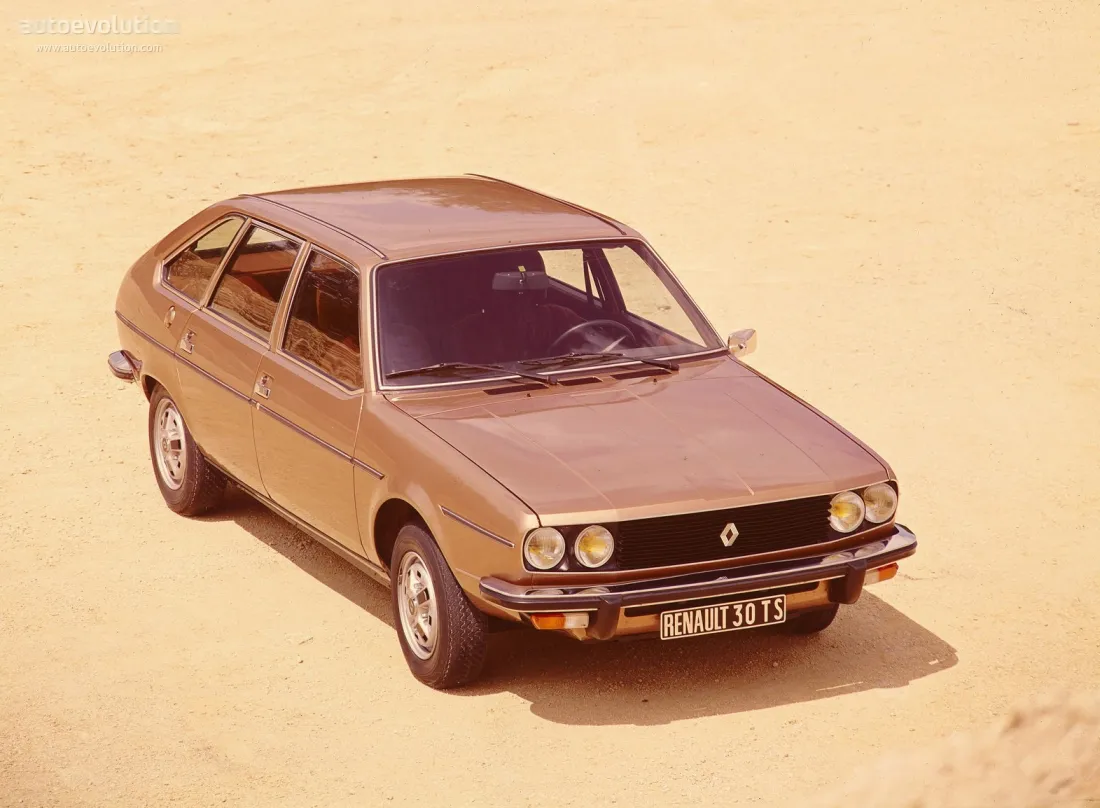
After switching to Formula 1 and winning the 1978 LeMans race, Renault launched the facelift for its flagship, the 30. It was fitted with better engines and transmissions.

The Renault 30 was the first car built by Renault to feature an engine with more than 4 cylinders under the hood, after WWII. The state-owned French company took care of building accessible cars for French people and only after that it started to look more for the export markets.

The Cibie four-round headlamps and the black grille were one of the key design elements of the R30 when compared with its cheaper brother, the R20, which had the same bodywork but square headlights. There were new door handles, flush to the bodywork and that enhanced the look of the car. A wider choice of alloy-wheels was available. The car still featured steel bumper, both front, and rear, but with the addition of rubber strips.

Inside, the car was modernized. It could feature a Philips stereo-radio, a power-sunroof, power-windows and locks. The large front seats and the big space for the rear bench made the car very comfortable for long journeys.

The Renault 30 featured either a fuel-injected V6 engine or a 2.1-liter diesel. A 5-speed gearbox was fitted as standard and a 3-speed auto was available at extra cost for the gasoline version only. The four-wheel independent suspension enhanced the comfort and the cornering speed, while the disc-brakes all-around ensured a shorter stopping distance.

How much power does the Renault 30 have?

The most powerful Renault 30 trim is the 2.7L V6 3AT (143 HP) with 143 hp. The model has 7 trims, starting at 88 hp.

What is the fuel consumption of the Renault 30?

The most economical Renault 30 trim is the 2.1td 5MT (88 HP), with a stated combined consumption of 7.4 l/100 km and 196 g CO2 per km.

How quickly does the Renault 30 accelerate from 0 to 100 km/h?

The quickest trim is the 2.7L V6 4MT (131 HP): 0-100 km/h in 9.7 seconds, with a top speed of 188 km/h.

How large is the cargo volume of the Renault 30?

The largest stated cargo volume for the Renault 30 is 394 litres.

Other Renault models

Renault Fuego

1980 - 1985 · 4 trims

Power
110 hp
0–100
11.0 s
Fuel economy
6.7

Petrol

Renault 14

1976 - 1983 · 2 trims

Power
70 hp
0–100
13.0 s
Fuel economy
8.1

Petrol

Renault 20

1975 - 1984 · 6 trims

Power
116 hp
0–100
11.6 s
Fuel economy
7.9

Petrol Diesel

Renault 16

1965 - present · 4 trims

Power
90 hp
0–100
12.5 s
Fuel economy
9.3

Petrol