Skip to content
AD

Renault Fuego (1980 - 1985)

Renault · 4 trims

Renault Fuego

The Renault Fuego (1980 - 1985) is available in 4 trims producing 64 to 110 hp. The fastest trim reaches 192 km/h. The lowest stated fuel consumption is 6.7 l/100 km.

Power
110 hp
0–100
11.0 s
Fuel economy
6.7 l/100 km
Cargo
337 l

Fuego Trims

Compare →
Trims and engine versions — Renault Fuego
Trim Fuel Power Torque 0–100 Top speed Fuel economy CO2 Select
1.4L 5MT FWD (64 HP) Petrol 64 hp 101 Nm 15.0 s 160 km/h 7.0 l/100 km 167 g/km
1.7L 5MT FWD (74 HP) Petrol 73 hp 128 Nm 15.0 s 163 km/h 6.7 l/100 km 160 g/km
1.7L 5MT FWD (96 HP) Petrol 97 hp 130 Nm 12.1 s 180 km/h 8.3 l/100 km 198 g/km
2.0L 5MT FWD (110 HP) Petrol 110 hp 160 Nm 11.0 s 192 km/h 8.2 l/100 km 195 g/km

Fuel economy and CO2 follow the stated test cycle. Manufacturer figures; deviations per market and option pack are possible.

Is Renault Fuego a good choice against other models?

Average across every Renault Fuego trim, compared with 750 trims of other cars from the 1977–1983 period.

Is Renault Fuego a good choice against other models?
Measure This model Average Position
Power 86 hp 118 hp
better than 31%
Torque 130 Nm 183 Nm
better than 28%
Top speed 174 km/h 178 km/h
better than 49%
Acceleration 0–100 km/h 13.3 s 12.7 s
better than 37%
Combined consumption 7.6 l/100 km 9.3 l/100 km
better than 77%
CO2 emissions 180 g/km 209 g/km
better than 68%
Cargo volume 337 l 423 l
better than 30%
Unladen weight 977 kg 1,202 kg
better than 73%

Percentages show the share of trims from the same period this model beats on that measure. Manufacturer figures.

Comparable models from other brands

Mazda Peugeot Mercedes-Benz Audi Opel Tata Motors

About Renault Fuego

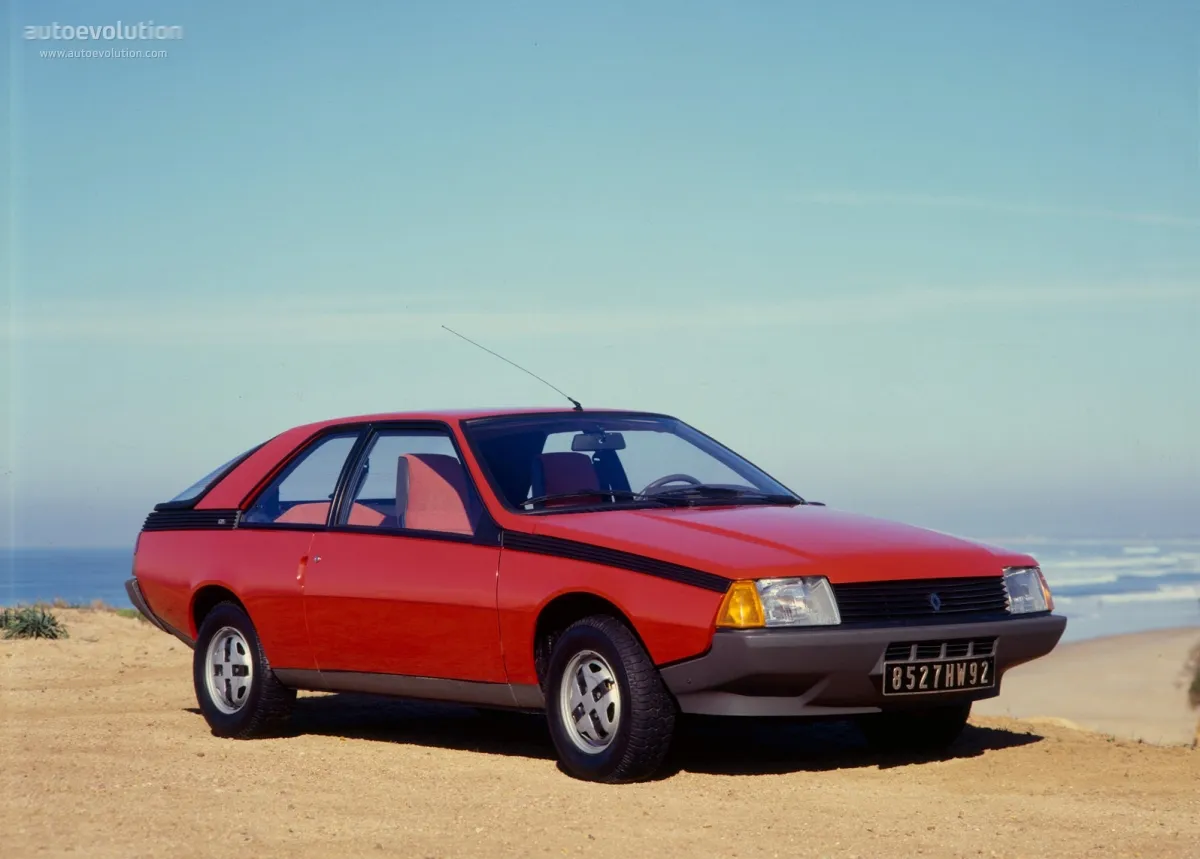
Renault was keen on keeping a sporty product on the European market and, in 1980, it launched the Fuego (Fire), aiming at the Ford Capri and Volkswagen Scirocco.

Like its predecessors, the models 15 and 17, the Fuego shared its platform with another big-selling vehicle from Renault's lineup, the 18. Unfortunately, that platform was already old since it was based on the Renault 12 from the mid-'60s. But still, the vehicle's shape was sporty and helped the carmaker sell more than 260,000 units.

The styling was appealing, with a fastback appearance and two doors. It offered a sporty look. Its door handles were hidden behind the vertical cut of the doors, leaving only the keyhole visible. At the front, the rectangular headlights and the tilted grille also increased the sporty look of the car. Its raked windshield and low roof led to a smaller cabin and narrow windows. As an option for several markets, the carmaker offered a canvas top that opened the car's roof.

Inside, the carmaker installed sport seats with high bolstering for the front passengers and a tiny bench in the rear fit mostly for purses and bags than for adults. The driver benefited from an adjustable steering column and a neat instrument panel with the fuel and temperature gauges in the middle, flanked by the speedometer on the left and the tachometer on the right. On the center stack, Renault installed the AC controls and a stereo.

Even though it shared its underpinning with the Renault 18, the Fuego benefited from a few parts carried over from the larger Renault 20. Thus, the carmaker managed to avoid further development costs by using what it had in stocks. Under the hood, depending on the market, the Fuego featured a wide engine range between 1.4- and 2.2-liter.

How much power does the Renault Fuego have?

The most powerful Renault Fuego trim is the 2.0L 5MT FWD (110 HP) with 110 hp. The model has 4 trims, starting at 64 hp.

What is the fuel consumption of the Renault Fuego?

The most economical Renault Fuego trim is the 1.7L 5MT FWD (74 HP), with a stated combined consumption of 6.7 l/100 km and 160 g CO2 per km.

How quickly does the Renault Fuego accelerate from 0 to 100 km/h?

The quickest trim is the 2.0L 5MT FWD (110 HP): 0-100 km/h in 11.0 seconds, with a top speed of 192 km/h.

How large is the cargo volume of the Renault Fuego?

The largest stated cargo volume for the Renault Fuego is 337 litres.

Other Renault models

Renault 30

1979 - 1984 · 7 trims

Power
143 hp
0–100
9.7 s
Fuel economy
7.4

Petrol Diesel

Renault 14

1976 - 1983 · 2 trims

Power
70 hp
0–100
13.0 s
Fuel economy
8.1

Petrol

Renault 20

1975 - 1984 · 6 trims

Power
116 hp
0–100
11.6 s
Fuel economy
7.9

Petrol Diesel

Renault 16

1965 - present · 4 trims

Power
90 hp
0–100
12.5 s
Fuel economy
9.3

Petrol