About Samsung SM5
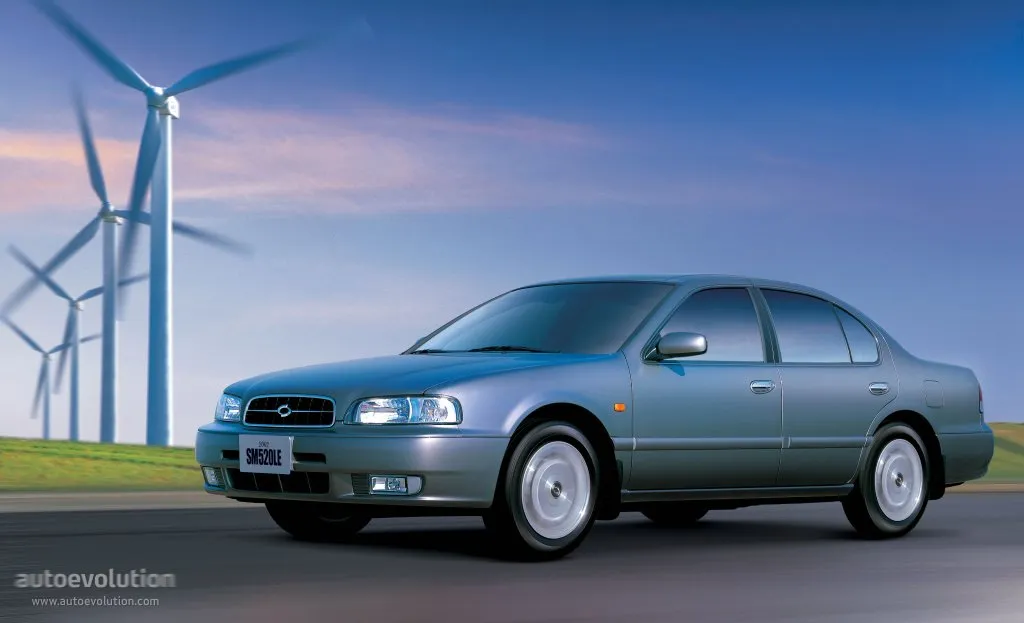
Samsung Motors introduced the SM5 as its flagship model in 1998, and it was a badged-engineered product of the fourth generation of the Nissan Maxima.
The Korean industrial giant Samsung established Samsung Motors in 1994 after it inked a deal with the Japanese automaker Nissan to help them produce cars. As a result, one of the first products was the 1998 Samsung SQ5, which was later renamed SM5. While it was mostly a Nissan Cefiro/Maxima, it sported the Korean automaker’s logos and was built in Korea at Samsung’s factory in Busan. Unfortunately for the young car brand, its independence didn’t last too long due to the Asian financial crisis in the late 90s, and Samsung had to sell its automotive business to Renault in 2000. The French automaker had already formed an alliance with Nissan in March 1999, so things went smoother.
Samsung had its ideas regarding cars and imposed them when it penned the SM5. As a result, the front fascia featured different headlights than its Maxima sister. These sported larger inner headlamps for the high beams that partly intruded into the front bumper. Between them, the automaker placed the grille with thin vertical slats and a chromed surrounding. On the lower side of the bumper, the SM5 featured a broad air intake crossed by a horizontal slat and flanked by a pair of fog lamps. Last but not least, Samsung installed a chromed badge on the hood.
From its profile, the four-door sedan sported curved lines that resembled the bio-design era from the early ‘90s. The flush door handles and the body-colored trims applied on the doors offered a luxurious look for the car. Still, the B-pillars were black, creating the image of larger windows, and didn’t have any chromed elements. Finally, at the back, the automaker installed wide taillights extended from the quarter panels onto the trunk’s lid, with the upper section reserved for the reversing lights.
Inside, Samsung tried to create a luxurious cabin with standard fabric upholstery and an option for leather-wrapped seats. In addition, several wood trims adorned the dashboard, the center stack, the door cards, and the center console. Like its Japanese brother, the SM5 featured a clean layout for the instrument cluster where the fuel level and coolant temperature gauges flanked the speedometer and the tachometer. In addition, a small LCS placed on the lower side of the panel showed the odometer.
Samsung installed a choice of three engines under the SM5’s hood: two inline-four and a V6. The former versions sent their power to the front wheels via five-speed manual transmissions, while the V6 was a four-speed automatic affair. Unfortunately, the main downturn of the SM5 was the torsion beam for the rear suspension carried over from the Maxima. That couldn’t provide the expected comfort of a premium mid-size sedan. But still, it was good enough for the young Korean automaker.