
Skip to content
AD

Samsung SM 3 (2002 - present)

Samsung · 1 trim

Samsung SM 3

The Samsung SM 3 (2002 - present) is available in 1 trims producing 100 to 100 hp. The fastest trim reaches 183 km/h. The lowest stated fuel consumption is 8.2 l/100 km.

Power
100 hp
0–100
11.7 s
Fuel economy
8.2 l/100 km
Cargo
459 l

SM 3 Trims

Compare →
Trims and engine versions — Samsung SM 3
Trim Fuel Power Torque 0–100 Top speed Fuel economy CO2 Select
1.5L 5MT (100 HP) Petrol 100 hp 136 Nm 11.7 s 183 km/h 8.2 l/100 km 195 g/km

Fuel economy and CO2 follow the stated test cycle. Manufacturer figures; deviations per market and option pack are possible.

Is Samsung SM 3 a good choice against other models?

Average across every Samsung SM 3 trim, compared with 5,710 trims of other cars from the 1999–2005 period.

Is Samsung SM 3 a good choice against other models?
Measure This model Average Position
Power 100 hp 166 hp
better than 18%
Torque 136 Nm 260 Nm
better than 12%
Top speed 183 km/h 203 km/h
better than 29%
Acceleration 0–100 km/h 11.7 s 10.3 s
better than 29%
Combined consumption 8.2 l/100 km 8.2 l/100 km
better than 41%
CO2 emissions 195 g/km 199 g/km
better than 43%
Cargo volume 459 l 502 l
better than 59%
Unladen weight 1,161 kg 1,423 kg
better than 81%

Percentages show the share of trims from the same period this model beats on that measure. Manufacturer figures.

Comparable models from other brands

SEAT Mercedes-Benz Saab Renault

About Samsung SM 3

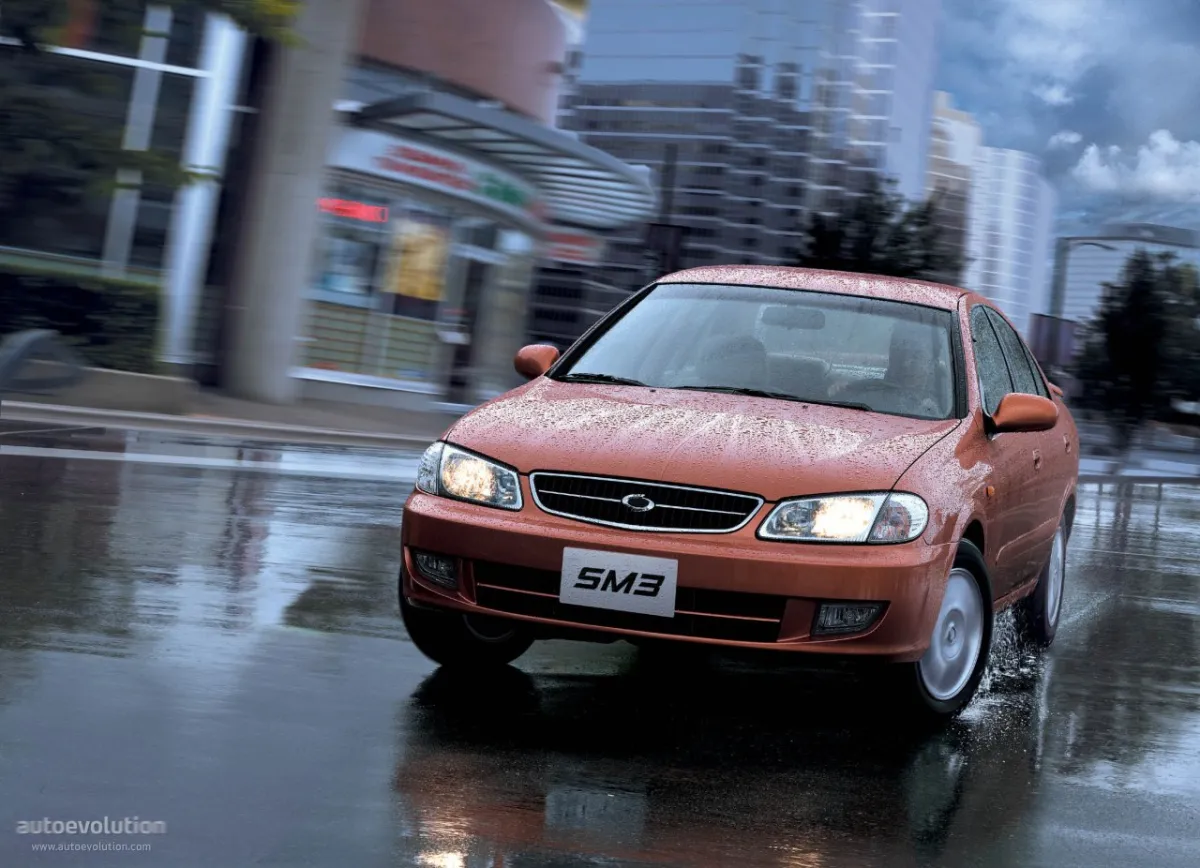
The Renault-Nissan Alliance also had the Samsung brand under its roof, and the Korean automaker was able to build and sell a badge-engineered version of the Nissan Almera on its home market.

Based on the new platform developed by Renault and Nissan, the SM 3 was a fresh addition to the Korean market, where it had to face stiff competition from Hyundai, Kia, and Daewoo. Unlike its Almera sibling, the SM 3 was sold only as a four-door sedan.

The rounded, organic shapes of the SM3 mainly belonged to the bio-design era, which was already gone in other countries. Yet, the customers were not bothered by that. The car's angled headlights that flanked a one-slat grille didn't look very aggressive. Samsung didn't need that; it needed a vehicle suitable for a family. The car's profile revealed a curved window line adorned with black trims on the rear doors. In addition, the automaker offered an option for a blackened B-pillar. Finally, at the back, the corner-mounted taillights flanked the wide trunk opening.

Inside, the curved lines dominated the dashboard, with an instrument panel dominated by the center-mounted speedometer. That was flanked by a tachometer on the left and the fuel and water-temperature gauges on the right. Samsung installed bucket seats designed mostly for comfort and provided little bolstering. Its back seats featured a split-folding seatback and provided enough elbow and hip room but limited legroom for adult passengers.

Underneath the hood, the automaker installed a choice of two engines developed by Nissan. These were paired with a four-speed automatic or a five-speed manual that sent the power to the front wheels.

How much power does the Samsung SM 3 have?

The most powerful Samsung SM 3 trim is the 1.5L 5MT (100 HP) with 100 hp. The model has 1 trims, starting at 100 hp.

What is the fuel consumption of the Samsung SM 3?

The most economical Samsung SM 3 trim is the 1.5L 5MT (100 HP), with a stated combined consumption of 8.2 l/100 km and 195 g CO2 per km.

How quickly does the Samsung SM 3 accelerate from 0 to 100 km/h?

The quickest trim is the 1.5L 5MT (100 HP): 0-100 km/h in 11.7 seconds, with a top speed of 183 km/h.

How large is the cargo volume of the Samsung SM 3?

The largest stated cargo volume for the Samsung SM 3 is 459 litres.

Other Samsung models

Samsung SM 5

2004 - 2010 · 1 trim

Power
136 hp
0–100
Fuel economy

Petrol

Samsung SM 7

2005 - 2011 · 2 trims

Power
230 hp
0–100
Fuel economy

Petrol

Samsung SM5

1998 - present · 3 trims

Power
173 hp
0–100
9.8 s
Fuel economy
9.2

Petrol