Skip to content
AD

Volvo 142 (1967 - 1974)

Volvo · 3 trims

Volvo 142

The Volvo 142 (1967 - 1974) is available in 3 trims producing 90 to 135 hp. The fastest trim reaches 175 km/h.

Power
135 hp
0–100
Fuel economy
Cargo

142 Trims

Compare →
Trims and engine versions — Volvo 142
Trim Fuel Power Torque 0–100 Top speed Fuel economy CO2 Select
2.0L 4MT RWD (90 HP) Petrol 90 hp 163 Nm 148 km/h
2.0L 4MT RWD (118 HP) Petrol 118 hp 167 Nm 163 km/h
2.0L 4MT RWD (135 HP) Petrol 135 hp 176 Nm 175 km/h

Fuel economy and CO2 follow the stated test cycle. Manufacturer figures; deviations per market and option pack are possible.

Is Volvo 142 a good choice against other models?

Average across every Volvo 142 trim, compared with 386 trims of other cars from the 1964–1970 period.

Is Volvo 142 a good choice against other models?
Measure This model Average Position
Power 114 hp 173 hp
better than 39%
Torque 169 Nm 278 Nm
better than 37%
Top speed 162 km/h 179 km/h
better than 33%
Unladen weight 1,153 kg 1,321 kg
better than 60%

Percentages show the share of trims from the same period this model beats on that measure. Manufacturer figures.

Not stated by the manufacturer: acceleration 0–100 km/h, combined consumption, co2 emissions and cargo volume. Those measures are left out of the comparison.

Comparable models from other brands

Isuzu Bugatti Ferrari Mazda Nissan Opel

About Volvo 142

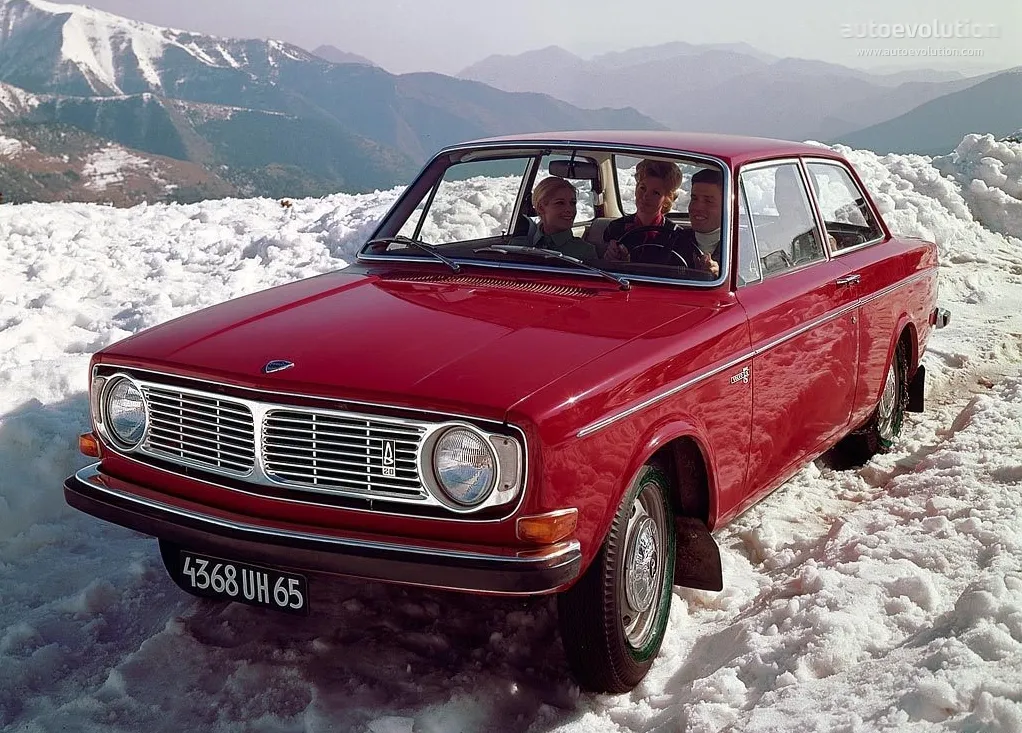
In 1966, Volvo left the old design lines from the Amazon and moved to a different level that was kept until the '90s: the box design. At the same time, it introduced the new designation names with three numbers: first was the series of the vehicle, the second number was the number of cylinders and the last was the number of doors. In 1967, Volvo launched the two-door version for the 1st series, with four cylinders engines. So, the name was 142.

The minimalist exterior design had a visual look of a large box containing the front, middle up tot the beltline and trunk in the same box and a second box on top, for the greenhouse. The coupe was a version of the sedan, but with two doors and two side windows.

The interior was very simple, with a straight dashboard and full instrument panel containing tachometer, speedometer, fuel level, coolant temperature, oil pressure, and battery voltage, along with some warning lights. The vehicles equipped with a manual transmission had the stick on the floor while the automatic transmission versions had the lever behind the steering wheel.

The engine was a 1.8-liter four-cylinder in three outputs, depending on the fuel system. All were with carburetors but were different. The main model was with an oil-lubricated Stromberg upside-down double-barrel carburetor. In 1971, a new 2.0-liter engine was introduced and was fuel-injected and the power output was 136 hp (SAE). The automatic transmission was moved to the floor and received a T-bar gear-lever.

How much power does the Volvo 142 have?

The most powerful Volvo 142 trim is the 2.0L 4MT RWD (135 HP) with 135 hp. The model has 3 trims, starting at 90 hp.

Other Volvo models

Volvo 144

1967 - present · 4 trims

Power
126 hp
0–100
14.1 s
Fuel economy

Petrol

Volvo 145

1967 - 1974 · 4 trims

Power
126 hp
0–100
10.1 s
Fuel economy

Petrol

Volvo P1800

1961 - 1973 · 1 trim

Power
97 hp
0–100
Fuel economy

Petrol

Volvo 244

1975 - 1990 · 8 trims

Power
155 hp
0–100
9.0 s
Fuel economy
8.3

Petrol Diesel

Volvo 245

1975 - 1990 · 8 trims

Power
155 hp
0–100
9.0 s
Fuel economy
8.7

Petrol Diesel

Volvo 66

1975 - 1981 · 2 trims

Power
57 hp
0–100
18.5 s
Fuel economy

Petrol