
Skip to content
AD

Aston Martin DB Mark III (1957 - present)

Aston Martin · 1 trim

Aston Martin DB Mark III

The Aston Martin DB Mark III (1957 - present) is available in 1 trims producing 164 to 164 hp. The fastest trim reaches 193 km/h.

Power
164 hp
0–100
9.3 s
Fuel economy
Cargo

DB Mark III Trims

Compare →
Trims and engine versions — Aston Martin DB Mark III
Trim Fuel Power Torque 0–100 Top speed Fuel economy CO2 Select
2.9L 4MT (164 HP) Petrol 164 hp 244 Nm 9.3 s 193 km/h

Fuel economy and CO2 follow the stated test cycle. Manufacturer figures; deviations per market and option pack are possible.

Is Aston Martin DB Mark III a good choice against other models?

Average across every Aston Martin DB Mark III trim, compared with 113 trims of other cars from the 1954–1960 period.

Is Aston Martin DB Mark III a good choice against other models?
Measure This model Average Position
Power 164 hp 149 hp
better than 67%
Torque 244 Nm 225 Nm
better than 65%
Top speed 193 km/h 167 km/h
better than 74%
Acceleration 0–100 km/h 9.3 s 13.5 s
better than 76%
Unladen weight 1,270 kg 1,268 kg
better than 56%

Percentages show the share of trims from the same period this model beats on that measure. Manufacturer figures.

Not stated by the manufacturer: combined consumption, co2 emissions and cargo volume. Those measures are left out of the comparison.

Comparable models from other brands

Mazda Peugeot Ferrari Ford Mitsubishi

About Aston Martin DB Mark III

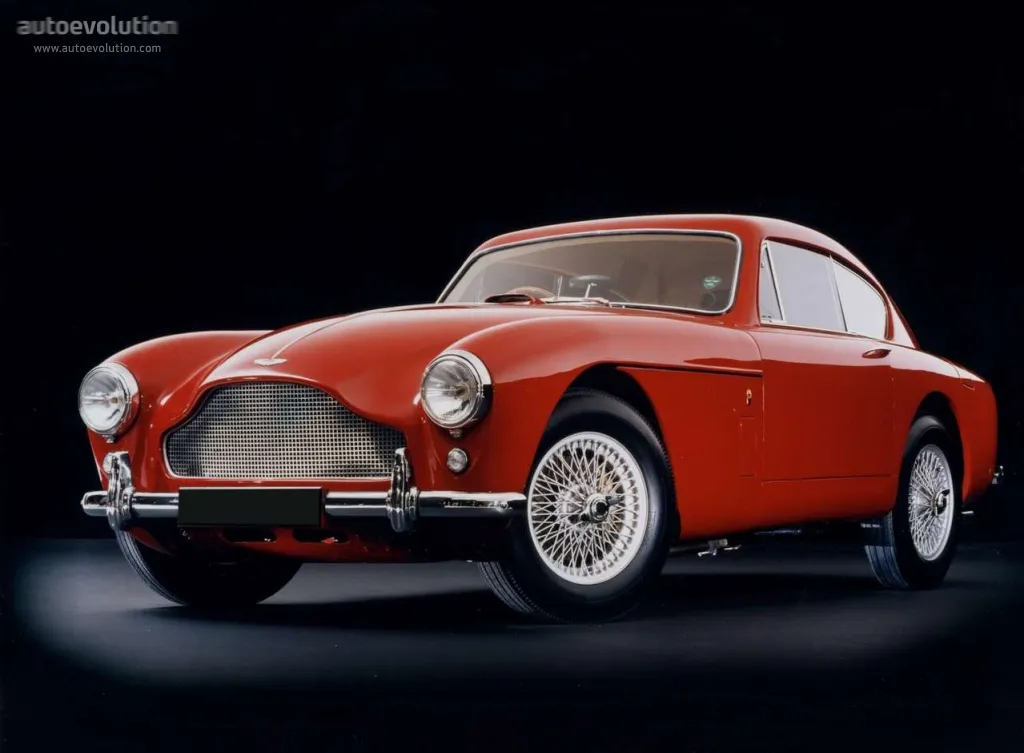
The British automaker started to make its way onto the exclusive circle of grand touring cars, and the DB Mark III was an important step toward that.

Aston Martin was not yet a significant brand in the personal luxury coupe segment, but its ambitions were high. Even though this 1957 DB Mark III was based on the same chassis as the DB2/4 Mark II, it looked different, offered new amenities on the interior, and was powered by a stronger engine.

The automaker started to shape the car's main grille, which was inspired by a sea shell. That was noticed even in the Aston Martin's first car, but this time it was more refined. It featured rounded edges and covered most of the front fascia. The front fenders supported the round headlights, which were encircled by chromed surroundings. From its profile, the greenhouse started with a tilted windshield, and the roof was sloped down to the back of the car. Its descending line started right behind the B-pillars. At the back, the design team played it safe and created a tailgate to access the trunk while the taillights were installed on the rear quarter panels' endings.

But if there was something that Aston Martin was good at, that was the cabin. It was fitted with woodgrains on the dashboard and door panels, a pair of bucket seats at the front, and a bench in the back for two other passengers.

For the drivetrain, Aston Martin installed an engine developed by W.O. Bentley paired with a four-speed manual. There were less than 600 units produced by Aston Martin.

How much power does the Aston Martin DB Mark III have?

The most powerful Aston Martin DB Mark III trim is the 2.9L 4MT (164 HP) with 164 hp. The model has 1 trims, starting at 164 hp.

How quickly does the Aston Martin DB Mark III accelerate from 0 to 100 km/h?

The quickest trim is the 2.9L 4MT (164 HP): 0-100 km/h in 9.3 seconds, with a top speed of 193 km/h.

Other Aston Martin models

Aston Martin DB5

1963 - 1965 · 1 trim

Power
286 hp
0–100
8.6 s
Fuel economy

Petrol

Aston Martin DB2

1950 - 1953 · 1 trim

Power
106 hp
0–100
12.4 s
Fuel economy

Petrol