Skip to content
AD

Aston Martin Valhalla (2022 - present)

Aston Martin · 1 trim

Aston Martin Valhalla

The Aston Martin Valhalla (2022 - present) is available in 1 trims producing 937 to 937 hp. The fastest trim reaches 330 km/h.

Power
937 hp
0–100
2.5 s
Fuel economy
Cargo

Valhalla Trims

Compare →
Trims and engine versions — Aston Martin Valhalla
Trim Fuel Power Torque 0–100 Top speed Fuel economy CO2 Select
4.0L V8 8AT (937 HP) Hybrid 937 hp 1,000 Nm 2.5 s 330 km/h

Fuel economy and CO2 follow the stated test cycle. Manufacturer figures; deviations per market and option pack are possible.

Is Aston Martin Valhalla a good choice against other models?

Average across every Aston Martin Valhalla trim, compared with 2,959 trims of other cars from the 2019–2025 period.

Is Aston Martin Valhalla a good choice against other models?
Measure This model Average Position
Power 937 hp 276 hp
better than 99%
Torque 1,000 Nm 424 Nm
better than 98%
Top speed 330 km/h 228 km/h
better than 98%
Acceleration 0–100 km/h 2.5 s 7.3 s
better than 99%

Percentages show the share of trims from the same period this model beats on that measure. Manufacturer figures.

Not stated by the manufacturer: combined consumption, co2 emissions, cargo volume and unladen weight. Those measures are left out of the comparison.

Comparable models from other brands

Lamborghini Porsche GMC Pagani Tesla

About Aston Martin Valhalla

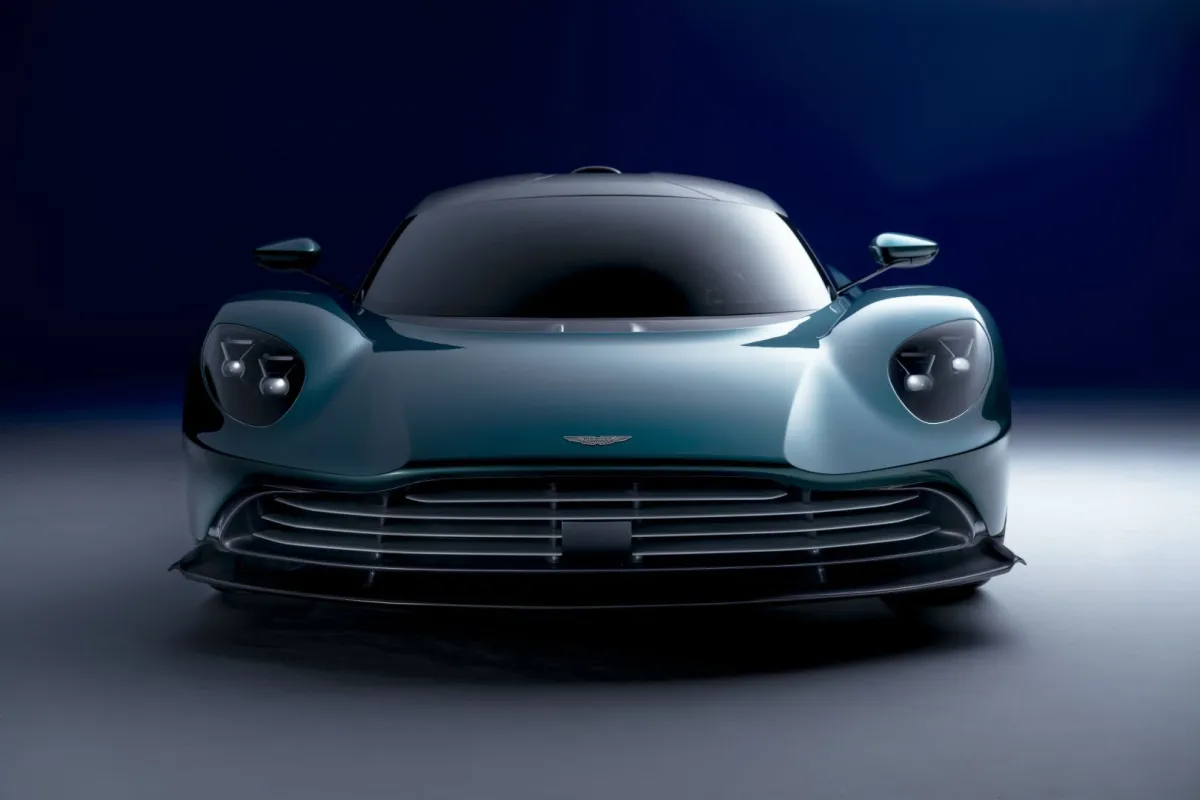
Aston Martin used all of its expertise and its Formula 1 drivers to develop their ultimate hypercar, the Valhalla.

The British carmaker learned its lessons when it worked on the Valkyrie supercar and applied it to the Valhalla, but it was an important difference between those two models. While the Valkyrie was a track-focused vehicle, the Valhalla had to cope well with the tracks and the regular roads.

They created the vehicle around a carbon-fiber tub with a mid-mounted engine. That led to a narrow and short front area, a greenhouse with a massive curved windscreen, and a carbon-fiber roof. Behind it, a snorkel-like air-intake allowed the air to get into the twin-turbo powerplant mounted behind the cabin. A carbon-fiber dual-wing that ensured up to 600 kg (1,322 lbs) of downforce onto the rear axle at the back.

Aston Martin created a minimalistic interior with a pair of sport bucket seats crafted in carbon fiber and thin padding. Between them, the center console hosted the buttons for the gearbox. In addition, the British carmaker installed a digital instrument panel in front of the driver and a squared-looking steering wheel.

The 4.0-liter V8 power plant featured a flat crankshaft for a better engine balance. The engineers paired it to an eight-speed automatic (dual-clutch) transmission. Worth mentioning that all eight gears were for forwarding. For reversing the car, Aston Martin employed the electric motor. The all-wheel-drive system featured an electric motor at the front and another one for the rear axle, which worked together with the 750 hp twin-turbocharged engine.

How much power does the Aston Martin Valhalla have?

The most powerful Aston Martin Valhalla trim is the 4.0L V8 8AT (937 HP) with 937 hp. The model has 1 trims, starting at 937 hp.

How quickly does the Aston Martin Valhalla accelerate from 0 to 100 km/h?

The quickest trim is the 4.0L V8 8AT (937 HP): 0-100 km/h in 2.5 seconds, with a top speed of 330 km/h.

Other Aston Martin models

Aston Martin DBX

2020 - present · 1 trim

Power
550 hp
0–100
4.5 s
Fuel economy
14.3

Petrol