Skip to content
AD

Bufori Buori MK I 2nd Series (1992 - present)

Bufori · 4 trims

Bufori Buori MK I 2nd Series

The Bufori Buori MK I 2nd Series (1992 - present) is available in 4 trims producing 107 to 128 hp. The fastest trim reaches 185 km/h.

Power
128 hp
0–100
8.5 s
Fuel economy
Cargo

Buori MK I 2nd Series Trims

Compare →
Trims and engine versions — Bufori Buori MK I 2nd Series
Trim Fuel Power Torque 0–100 Top speed Fuel economy CO2 Select
1.8L 3AT RWD (108 HP) Petrol 107 hp 161 Nm 9.4 s 159 km/h
1.8L 4MT RWD (108 HP) Petrol 107 hp 161 Nm 9.4 s 159 km/h
2.2L 3AT RWD (128 HP) Petrol 128 hp 190 Nm 8.5 s 185 km/h
2.2L 4MT RWD (128 HP) Petrol 128 hp 190 Nm 8.5 s 185 km/h

Fuel economy and CO2 follow the stated test cycle. Manufacturer figures; deviations per market and option pack are possible.

Is Bufori Buori MK I 2nd Series a good choice against other models?

Average across every Bufori Buori MK I 2nd Series trim, compared with 2,317 trims of other cars from the 1989–1995 period.

Is Bufori Buori MK I 2nd Series a good choice against other models?
Measure This model Average Position
Power 118 hp 139 hp
better than 50%
Torque 176 Nm 208 Nm
better than 47%
Top speed 172 km/h 193 km/h
better than 27%
Acceleration 0–100 km/h 8.9 s 11.6 s
better than 78%
Unladen weight 968 kg 1,301 kg
better than 89%

Percentages show the share of trims from the same period this model beats on that measure. Manufacturer figures.

Not stated by the manufacturer: combined consumption, co2 emissions and cargo volume. Those measures are left out of the comparison.

Comparable models from other brands

Toyota Volkswagen Suzuki Plymouth Scion

About Bufori Buori MK I 2nd Series

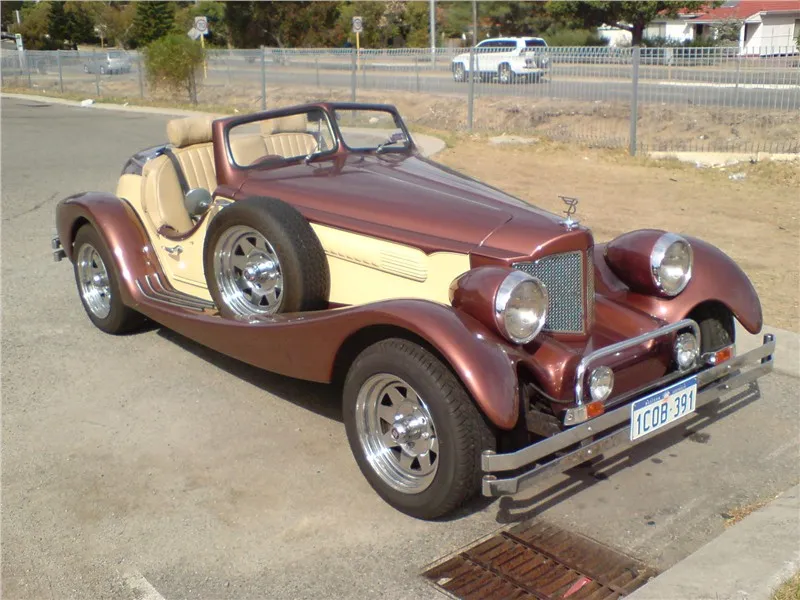
The second series of the Bufori MK I appeared on the market in 1992, and it was an updated and upgraded version of the original Australian roadster.

Produced by three Lebanese Australian brothers, Bufori roadsters were initially made for themselves. To anyone's surprise, the car got traction on the market, and soon other customers asked them if they could build another one. But at the end of the '80s, the low-powered 1.6-liter engine made the company's owners wonder if they could do something better. And they did this by installing a new powerplant over the same chassis.

With its charming look inspired by American roadsters from the '30s, the second series of Bufori came with an improved design and higher-quality finishes. It still kept the V-shaped radiator recessed far behind the front bumper by the '90s standards. The round headlights were mounted directly on the front fenders. Its split windshield and the low-cut for the doors were kept similar to the 1988 model. The bulky, V-shaped rear end at the back concealed the engine, not the trunk. That was at the front, hidden under what appeared to be the hood.

Since the car was handbuilt and expensive, Bufori used only expensive materials on the interior. Thus, genuine leather and wood trims surrounded the two occupants who sat on the wide, comfortable chairs. Unlike many roadsters from the '30s, the MK I Series 2 sported the instrument panel fronting the driver.

The lack of power of its predecessor was fixed by using a 2.2-liter boxer engine carried over from Subaru. This powerplant was paired with a five-speed manual, although a three-speed automatic was available.

How much power does the Bufori Buori MK I 2nd Series have?

The most powerful Bufori Buori MK I 2nd Series trim is the 2.2L 3AT RWD (128 HP) with 128 hp. The model has 4 trims, starting at 107 hp.

How quickly does the Bufori Buori MK I 2nd Series accelerate from 0 to 100 km/h?

The quickest trim is the 2.2L 3AT RWD (128 HP): 0-100 km/h in 8.5 seconds, with a top speed of 185 km/h.

Other Bufori models

Bufori V6i

1992 - 1994 · 2 trims

Power
173 hp
0–100
6.2 s
Fuel economy

Petrol

Bufori MK I

1988 - 1992 · 2 trims

Power
75 hp
0–100
8.5 s
Fuel economy

Petrol