About Dacia 1100
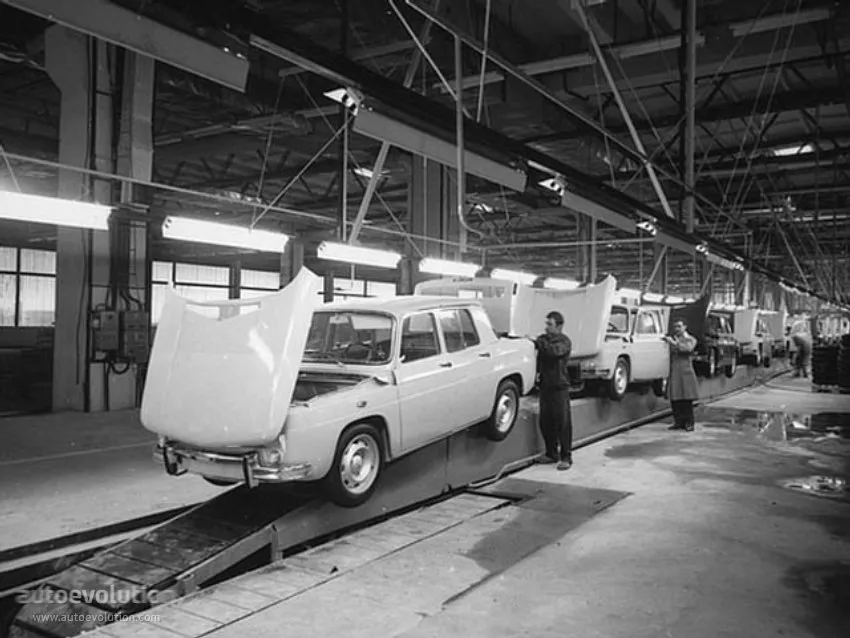
n 1968, the UAP automaker released its first model, a license-built Renault 8 sold under the Dacia 1100 nameplate, beginning its journey on the East-European market as a Romanian national brand.
Romania didn’t want to depend on Russian vehicles, and therefore, it decided to launch its own brand. The factory had been up and running since 1943, when it was used to make parts for the aviation industry. Switching to the automotive segment wasn’t easy, but by 1968, when production started, the entire process was already completed. The initial contract was for another vehicle, the Renault 12, but since that model wasn’t launched yet, UAP started with the licensed-built Renault 8. UAP stands for the Uzina de Automobile Pitesti (Pitesti Automobile Factory), and the chosen brand was Dacia, the ancient name of the Romanian territory. The first batches were made from complete knocked-down kits (CKD) to help workers understand the process and ease their jobs when the next automobile was about to start production.
The boxy-looking Dacia 1100 shared its panels and components with its French twin sibling, the Renault 8. Its front fascia showcased a flat panel with recessed headlights in individual clusters. The automaker placed a chromed horizontal trim between them sporting the Dacia 1100 nameplate. A chromed bumper with a raised middle section protected the vehicle in case of a crash. Underneath that raised element was a flip-down panel where the spare wheel was placed.
From its profile, the three-box sedan with four doors had a simple layout, with a steep windshield and rear window. The exposed, grab-type door handles were chromed and mounted on the upper side of the door panels. Dacia fitted the vehicle with 13-inch steel wheels and chromed caps with a center bolt. Even though the engine was mounted in the back, there were no side air intakes to cool it, but still, the automaker made a wide and slatted vent. On the vertical rear panel, the 1100 featured horizontally mounted taillights flanking the squared license plate holder. Finally, a chromed bumper featuring vertical metallic elements with rubber blocks protected the vehicle.
Inside, Dacia installed a pair of vinyl-covered seats up front and a bench seat in the back. The front windows could be rolled down, while those for the rear seated passengers featured a forward-to-rearward sliding system. The 1100 was made for common people and didn’t provide any kind of luxurious pieces of equipment. It didn’t even have a rev counter. Fronting the driver was a flat dash panel sporting two large dials, one for the speedometer and the other grouped the gauges that showed the oil pressure, coolant temperature, and fuel level. In front of the side passenger was an open glove box.
While its French sibling was available in a choice of engines, the 1100 was sold with the 1.1-liter version of the Cleont-Fonte powerplant shared with other vehicles from Renault’s lineup. Its 46 PS (45 hp) was sent to the rear wheels via a four-speed manual transmission. Later, the automaker produced the S version, featuring different carburetors, producing 65 PS (64 hp). Dacia made just 100 units of them, 50 allocated to the police forces (the Militia) and the other 50 for designated race drivers.