About Fiat 1100 E
Fiat introduced the 1100 lineup in 1937, and it produced it in several versions until 1949, when it replaced it with the first unibody vehicle in its lineup, the 1953 1100.
In 1932, the Italian automaker made the first generation of the Balilla, known as the 508. It was an affordable and successful vehicle. But soon, Fiat noticed that the styling was too old and decided to launch a new version, only this time it used the 1100 moniker that represented the engine’s displacement. The car appeared on the market in 1937, but the assembly lines came to a halt because of WWII. After the war, in 1949, the Italian economy struggled to get back on its feet, and Fiat, as the biggest automaker in the country, resumed production of the 1100, and one of the versions was the E.
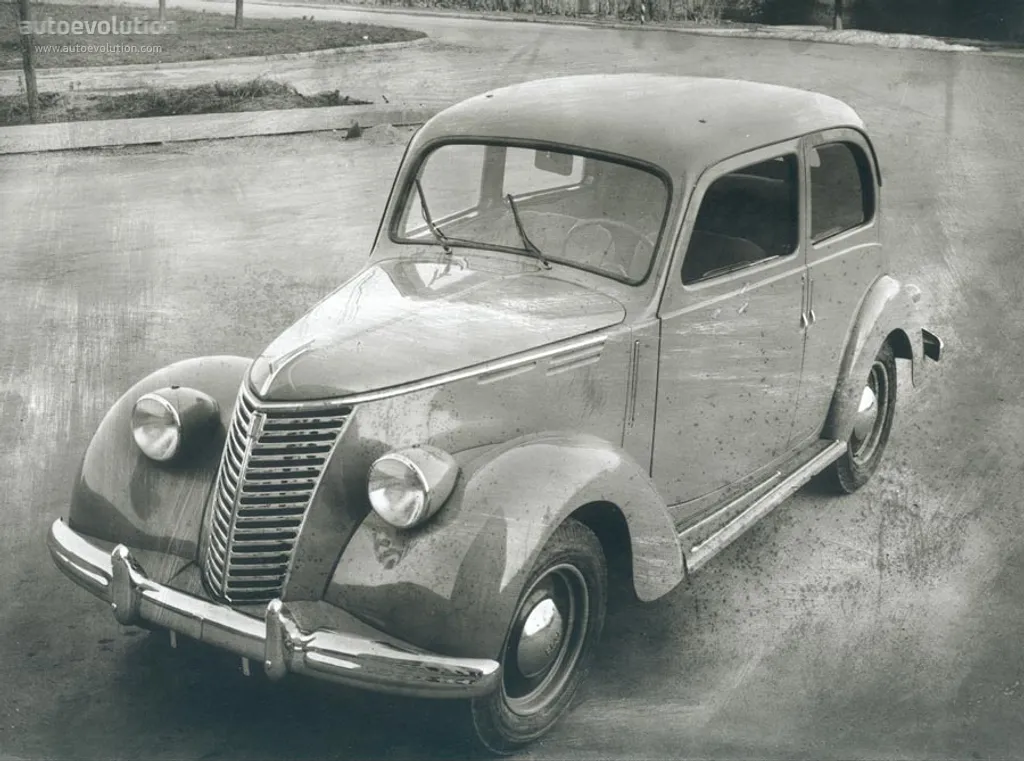
Created on the same chassis as the pre-war 1100 Balilla, the 1100 E featured a modernized bodywork. It featured a front fascia with a pinched-out grille adorned by chromed metallic slats. The V-shaped hood covered the tall engine compartment that was flanked by valanced wide fenders. Fiat installed the headlights on small pillars between the fenders and the engine compartment. The chromed metallic front bumper was placed low, mounted on the chassis’ endings, and featured additional vertical parts that protected the vehicle.
From its sides, the 1100 E resembled the 508 Balilla with its tall greenhouse and sloped-down rear end, where the automaker added the trunk lid and placed the spare wheel. Just like its predecessor, it featured opposing-type opening doors without a B-pillar to ease ingress and egress. On the arched rear fenders, Fiat installed the taillights, which were also attached on stalks, not directly to the bodywork. Finally, at the back, the automaker installed a chromed metallic bumper, which also featured additional vertical protections.
Inside, the vehicle featured adjustable front bucket seats covered in fabric, while in the rear, there was a bench seat fit for two adults. Since the 1100 E was a narrow vehicle, it was difficult to sit a third person in the back. In front of the driver, Fiat installed a two-spoke steering wheel, and the gear stick behind it. A few dials and gauges installed on the flat dash panel showed the speed and information about the engine temperature, oil pressure, and fuel level. In addition, the car was fitted with electric windshield wipers.
Under the hood, the Italian automaker placed a small four-pot engine with a 1.1-liter displacement paired with a four-speed manual gearbox. Power went to the rear axle that featured an open differential. By choosing to use an independent front suspension, the 1100 E offered enough comfort for its customers and was effective on bad roads.