About Fiat 8V
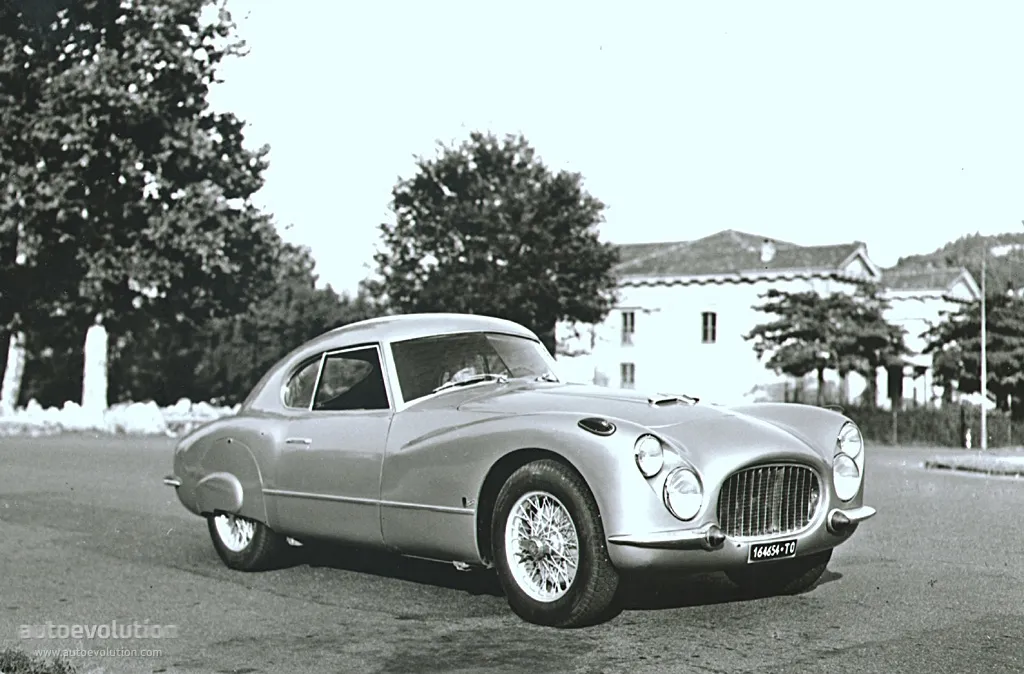
Fiat tried to enter the sports car market with a V8-powered vehicle and unveiled the 8V at the 1952 Geneva Motor Show, surprising customers with a car that could keep pace with the already famous Porsche 356.
The Italian automaker was no stranger to sports cars since it built many of them before World War II. After that, it focused on economical vehicles, so the 8V was a little bit of a stretch for it. Still, it tried to impress and gain popularity in a market where customers asked about more performance. It was an entirely new concept for the Italian automaker who took inspiration from vehicles coming from UK and the U.S. Furthermore, its Spanish partner, SIATA, had a two-liter V8 engine developed and ready to be installed in a vehicle, and thus, the 8V was born.
FIAT produced 114 units of the vehicle between 1952 and 1954. Besides those completed by the automaker, others were bodied by leading Italian coachbuilders, such as Zagato, Ghia, or Vignale. Furthermore, some vehicles sported fiberglass bodywork, which made them lighter and, as a result, faster. That’s why some 8Vs featured two headlights at the front, and others were fitted with four, depending on customers’ demands. But still, most of them featured an oval-shaped grille at the front fitted with vertical slats. Those equipped with bumpers had them installed onto the front fenders, which was not mandatory.
From its profile, the coupe featured long and curved fenders that resembled the design language of the pre-war vehicles. The hood sported an air intake and was followed by the short, split windshield. Thanks to the low and arched roof, which sloped down towards the back of the car, the 8V had an aerodynamic profile. Its rear fenders were also wider and featured shoulders-like shapes above the rear wheels. Finally, at the back, the 8V featured three small, round taillights on each side and the fuel filler cap mounted underneath the rear window.
One of the most intriguing parts of the car was its instrument cluster that fronted the driver. It was oval-shaped and had the speedometer on the left half-circle and the tachometer on the right side. As a result, the needle from the former ran clockwise, while the one for the latter ran counterclockwise. Between them, there was the odometer (total and trip) on the left and two other counters on the right for the engine speed. In the dashboard’s center, Fiat installed a clock and a dial with gauges for the oil pressure and fuel level. The water temperature gauge was in front of the side passenger.
Under the hood was a two-liter V8 engine that produced 105 PS (104 hp), which was remarkable for a 1952 vehicle. It was paired with a four-speed manual transmission. Several vehicles were fitted with an upgraded version of this engine and produced 115 PS (113 hp).